Curving wireless beams could let cyberattackers hide the source of jamming attacks
Rice researchers demonstrated a new kind of wireless jamming attack that uses curved radio signals to disguise where interference is coming from.
Curving wireless beams could let cyberattackers hide the source of jamming attacks
Rice researchers demonstrated a new kind of wireless jamming attack that uses curved radio signals to disguise where interference is coming from.
First-in-human trial demonstrates promise of implantable cytokine factories for ovarian cancer
Rice researchers and collaborators at MD Anderson report results from a first-in-human trial evaluating a novel cell-based therapeutic platform in patients with advanced ovarian cancer.
AI-powered handheld microscope aims to spot cancer earlier
Researchers at Rice and The University of Texas MD Anderson Cancer Center have developed a compact, artificial intelligence-powered imaging device that could transform how clinicians detect cancer.
Climate patterns may shape where violent conflict risks are amplified, Rice study finds
A new Rice study uses high-resolution data and empirical modeling to examine how large-scale climate patterns shape the probability of civil conflict and war.
Rice and Baylor College of Medicine have renewed their joint Superfund Research Program with a nearly $15 million, five-year grant from the National Institute of Environmental Health Sciences to advance detection, health research and cleanup technologies for a class of hazardous pollutants known as polycyclic aromatic hydrocarbons.
Parthasarathy Ranganathan, vice president and engineering fellow at Google, discussed the rapid evolution of artificial intelligence and the technical and societal challenges shaping its future during the second annual Raleigh White Johnson Jr. Lecture at the George R. Brown School of Engineering and Computing.
Water resilience research brings more prepared future
This Earth Month, Rice is highlighting a selection of research projects that seek to better understand and build resiliency for extreme water events like flooding.
Rice engineer selected for Air Force Research Lab Visiting Faculty Research Program
Rice electrical and computer engineering professor César A. Uribe has been selected for the Air Force Research Laboratory Visiting Faculty Research Program, a competitive initiative that brings university researchers into Air Force laboratories to collaborate on high-impact research aligned with national defense priorities.
Rice doctoral student uses mechanics to map how breastfeeding works in real time
As researchers work to close long-standing gaps in women’s health, a Rice doctoral student is using principles of mechanics to shed light on one of the most fundamental aspects of early motherhood: breastfeeding.
Faculty, staff, students honored for excellence in teaching, mentoring, service
Each year, Rice honors members of its community who have served students through outstanding teaching, dedication and service.
Prabhakar Raghavan, chief technologist at Google, was the featured speaker in the Ken Kennedy Institute Distinguished Lecture Series.
Rice bioengineer to lead national organization, advocate for research funding on Capitol Hill
The Rice bioengineering department helped host the annual meeting of the American Institute for Medical and Biological Engineering, where two Rice faculty were inducted as Fellows and Michael King stepped in as president.
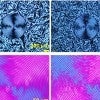
AI spots hidden behavior patterns in self-organizing bacteria
A custom-built artificial intelligence system developed by Rice researchers helped uncover how bacterial communities self-organize.
Rice brings global AI dialogue to Paris
“Artificial intelligence is transforming the global economy and raising profound questions about how technology intersects with society,” said Caroline Levander, Rice’s vice president for global strategy.
For more than a decade, Rice’s Frederi Viens has been studying Lake Chad, a vast freshwater lake in west-central Africa that borders Nigeria, Niger, Chad and Cameroon.