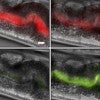
Researchers from Rice University and Baylor College of Medicine have shown that colored light can both activate and deactivate genes of gut bacteria in the intestines of worms. The research shows how optogenetic technology can be used to investigate the health impacts of gut bacteria.
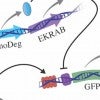
Rice University bioscientists develop a versatile gene signal amplifier that can not only do a better job of detecting the expression of chromosomal genes than current methods but can potentially be used to detect any cellular gene.
Dissolved carbon in soil can quench plants' ability to communicate with soil microbes, allowing plants to fine-tune their relationships with symbionts. Experiments show how synthetic biology tools developed at Rice University can help understand environmental controls on agricultural productivity.
Rice University recruits synthetic biologist Caroline Ajo-Franklin with a $6 million grant from the Cancer Prevention and Research Institute of Texas to bolster the university’s cutting-edge Systems, Synthetic and Physical Biology program.