
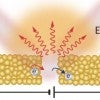
Teamwork makes light shine ever brighter
If you’re looking for one technique to maximize photon output from plasmons, stop. It takes two to wrangle.
Teamwork makes light shine ever brighter
If you’re looking for one technique to maximize photon output from plasmons, stop. It takes two to wrangle.

The questions of our time: Humanities courses encourage closer examination of daily life
Rice's Big Questions courses speak to issues that are fundamental to our experience.

A new look at ‘The Red Book,' a 1915 artifact of Black life in Houston
A midwife named Annie Hagen “came to Houston with 50 cents and through her industry and thrift … accumulated a nice bit of property” around the turn of the 20th century.

Rice study to examine how ice melt in one area impacts sea level rise in another
How does ice melted by climate change in Greenland hit the shores of Honolulu?

COVID-19 vaccine now being administered at Rice Stadium
The historic stadium is serving the entire Houston area as a community vaccination site.
Rice recognized as one of nation’s top producers of Fulbright scholars
Rice celebrated one of its largest cohorts of Fulbright scholars last year, when 11 alumni were offered grants from the program for work or research abroad.
Seven research teams win Carbon Hub funding
Carbon Hub, Rice University's zero-emissions research initiative, has awarded seed grants for seven projects that will rapidly advance its vision for transforming the oil and gas sector into a leading provider of both clean hydrogen energy and solid carbon products that can be used in place of materials with large carbon footprints.
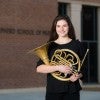
Rice student to play for nationwide audience on 'Performance Today'
Graduate student in horn performance Lauren Anker will represent Rice's Shepherd School of Music as part of American Public Media’s “Performance Today” Young Artists in Residence series. Her segments will be posted online March 25.

Eddie Glaude on the moment the ‘cold civil war’ turned hot
The Princeton professor's Campbell Lecture on March 4 tackled the stakes of racial justice and the future of American democracy.
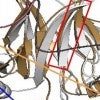
Cancer ‘guardian’ breaks bad with one switch
A mutation that replaces a single amino acid in a potent tumor-suppressing protein makes it prone to nucleating amyloid fibrils implicated in many cancers as well as neurological diseases.
Christopher Tunnell wins NSF CAREER Award
Rice University computational astroparticle physicist Christopher Tunnell is getting help in his search for the nature of the universe through a National Science Foundation (NSF) CAREER Award.
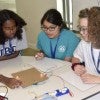
Physics camp has proven benefits for high school girls
HOUSTON – (March 5, 2021) – Even a small effort up front can boost the abilities and confidence of girls as they anticipate taking challenging science courses.

Camera traps reveal newly discovered biodiversity relationship
In one of the first studies of its kind, an analysis of camera-trap data from 15 wildlife preserves in tropical rainforests revealed a previously unknown relationship between the biodiversity of mammals and the forests in which they live.

New sensation: Grad student symposium hosts international experts on five senses
‘Making Sense’ draws scholars from diverse array of disciplines March 12-13 for an international conference on humanistic research.
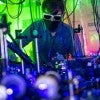
Bottling the world's coldest plasma
Rice University physicists have discovered a way to trap the world's coldest plasma in a magnetic bottle, a technological achievement that could advance research into clean energy, space weather and astrophysics.