
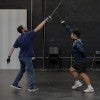
Swords drawn, students take stage for unconventional Rice final
Taught by lecturer Kyle Clark, Combat and Movement for the Stage is open to any Rice student regardless of major.
Swords drawn, students take stage for unconventional Rice final
Taught by lecturer Kyle Clark, Combat and Movement for the Stage is open to any Rice student regardless of major.

Rice students uncover Houston’s hidden histories through Fondren Fellows program
Fondren Fellows pairs Rice undergraduate and graduate students with faculty mentors and library staff to pursue original research projects grounded in Fondren Library’s collections and digital infrastructure.

The GLP-1 paradox: Rice study finds weight loss drugs may carry unexpected stigma
GLP-1 medications have taken over the national conversation around weight loss, but new research from Rice suggests the social reality may be more complicated.

Rice students tackle racism, homelessness, horror — and win awards doing it
Nearly 100 students presented research and creative work across two days at the annual Humanities and Arts Festival held April 13-14.

An internal seed funding initiative will support 12 projects exploring brain health research.

Faculty, staff, students honored for excellence in teaching, mentoring, service
Each year, Rice honors members of its community who have served students through outstanding teaching, dedication and service.

Study uncovers hidden factor shaping dementia caregiving stress
New research from Rice suggests the experience of caring for a spouse with dementia is not defined by the diagnosis alone.

Study of Women, Gender and Sexuality major and minor build ‘human literacy’ for today’s workplace
“Gender and sexuality studies is social theory made accessible,” said Lora Wildenthal, the John Antony Weir Professor of History and director of Rice’s Center for the Study of Women, Gender and Sexuality.

Rice psychologists named APS Fellows for advancing research with real-world impact
Two Rice researchers recently named fellows of the Association for Psychological Science, one of the field’s leading international organizations.

Brains in society: De Lange Conference explores how neuroscience is shaping the future
Neuroscientists, artists, educators and policymakers gathered at Rice for the De Lange Conference to explore questions at the center of everyday life: how the brain works and what that means for society.

Rice researcher’s work on lifelong learning earns national recognition
Margaret Beier's research, which examines how motivation, self-efficacy and context shape learning outcomes, led to her election as a 2026 fellow of the American Educational Research Association.
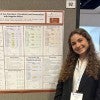
Day in the life: Health sciences senior follows research toward clinical psychology
Isabella Bourtin balances GRE prep, lab work and upper-level courses as she pivots from pre-med ambitions toward a future in clinical psychology.

Why misunderstood hand signals put cyclists at risk
As more Americans turn to biking for commuting, exercise and recreation, the roads are growing more crowded and more dangerous as cyclist fatalities have risen sharply nationwide. While crashes are often attributed to speeding, distracted driving or inadequate infrastructure, new research from Rice University suggests another factor may quietly increase risk: Drivers and cyclists are not always communicating as clearly as they think.

Rice and Houston Methodist award seed grants for Center for Human Performance
Rice and Houston Methodist have selected interdisciplinary research teams for the inaugural Houston Methodist-Rice Center for Human Performance seed grant program. The awards, supported by Rice's ENRICH office, reflect the university’s growing leadership in health-focused research and its deepening partnership with Houston Methodist.

Rice to host interdisciplinary conference examining global impact of soccer
“The World at Play: The Beautiful Game in 2026” will take place Feb. 6-7 at Rice’s BioScience Research Collaborative.