Rice University and Woodside Energy today announced a ground-breaking five-year technology collaboration aimed at reducing greenhouse gas emissions and providing lower carbon solutions.
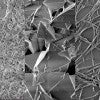
Rice scientists in the lab of Angel Martí have uncovered a new way to make high-purity boron nitride nanotubes, hollow cylindrical structures that can withstand temperatures of up to 900 degrees Celsius while also being stronger than steel by weight.
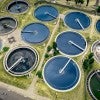
Houston’s water and wastewater system could be more resilient with the development of hybrid urban water supply systems that combine conventional, centralized water sources with reclaimed wastewater, according to a study by Rice engineers published in Nature Water.
Leaders from Rice University and Woodside Energy will hold a news conference at the Ion Jan. 17 to announce a new partnership to advance energy transition solutions.
Rice’s Ashok Veeraraghavan has been awarded the Edith and Peter O’Donnell Award in Engineering from the Texas Academy of Medicine, Engineering, Science and Technology (TAMEST), one of the state’s highest academic honors.
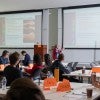
Rice University’s Center for Teaching Excellence will host its 11th annual Symposium on Teaching and Learning: The Future of General Education at Rice from 9 a.m. to 6 p.m. Friday, Jan. 5, 2024.
Rice chemical engineer Walter Chapman is spearheading a collaboration with the Hamburg University of Technology’s SMART Reactors Collaborative Research Center, which aims to develop solutions in support of a transition from fossil fuel to renewables-based economic and production chains through innovative reactor design and development.
Rice materials scientist Yimo Han and collaborators mapped the structural features of a 2D ferroelectric material made of tin and selenium atoms using a new technique that can be applied to other 2D van der Waals ferroelectrics, unlocking their potential for use in electronics and other applications.
Pedro Alvarez, the George R. Brown Professor of Civil and Environmental Engineering at Rice, received an Outstanding Achievement Award from the Chinese Chemical Society for his “long-term systematic contributions in basic research and technology development in the field of environmental chemistry.”
Rice experiments have provided the first direct evidence that electricity seems to flow through “strange metals” in an unusual liquid-like form. The first “shot noise” experiments on a strange metal from the Vienna University of Technology (TU Wien) are detailed this week in Science by physicists from both universities.
The Howard Hughes Medical Institute awarded Rice University with $2.5 million spanning over five years as part of its Driving Change initiative designed to connect research universities that are working to build inclusive learning environments for students in science, technology, engineering and mathematics.
Rice’s Santiago Segarra and Ashutosh Sabharwal have won a grant from the DEVCOM Army Research Laboratory to develop a machine learning framework that improves military communication networks’ decision-making processes. The research could also help inform applications such as self-driving vehicles and cyber intrusion detection.