

Rice study reveals Parkinson’s protein clumps rob brain cells of vital energy
A new study has revealed that protein clumps associated with Parkinson’s can actively drain energy from brain cells.
Rice study reveals Parkinson’s protein clumps rob brain cells of vital energy
A new study has revealed that protein clumps associated with Parkinson’s can actively drain energy from brain cells.

Richards-Kortum elected to the National Academy of Medicine
Rice's Rebecca Richards-Kortum has been elected to the National Academy of Medicine (NAM), one of the nation’s highest honors in health and medicine. She is one of two Rice faculty who are the only Texas researchers to share membership across the national academies of medicine, science and engineering — an honor held by fewer than 35 researchers nationwide.
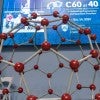
Rice celebrates 40 years since the discovery of carbon-60 or ‘buckyballs’ with 2 days of events
Rice celebrated the 40th anniversary of the discovery of carbon-60.

Digital Health Institute summit showcases Rice-Houston Methodist partnership in AI-driven medicine
The Digital Health Institute, a joint initiative of Rice University and Houston Methodist, held its inaugural summit Oct. 8 at Rice.
Rice, Houston Methodist developing soft ‘sleep cap’ to advance dementia prevention research
Rice researchers are working with physician scientists at Houston Methodist to develop a soft, wearable “sleep cap” designed to measure and improve deep sleep, a process critical for protecting the brain against dementia and related diseases.
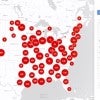
Rice researcher develops interactive tool to track FEMA buyouts
A new interactive tool created at Rice shows that the vast majority of people aren’t relying on FEMA buyout program, which has major implications for resilience.

STaRT@Rice offers a “panoramic view of the research process,” combining workshops, mentoring and interdisciplinary exposure to help participants at all levels build confidence and capability.

Rice, BCarbon join forces with Mexican state government to build community-driven carbon market
Representatives from the Mexican state of Tamaulipas, Earth Carbon and the nonprofit BCarbon met at Rice’s Baker Institute for Public Policy last month to sign a memorandum of understanding recognizing their collaboration in carbon sequestration. Since then, Since then, in accord with an MOU between BCarbon and Rice, the team has been in Mexico meeting with stakeholders and changemakers to create a carbon market that benefits the community.
Exploring links between AI and the brain as Texas weighs Proposition 14
LLMs and the Brain, a symposium featuring researchers from Rice, Baylor College of Medicine, the University of Texas, the Georgia Institute of Technology, the University of Montreal and other institutions explored the intersection between neuroscience and AI. The conversation around brain research extends beyond the university and is unfolding at the state level. On Nov. 4, Texas voters will decide on Proposition 14, which would fund the Dementia Prevention and Research Institute of Texas (DPRIT) with $3 billion over 10 years, creating the largest state-funded dementia research program in the country.

Rice researchers have successfully measured the temperature of quark-gluon plasma at various stages of its evolution.
A team of researchers at Rice has developed a new catalyst that dramatically reduces the amount of iridium needed in proton exchange membrane water electrolyzers, a key technology for generating green hydrogen from water.

Rice climbs 9 spots in Times Higher Education global rankings, places among world’s top universities
Rice continues its upward momentum in global higher education, rising nine spots to No. 103 worldwide and No. 37 in the United States in the 2026 Times Higher Education World University Rankings.

Rice's Ken Kennedy Institute hosted the fourth annual AI in Health Conference, convening over 550 attendees across the four-day event for plenary speaker sessions, networking and workshops that explored key areas for artificial intelligence-driven advancement across health and public health domains.

Rice faculty recognized for national awards in inaugural ceremony
President Reginald DesRoches and Provost Amy Dittmar welcomed winners of highly prestigious and prestigious awards to the Brockman Hall for Opera to celebrate Rice faculty excellence. On Oct. 6, Rice honored those faculty who have earned prestigious and highly prestigious awards, defined as such by the Organization of the National Research Council and the Association of American Universities.

A new Kinder Institute for Urban Research report found that despite some impressive gains for some students, it has failed to close the achievement gap for economically disadvantaged students.