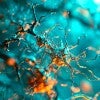
Rice has launched the Amyloid Mechanism and Disease Center, a new campus hub dedicated to uncovering the molecular origins of Alzheimer’s, Parkinson’s and other amyloid-related diseases.
More than 300 guests gathered Nov. 6 at Hotel ZaZa in Houston’s Museum District for a dinner and alumni awards ceremony celebrating the 50th anniversary of the Wiess School of Natural Sciences as an independent school at Rice.
The first-of-its-kind initiative links two of the world’s leading research universities to create shared academic pathways and immersive undergraduate experiences across Houston, Paris and PSL’s campus in Sophia Antipolis.
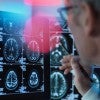
Rice has announced the creation of the Rice Brain Institute, an ambitious, interdisciplinary hub that unites faculty members across campus, including engineering, natural sciences and social sciences, to tackle one of humanity’s most complex and promising frontiers: the brain.
New research from Rice suggests that the giant planet Jupiter reshaped the early solar system in dramatic ways, carving out rings and gaps that ultimately explain one of the longest-standing puzzles in planetary science: why many primitive meteorites formed millions of years after the first solid bodies.
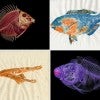
A new display at Rice’s Moody Center for the Arts showcases work led by Kory Evans, assistant professor of biosciences, whose research examines how bony fish adapt, diversify and survive amid a rapidly changing climate.
The inaugural semester of student programming at the Rice Global Paris Center is a collaboration between the Wiess School of Natural Sciences and Rice Global with support from the School of Social Sciences and School of Humanities and Arts.
From her morning commute on the Metro to afternoon classes in social psychology and evenings exploring the 13th arrondissement, sophomore Jessica Ji shares what it’s like to live, learn and study abroad while staying on track with her Rice degree.