
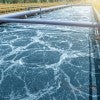
Rice researchers have developed an ultraporous material capable of pulling several valuable and rare earth elements from complex waste streams, a potential step toward recovering critical minerals that might otherwise be discarded.
Rice researchers have developed an ultraporous material capable of pulling several valuable and rare earth elements from complex waste streams, a potential step toward recovering critical minerals that might otherwise be discarded.

Rice researchers to use NASA AI model to improve hurricane risk estimates
Rice researchers to use NASA AI model to improve hurricane risk estimates.

A softer porous material could help improve solid-state batteries
Rice researchers have developed a relatively soft, flexible material that can selectively transport lithium ions — offering a new approach to porous solid electrolytes that combine efficient ion movement with better mechanical adaptability inside a battery.
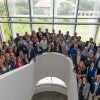
Rice convenes leaders to address Texas water challenges
More than 120 utility leaders, researchers, government officials, entrepreneurs, corporate water teams, engineers and investors gathered at Rice for the Water Nexus Conference.

Rice and TMC partners secure climate health consortium grant to face climate change and human health
A team of climate and environmental scientists, educators, epidemiologists and infectious disease researchers from Rice University, Baylor College of Medicine and the University of Texas School of Public Health has been awarded the inaugural Burroughs Wellcome Fund’s Climate + Health Excellence award, an initiative designed to strengthen research, education and public engagement related to climate change and human health.

Rice researchers develop technology to clean salty wastewater while recovering valuable metals
A team led by Shihong Lin has shown that electrochemical ion pumping can be programmed to desalinate wastewater while selectively recovering dissolved metals such as copper.

Before Day 1, Rice’s newest students got their hands dirty in Houston
The Moody Civic Immersion program is a weeklong experience run by Rice’s Center for Civic Leadership that brings incoming students into the city before their first semester begins.

Rice study explores blue carbon financing for Texas coastal protection
Rice researchers will investigate whether carbon credits could provide a new source of funding for a major coastal erosion and wetland protection project along the Gulf Intracoastal Waterway in Galveston County.

Rice recently held a two-day Urban Sustainability Innovation Sprint and the opening reception for the Urban Sustainability Projects Portfolio at the Ion.

Study finds carbon capture and storage could help curb emissions from AI-driven data center boom
As artificial intelligence accelerates demand for computing power across the U.S., a new study co-authored by Hon Chung Lau, adjunct professor in the Department of Chemical and Biomolecular Engineering at Rice and founder of Low Carbon Energies LLC, has found that carbon capture and storage could play a major role in limiting the climate impact of data centers.

Rice’s SSPEED Center helped shape coastal recreation vision now before Congress
A coastal resilience vision that launched more than 15 years ago through Rice University’s Severe Storm Prediction, Education and Evacuation from Disasters Center has reached a major milestone through the introduction of the Lone Star Coastal National Recreation Area Act.
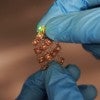
Researchers create moisture-driven tech that powers green batteries — and dissolves spy gear
Researchers from Rice and North Carolina State University have created a nontoxic, stretchable battery that operates by extracting moisture from the ambient environment.

Study finds climate change missing from stories shaping modern culture
The findings raise pointed questions about how elite fiction reflects what study authors call the defining crisis of the present moment.

Rice unites global quantum materials synthesis leaders in Paris for cutting-edge workshop
The Rice Center for Quantum Materials hosted a workshop on quantum materials synthesis at the Rice Global Paris Center, bringing together global researchers in physics, materials science, chemistry and quantum research to identify new directions and address urgent challenges facing the quantum materials synthesis community.

Over the course of seven days, Rice’s presidential delegation crossed two countries and held meetings with many prominent universities, research institutions and government leaders.