

Engineered organism could diagnose Crohn's disease flareups
Rice University researchers have engineered a bacterium capable of diagnosing a human disease, a milestone in the field of synthetic biology.
Engineered organism could diagnose Crohn's disease flareups
Rice University researchers have engineered a bacterium capable of diagnosing a human disease, a milestone in the field of synthetic biology.

Bio-inspired scaffolds help promote muscle growth
Rice University bioengineers are fabricating and testing tunable electrospun scaffolds completely derived from decellularized skeletal muscle to promote the regeneration of injured skeletal muscle.
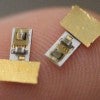
Timing is everything in new implant tech
Rice engineers' wireless implants now allow for multiple stimulators to be programmed and magnetically powered from a single transmitter.

Students’ model could help avoid costly natural gas compressor shutdowns
A student project to predict the need for maintenance in natural gas compressors and avoid unexpected shutdowns has won this year’s Data to Knowledge Lab Showcase.

Nagarajaiah named distinguished member of American Society of Civil Engineers
Satish Nagarajaiah, a professor of civil and environmental engineering and of mechanical engineering at Rice’s Brown School of Engineering, has been elected a distinguished member of the American Society of Civil Engineers (ASCE)

Rice adds Master of Engineering Management and Leadership degree
The Rice University Faculty Senate has approved the creation of a new professional master’s degree in the George R. Brown School of Engineering, the Master of Engineering Management and Leadership (MEML), to become available to students beginning in the fall.
Rice approves new Master of Engineering Management and Leadership degree
The graduate program will launch on campus this fall and online in spring 2022.

Brain Drain team tops Engineering Design Showcase
A student-designed implantable pump to help relieve pressure on the brains of patients with normal pressure hydrocephalus or idiopathic intracranial hypertension has won the top prize in this year’s Brown School of Engineering Design Showcase.

Neural nets used to rethink material design
The microscopic structures and properties of materials are intimately linked, and customizing them is a challenge. Rice University engineers are determined to simplify the process through machine learning.

Help may be at hand for hair-pulling
People who compulsively pull their hair – suffering from an affliction known as trichotillomania – could find relief with a device created by Rice University students.

Wearable glucose monitors shed light on progression of Type 2 diabetes in Hispanic/Latino adults
In one of the first studies of its kind, medical and engineering researchers have shown wearable devices that continuously monitor blood sugar provide new insights into the progression of Type 2 diabetes among at-risk Hispanic/Latino adults.

Students wonder what to do with old windmill blades
Wind power has a bright future, but what happens when wind turbines power down? A worn blade the length of a football field isn’t easy to recycle.

Rice names architect for new engineering and science building
With the imminent demolition of Rice University’s Abercrombie Engineering Laboratory, the space will soon be cleared for a new engineering and science building, according to Rice administrators. International architecture firm Skidmore, Owings & Merrill (SOM) has been selected as lead architect for the new building. Houston’s Scientia Architects will consult on laboratory design.

Brain drain could give patients peace of mind
Pressure from excess cerebrospinal fluid on the brain is often relieved by surgically installing a shunt that carries the fluid to a reservoir. But when pressure in the reservoir itself is too high, the shunt needs a little help.

Engineering Design Showcase returns
The George R. Brown School of Engineering’s annual Engineering Design Showcase returns on April 29, with 59 teams competing for more than $14,000 in prizes.