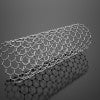
The increasing use of carbon nanotubes (CNTs) — and a proposal in the European Union to ban the entire class of materials — highlights the need for an updated and standardized approach to assess human and environmental impacts of CNTs and products that contain them, according to a new collaborative study co-authored by Rice University researchers.
An international team of scientists led by Rice’s Matteo Pasquali has won a $4.1 million grant to optimize carbon nanotube synthesis. The award is a joint effort by The Kavli Foundation, with a $1.9 million Exploration Award in Nanoscience for Sustainability, and Rice’s Carbon Hub, which contributed an additional $2.2 million.
Rice University scientists create carbon nanotubes and other hybrid nanomaterials out of plastic waste using an energy-efficient, low-cost, low-emissions process that could also be profitable.
Rice University scientists have figured out a way to engineer wood to trap carbon dioxide through a potentially scalable, energy-efficient process that also makes the material stronger for use in construction.
Rice faculty members have installed “Building Ecologies” at Post Houston to demonstrate a “circular” strategy that incorporates environmental systems into architecture.
NASA astronaut and Rice alumnus Shannon Walker ’87 returned to campus Oct. 12 to present more than a dozen Rice-related mementos that flew with her during her latest six-month mission to the International Space Station.
A new National Academies Gulf Research Program will expand the opportunities Rice students have to study and impact the most pressing environmental, health, energy and infrastructure challenges in the Gulf of Mexico region.
Carbon nanotube thread woven into athletic shirts gathered electrocardiogram and heart rate data that matched standard monitors and beat chest-strap monitors. The fibers are flexible and the shirts are machine washable.
Carbon nanotubes woven into thread-like fibers and sewn into fabrics become a thermoelectric generator that can turn heat from the sun or other sources into energy.
Rice University carbon materials expert Matteo Pasquali is available to discuss ways to slash carbon dioxide emissions and rapidly decarbonize the global economy.
New research suggests the jiggling motion of carbon nanotubes suspended in liquid solutions could have implications for the structure, processing and properties of nanotube fibers formed from those solutions.
HOUSTON -- (Feb. 6, 2020) -- Experts from industry, academia and government will gather at Rice University's Carbon Hub Kickoff Meeting Feb. 13 to discuss the challenges and opportunities of transitioning to a zero-emissions future where hydrocarbons provide both clean hydrogen energy and advanced carbon materials that help house, move and feed people.