


Crown Princess of Sweden visits Rice
Swedish professors Pernilla Wittung-Stafshede and Anna-Karin Gustavsson, welcomed Victoria Ingrid Alice Désirée, Crown Princess of Sweden, to campus March 16.

Urban prairie gives birth to new ecological restoration site at Rice’s Harris Gully
Prairie grasses are transported to Harris Gully and other city prairies by volunteers from Rice and the Greater Houston Area.
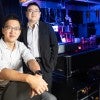
Rice’s SynthX Center leads up to $18M effort to transform lymphatic imaging
Rice's SynthX Center is leading a new effort to improve how doctors detect and diagnose lymphatic diseases.
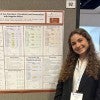
Day in the life: Health sciences senior follows research toward clinical psychology
Isabella Bourtin balances GRE prep, lab work and upper-level courses as she pivots from pre-med ambitions toward a future in clinical psychology.

Can humans become Martians? Solomon investigates how life beyond Earth may shape our evolution
Scott Solomon, teaching professor of biosciences at Rice, headlined a lecture hosted by the Science and Technology Policy Program at Rice’s Baker Institute for Public Policy to discuss those implications.
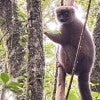
Strawberry guava prevents natural forest generation in Madagascar
Rice researchers find that strawberry guava, an invasive plant, can prevent natural forest generation in areas of Madagascar's Ranomafana National Rainforest, even decades after deforestation has ended.

Newly identified protein dark energy provides insight into form vs function in protein structure
Rice researchers and collaborators recently published a paper describing the “dark energy” found in the structural protein universe.
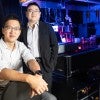
Rice's SynthX Center has received an up to five-year, $18 million award from the Advanced Research Projects Agency for Health.

Scientists demonstrate first-time use of AI for genetic circuit design
A new study reports first-time use of artificial intelligence for genetic circuit design.

‘Making a difference does not have to wait’: Rice freshman’s nonprofit tackles child literacy
Lucia Noto, a Rice freshman, is founder and CEO of a nonprofit organization that supports literacy and promotes reading among children with health challenges and from underserved communities.

How AI can help detect disease and accelerate medical breakthroughs
As artificial intelligence plays an increasingly prominent role in decoding DNA, tracking pathogens and accelerating drug discovery, the line between real capability and hype can be unclear. Rice experts can provide clear, technically grounded perspectives on how these tools are meaningfully advancing disease detection, public health preparedness and treatment design.
Oceanographers unveil new framework linking surface microbes to deep ocean carbon storage
Oceanographers including Sven Kranz have discovered a significant connection between small-scale microbial processes and ecosystemwide dynamics.
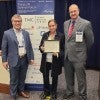
Texas Life Science Forum showcases medtech, biotech and health care innovation
More than 600 investors, entrepreneurs and industry leaders gathered at Rice Business Nov. 11 for the 14th annual Texas Life Science Forum, co-hosted by BioHouston and the Rice Alliance for Technology and Entrepreneurship. The event highlighted Houston’s growing leadership in life science innovation, commercialization and venture investment.
Rice launches Brain Institute to accelerate discoveries in brain science and health
Rice has announced the creation of the Rice Brain Institute, an ambitious, interdisciplinary hub that unites faculty members across campus, including engineering, natural sciences and social sciences, to tackle one of humanity’s most complex and promising frontiers: the brain.