An algorithm by Rice University scientists predicts the structures and melting temperatures of collagen, the triple helix that accounts for about a third of the body’s proteins and forms the fibrous glue in skin, bones, muscles, tendons and ligaments.
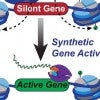
Rice bioengineers harness the CRISPR/Cas9 system to program histones, the support proteins that wrap up and control human DNA, to manipulate gene activation and phosphorylation. The new technology enables innovative ways to find and manipulate genes and pathways responsible for diseases.
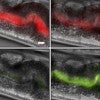
Researchers from Rice University and Baylor College of Medicine have shown that colored light can both activate and deactivate genes of gut bacteria in the intestines of worms. The research shows how optogenetic technology can be used to investigate the health impacts of gut bacteria.
Researchers from Rice University and MD Anderson Cancer Center have created a microscope that uses artificial intelligence to quickly and inexpensively image large tissue sections at high resolution with minimal preparation. If clinically validated, the DeepDOF microscope could allow surgeons to inspect tumor margins within minutes.
The lab of physicist Junichiro Kono will share in a $1 million grant from the Chan Zuckerberg Initiative to improve imaging of proteins, cells and tissues.
Rice alumnae Elisa Arango, Susannah Dittmar, Lauren Payne and Sanika Rane are finalists in the Collegiate Inventors Competition sponsored by the National Inventors Hall of Fame for their Universally Friendly Obturator, a customizable device developed at the Oshman Engineering Design Kitchen that simplifies radiation therapy for patients with cervical cancer.
Bioengineers at Rice and the University of Washington are devising a hot new technology to remotely control the positioning and timing of cell functions to build 3D artificial, living tissues.
HOUSTON – (Sept. 14, 2020) – Rice University moved up to the No. 16 ranking among the best national universities in the 2021 edition of U.S. News & World Report’s “Best Colleges” guidebook, which was published today.
Three teams of Rice University and Baylor College of Medicine researchers have been named winners of the 2020 John S. Dunn Collaborative Research Awards.