
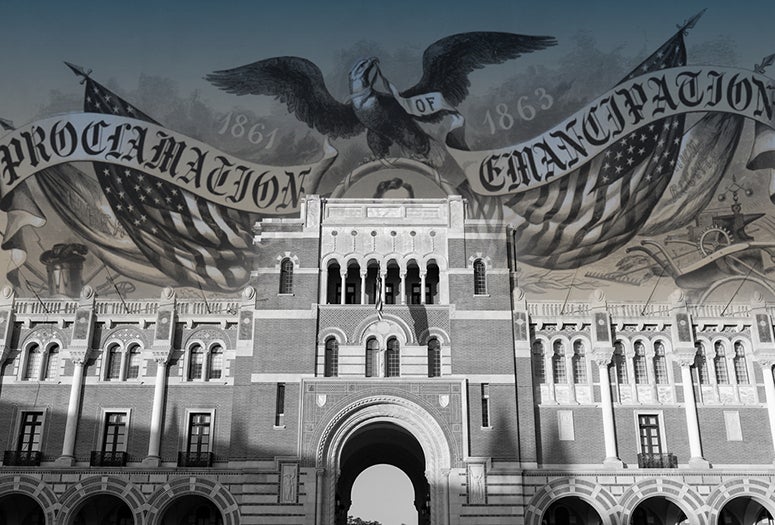
More than 160 years after Union troops arrived in Galveston and announced the end of slavery in Texas, Juneteenth continues to shape national conversations about freedom, history and democracy.
Rice University experts are available to discuss the origins of Juneteenth, its Texas roots and its lasting cultural and historical significance as communities across the country prepare to commemorate the holiday.
Slavery, emancipation and meaning of Juneteenth
Alexander Byrd, vice provost for the Office of Access and Institutional Excellence and associate professor of history
Byrd studies Black life in the Atlantic world and the Jim Crow South, with a focus on African American history, citizenship and democracy. He can provide historical context on Juneteenth, Black freedom struggles and life after emancipation.
Caleb McDaniel, the Mary Gibbs Jones Professor of Humanities and Pulitzer Prize-winning historian
McDaniel researches 19th-century America, slavery, emancipation and Reconstruction. He can provide insight into the origins of Juneteenth, the Civil War era and how early Texas commemorations shaped national observances of emancipation.
Portia Hopkins, university historian
Hopkins studies African American history, public memory and the spread of emancipation news across Texas during and after the Civil War. She can speak to how news of freedom spread through Texas, the grassroots movement behind Juneteenth’s national recognition and the role of local communities in preserving its history.
Civil War, Reconstruction and overlooked histories
Fay Yarbrough, the William Gaines Twyman Professor of History and senior associate dean of faculty and graduate programs
Yarbrough studies Native American, African American and Civil War history with particular expertise in Native nations, slavery and sovereignty in the 19th-century United States. She can address emancipation in Indian Territory and the intersections of Native and African American histories during Reconstruction.
To schedule an interview, contact Brandi Smith at bs116@rice.edu or Marcy de Luna at marcy.deluna@rice.edu.