

Underwater robot pioneers new energy-efficient buoyancy control
A remotely operated underwater robot built by a team of Rice University engineering students pioneers a new way to control buoyancy via water-splitting fuel cells.
Underwater robot pioneers new energy-efficient buoyancy control
A remotely operated underwater robot built by a team of Rice University engineering students pioneers a new way to control buoyancy via water-splitting fuel cells.
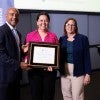
Faculty, students honored for top-notch teaching at annual awards ceremony
Rice University recognized members of the university community who have served students through excellence in teaching, mentoring and service at an awards ceremony hosted by the Center for Teaching Excellence April 22.

Moody X-Fest ’24 punctuates weekslong celebration of the Moody Experience at Rice
The Rice University community gathered for the second year in celebration of the Moody Foundation’s historic $100 million gift to the campus. More than 1,500 students flocked to Founder’s Court April 19 for Moody X-Fest ’24.

Anne Santos wins Elizabeth Gillis Award
Anne Santos, assistant dean for finance and administration in the Susanne M. Glasscock School of Continuing Studies, was named this year’s winner of the Elizabeth Gillis Award for Exemplary Service at President Reginald DesRoches’ event celebrating staff accomplishments April 18.

OpenStax at Rice University was awarded $90 million from the National Science Foundation to build and lead SafeInsights, a groundbreaking research and development (R&D) hub for inclusive learning and education research to benefit tens of millions of students and their instructors across all educational levels.

‘Music for New Bodies’ makes world premiere at Rice’s Shepherd School
Lauded by the New York Times for “the ferocity of the music” and “the layered depths of the text,” “Music for New Bodies” made its world premiere at the Shepherd School of Music at Rice University April 20.

Great teaching cannot be accomplished without first taking great responsibility in the classroom, said Betul Orcan-Ekmekci, an associate teaching professor in mathematics and Rice’s 2024 recipient of the George R. Brown Prize for Excellence in Teaching.

Empowering voices: The future of creative writing at Rice
Creative writing transcends conventional academic boundaries, serving as both a discipline and a practice that invites diverse perspectives and influences.

Rice honors staff during 2024 appreciation gathering
President Reginald DesRoches welcomed hundreds of Rice University staff members to a morning breakfast and recognition ceremony April 18 at Tudor Fieldhouse. Themed “Because of You,” the gathering highlighted the university’s successes and growth during the previous year and a glimpse into what the future holds for Rice.

Rice alumna wins prestigious merit-based fellowship for new Americans
Rice University alumna Minjung Kim is one of 30 recipients of the Paul & Daisy Soros Fellowships for New Americans, a merit-based graduate school program for immigrants and children of immigrants.

Duke-Makerere team claims first place in Rice360 design competition
A team of undergraduate students from Duke University and Makerere University won the top prize at the Rice360 Institute’s annual Global Health Technologies Design Competition as 24 international teams representing seven countries participated in the event April 12.

Rice and LSC celebrated the renewal of a memorandum of understanding and the signing of an articulation agreement to allow transfer students in LSC’s Take Flight Program to receive Rice credit for core science, technology, engineering and mathematics courses completed at LSC.

Rice engineering student builds Rice campus out of Lego pieces
Rice engineering student Andrew Linhart built a full scale model of the Rice campus using over 8,000 Lego pieces and help from his friends.
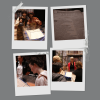
Woodson’s First Folio makes guest appearance at HSPVA’s ‘Book of Will’
Before the curtain rose on opening night of the Kinder High School for the Performing and Visual Arts ’ (HSPVA) performance of “The Book of Will,” the actors, technical team and faculty advisors gathered on stage to greet a special visitor: a part of the First Folio, the first published collection of Shakespeare’s plays, from Rice University’s Woodson Research Center.

Poetry meets AI: Nick Flynn and David Rokeby premiere groundbreaking collaboration at the Moody
The groundbreaking collaboration between poet Nick Flynn and media artist David Rokeby unveiled a fusion of poetry and artificial intelligence (AI) at an April 12 event at Rice University’s Moody Center for the Arts.