

Rice alums reflect on Olympic experiences: Lennie Waite
Lennie Waite, an Olympian and former Rice track and field star, talks about her experiences during the 2016 Olympics.
Rice alums reflect on Olympic experiences: Lennie Waite
Lennie Waite, an Olympian and former Rice track and field star, talks about her experiences during the 2016 Olympics.
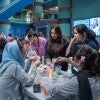
Students find inspiration at Tapia STEM Camps
The Tapia STEM Camps, founded by and named after Richard Tapia, aims to encourage students from underrepresented communities to pursue STEM careers.

In the minutes before the Orchestre National de France prepared to play Edith Piaf’s “L’Hymne à l’Amour” to close out the opening ceremony of the Paris Olympics, music director Cristian Măcelaru had a moment of confusion.

Breaking MAD: Generative AI could break the internet
Rice researchers have found that training successive generations of generative artificial intelligence models on synthetic data gives rise to self-consuming feedback loops.
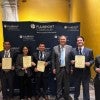
Rice is top destination for Mexican students who receive Fulbright awards
Seven master’s and Ph.D. Fulbright recipients from Mexico will study at Rice this fall, the most of any university and nearly double the number of any other university, including Rice’s Association of American Universities peers.

Rice lab finds faster, cleaner way to extract lithium from battery waste
Rice researchers uncover a rapid, efficient and environmentally friendly method for selective lithium recovery using microwave radiation and a readily biodegradable solvent.
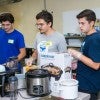
Incoming Rice Owls experience Houston and service-learning through Moody Civic Immersion program
Several dozen incoming Owls traveled to Houston to immerse themselves in the city and the social justice issues local advocates are striving to address through the Ross Rankin Moody Civic Immersion program, one of the flagships of the university’s Center for Civic Leadership.
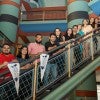
Brazilian students explore AI and infrastructure resiliency at Rice amid Hurricane Beryl
A group of undergraduate students and faculty from Brazil spent a week at Rice exploring the role of artificial intelligence (AI) in sustainability and natural disaster resiliency practices as part of a knowledge and cultural exchange program funded through the 100,000 Strong in the Americas initiative.
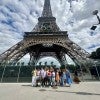
Rice sport management students take on Paris for 2024 Olympics
Students taking 3-week courses in venue management, professional sports business

Rice alums reflect on Olympic experiences: Funmi Jimoh
Former Rice student athlete and U.S. Olympian Funmi Jimoh talks about her experiences in the 2008 Olympics.

New $12M research project aims to provide ‘practical solutions to critical environmental challenges’
Scientists at Rice, in collaboration with the U.S. Army Engineer Research and Development Center, are making headway in addressing per- and polyfluoroalkyl substances (PFAS) contamination.
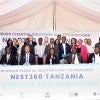
Tanzanian officials praise NEST360 contribution to newborn care
Rice President Reginald DesRoches joined Rice360 Institute for Global Health Technologies Co-Director Maria Oden and Rice360 supporters on a trip to Africa marking significant milestones on the road to ending preventable newborn deaths in the sub-Saharan region.

The Global Glacier Casualty List will be the first platform for tracking disappeared and critically endangered glaciers around the world and documenting their stories.
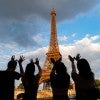
Rice students explore ‘new perspective on problem-solving’ in Paris summer program
A group of Rice students experienced firsthand how travel can enhance education during a two-week trip to Paris as part of the international Summer Experience in Engineering Design program, or iSEED.
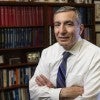
Rice chemist James Tour has led a research team to develop a rapid electrothermal mineralization process, which in seconds can remediate the accumulation of synthetic chemicals that can contaminate soil and the environment.