Rice University researchers have found a way to harvest hydrogen from plastic waste using a low-emissions method that generates graphene as a by-product, which could help offset production costs.
On Thursday, Sept.14, Rice inaugurates a new, state-of-the-art engineering and science research facility with a dedication ceremony to Ralph S. O’Connor.
New research from Rice University finds that antidepressants may actually reduce negative memories in individuals suffering from depression while improving overall memory function.
A new material that packs deadly heat for viruses on its outer surface while staying cool on the reverse side could be used to make sustainable, multiuse personal protective equipment. Marquise Bell, a Rice graduate student who is the lead author of the research, was also part of this year’s NextProf Nexus workshop, a national, competitive faculty development program for engineering students from underrepresented groups.
A team of Rice University researchers have won a 4-year, $1.2 million grant from the Department of Energy to evaluate the strengths and limitations of different physical systems used to build quantum computers and inform strategies for achieving near-term advances in quantum computing.
Kirsten Ostherr, the Gladys Louise Fox Professor of English and director of the new Medical Humanities Research Institute at Rice, received a grant from the National Endowment for the Humanities (NEH) to advance her work on the role of visual representation in the history of computational health.
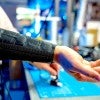
Rice U. engineers developed a lightweight, wearable textile-based device that can deliver complex haptic cues, enabling a user to perform open-world navigation tasks. The device is resilient to regular daily use, withstanding multiple cycles of washing and other damage and repair without loss of function.
Religious expression in the workplace — from wearing symbols of one’s beliefs to discussing faith at work — varies from geographic location to location, with Christians more likely to express their faith in the South, Jews most likely in the Northeast and Muslims most likely to do so out West, according to a new paper from researchers at Rice University’s Boniuk Institute and its Religion and Public Life Program, Purdue University, West Virginia University and Wheaton College.
In order to deepen and broaden the partnership between Rice University and the Indian Institute of Technology Kanpur (IITK), Rice Global recently welcomed a delegation from the institute to the university for a day-long meeting.
Rice U. bioengineers developed a platform that enhances survival and function of probiotics engineered to diagnose inflammatory bowel disease in animals. The technology holds promise for minimally invasive disease monitoring and advanced smart therapeutics.
Rice University and the Indian Institute of Technology Kanpur have taken an important next step in their strategic research and education partnership with the announcement of the first recipients of the Rice-IITK Strategic Collaboration Award program.
Rice chemists have discovered that tiny gold “seed” particles, a key ingredient in one of the most common nanoparticle recipes, are one and the same as gold buckyballs, 32-atom spheres that are cousins of the Nobel Prize-winning carbon buckyballs discovered at Rice in 1985.
Rice bioengineer Caleb Bashor and colleagues have developed a generalizable method to address “off-target” gene activation, a significant problem in the field of synthetic biology. Taking a cue from nature, the researchers showed they could all but eliminate the activation of off-target genes by designing weak transcription factors that cooperatively assemble.
The Rice360 Institute for Global Health Technologies has validated the accuracy of its latest testing technology for newborn jaundice. BiliDx addresses a critical gap in the availability of accurate, affordable, point-of-care jaundice testing in low-resource hospitals.