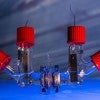
Automated insulin dosing systems combine low-cost blood-glucose monitors with insulin pumps that use precision dosing to continuously regulate blood-sugar and hold it steady. Rice synthetic biologists have found a way to piggyback on the technology and make it universally applicable for the precision dosing of virtually any drug.
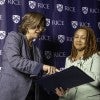
The Rice University Board of Trustees recently recognized Dagmar Beck for 20-plus years of service. She currently serves as the director of the professional science master’s program.
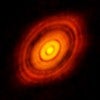
Rice University astronomer Andrea Isella and colleagues have reported the first observations of gaseous water in the portion of a protoplanetary disk where a rocky, Earth-like planet might be forming around a distant star.
An interdisciplinary group of Rice University students has been selected to compete in the Phase 3 final round of the U.S. Department of Energy’s 2024 Collegiate Wind Competition.
The Rice lab of nanotechnology pioneer Naomi Halas has uncovered a transformative approach to harnessing the catalytic power of aluminum nanoparticles by annealing them in various gas atmospheres at high temperatures.
Texas state Rep. Ann Johnson, whose legislative district includes Rice University, visited campus Feb. 29 to present resolutions from the 88th Texas Legislative session to Rice faculty, researchers and alumni.
NASA has released the first stunning images of the Orion Nebula from the James Webb Space Telescope in a study in the journal Science that shows with unprecedented precision how massive stars impact the formation of planetary systems.
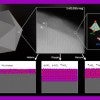
The Wiess School of Natural Sciences at Rice University has launched the Center for Nanoscale Imaging Sciences to improve the capture, analysis and interpretation of images at the nanometer scale. The center will push the frontiers of nanoscale imaging, contributing to breakthroughs in fields such as nanotechnology, materials science, biology and biomedicine.
Yonglong Xie, assistant professor of physics at Rice University, has been awarded a Faculty Early Career Development (CAREER) Award from the National Science Foundation (NSF). The $888,555 grant over five years will support Xie’s research into harnessing magnons, quantum mechanical wavelike objects in magnetic materials, to create synthetic matter and develop next-generation quantum devices and sensors.
Rice researchers have developed a new, energy-efficient upcycling method to transform glass fiber-reinforced plastic (GFRP) into silicon carbide, widely used in semiconductors, sandpaper and other products.
The centers are the Rice Center for Nanoscale Imaging Sciences, Synthesis X Center, Center for Environmental Studies, Center for Latin American and Latinx Studies, and Center for Coastal Futures and Adaptive Resilience.
Rice chemist James Tour was named to the National Academy of Engineering, one of the highest professional distinctions accorded “in recognition of distinguished contributions” to the field.
Rice University chemist Bruce Weisman’s three-decade career in nanocarbons research has been honored with the namesake award of the Rice colleague who founded the field and sparked Weisman’s interest in it.
A team of Rice researchers mapped out how flecks of 2D materials move in liquid ⎯ knowledge that could help scientists assemble macroscopic-scale materials with the same useful properties as their 2D counterparts.
Rice scientists have discovered a first-of-its-kind material, a 3D crystalline metal in which quantum correlations and the geometry of the crystal structure combine to frustrate the movement of electrons and lock them in place.