Megan Reiter, an assistant professor of physics and astronomy at Rice University, has won a National Science Foundation (NSF) CAREER Award to investigate the influence of neighboring stars on the formation of planets.
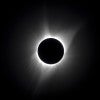
As the moon completely eclipsed the sun April 8, more than 300 Rice University alumni, faculty and staff gathered on the lawn of the Flying L Ranch Resort in Bandera, Texas, to view the last total solar eclipse in the contiguous United States for the next two decades.
Rice physicists have discovered a phase-changing quantum material — and a method for finding more like it — that could potentially be used to create flashlike memory capable of storing quantum bits of information, or qubits, even when a quantum computer is powered down.
A team of researchers from Rice University and the University of Illinois Urbana-Champaign has shown that molecules can be as formidable at scrambling quantum information as black holes by combining mathematical tools from black hole physics and chemical physics and testing their theory in chemical reactions.
Mark Torres, assistant professor of Earth, environmental and planetary sciences at Rice University, has won a National Science Foundation (NSF) CAREER Award to unlock new insights in river water chemistry, including its implications for addressing environmental concerns.
A team of Rice researchers led by Angel Martí, professor and chair of chemistry and professor of bioengineering, materials science and nanoengineering, was awarded a $1.875 million grant by the National Institutes of Health to support its groundbreaking research in biological fibrillar nanostructures with potential implications for the treatment and diagnosis of diseases including Alzheimer’s and Parkinson’s.
Rice University’s Emerging Scholars Program (RESP) has received a five-year, $2.5 million grant from the National Science Foundation. The funding aims to bolster achievements in science, technology, engineering and mathematics (STEM) among students from under-resourced families and communities.
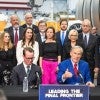
Gov. Greg Abbott on Tuesday announced the inaugural members of the Texas Space Commission and the Texas Aerospace Research and Space Economy Consortium, including Rice Space Institute Director David Alexander, at an event held at NASA’s Johnson Space Center in Houston.
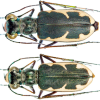
Rice University evolutionary biologist Scott Egan and his research team have unearthed a new species of tiger beetle, deemed Eunota houstoniana, honoring the region of Houston, where it predominantly resides.
George W.S. Abbey, senior fellow in space policy at Rice University’s Baker Institute for Public Policy and former director of NASA’s Johnson Space Center, passed away this week after an illness. He was 91.
Nationally recognized solar eclipse and solar power experts from Rice University are available to discuss the April 8 eclipse, which will be the last total solar eclipse in the U.S. for 20 years.
Rice University honored chemist James Tour with a reception March 21 at the Ralph S. O’Connor Building for Engineering and Science for being named to the National Academy of Engineering, one of the highest professional distinctions accorded in recognition of distinguished contributions to the field.
Rice has created the new Synthesis X Center to bring together clinicians treating cancer and researchers looking for cures to help spur drug discovery make precision adjustments to drug properties and translate fundamental research discoveries into clinical applications.
A team of physicists at Rice University led by Wei Li has been awarded a five-year, $15.5 million grant from the U.S. Department of Energy (DOE) Office of Nuclear Physics, marking a significant leap forward in the realm of high-energy nuclear physics.
In a significant stride toward advancing space exploration and fostering global partnerships, Rice University welcomed Philippe Baptiste, president and CEO of France’s National Center for Space Studies (CNES), for a visit March 18.