In order to deepen and broaden the partnership between Rice University and the Indian Institute of Technology Kanpur (IITK), Rice Global recently welcomed a delegation from the institute to the university for a day-long meeting.
Rice U. bioengineers developed a platform that enhances survival and function of probiotics engineered to diagnose inflammatory bowel disease in animals. The technology holds promise for minimally invasive disease monitoring and advanced smart therapeutics.
Rice University and the Indian Institute of Technology Kanpur have taken an important next step in their strategic research and education partnership with the announcement of the first recipients of the Rice-IITK Strategic Collaboration Award program.
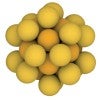
Rice chemists have discovered that tiny gold “seed” particles, a key ingredient in one of the most common nanoparticle recipes, are one and the same as gold buckyballs, 32-atom spheres that are cousins of the Nobel Prize-winning carbon buckyballs discovered at Rice in 1985.
Rice bioengineer Caleb Bashor and colleagues have developed a generalizable method to address “off-target” gene activation, a significant problem in the field of synthetic biology. Taking a cue from nature, the researchers showed they could all but eliminate the activation of off-target genes by designing weak transcription factors that cooperatively assemble.
The Rice360 Institute for Global Health Technologies has validated the accuracy of its latest testing technology for newborn jaundice. BiliDx addresses a critical gap in the availability of accurate, affordable, point-of-care jaundice testing in low-resource hospitals.
A $6.25 million National Institutes of Health grant supports Rice U. engineers optimizing a neural probe array that can record the activity of spinal cord neurons as bodies move and behave. Scientists would also develop an integrated data-processing and stimulation-feedback system.
Rice University scientists have found that a boron nitride nanocomposite interacts with light and heat in unexpected ways that could be useful for advanced technology applications.
Las Vegas; Miami; Louisville, Kentucky; Orlando, Florida; and Grand Rapids, Michigan top the list of cities at greatest risk of losing jobs to artificial intelligence (AI), according to a report from the Chamber of Commerce, a business research company.
Rice University experts are available to comment on a new report from the Chamber of Commerce predicting that Houston stands to lose as many as 12% of jobs due to AI by 2027.
Rice University’s Global Medical Innovation program combines engineering, business and clinical training to help students solve real-world medical needs.
A team of Rice University engineers has launched open-source software that constructs and uses personalized computer models of how individual patients move to optimize treatments for neurologic and orthopedic mobility impairments.
Kaiyu Hang, an assistant professor of computer science at Rice University, has won a National Science Foundation CAREER Award to develop robots that can manipulate unfamiliar objects in high-uncertainty situations.
Rice University AI experts Fred Oswald and Moshe Vardi are registered to attend a White House briefing this afternoon and are available to comment on its proceedings and likely challenges and potential outcomes of recent developments in AI industry advancements and regulation.