

Rice’s school of engineering changes its name to reflect excellence in computing
Rice’s school of engineering has officially changed its name to the George R. Brown School of Engineering and Computing.
Rice’s school of engineering changes its name to reflect excellence in computing
Rice’s school of engineering has officially changed its name to the George R. Brown School of Engineering and Computing.

Rice in top 20 of US News ‘Best Colleges’ rankings
Rice is No. 18 in the 2025 U.S. News “Best Colleges” rankings and stands out in the top 10 for both best value and undergraduate teaching programs.

Ken Kennedy Institute’s annual conference informs the future of AI in health innovation
Rice’s Ken Kennedy Institute hosted the third annual AI in Health Conference Sept. 9-12, welcoming over 470 participants to Houston to explore the latest advancements in artificial intelligence.

Rice student team takes top prize in national competition with innovative medical device
A team of Rice engineering students was awarded the top prize in a prestigious national design competition for its innovative medical device for urological care.
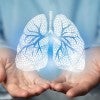
Rice and Baylor College of Medicine have received $2.8 million from the NIH for research on reducing inflammation and lung damage in acute respiratory distress syndrome patients.

Rice360 inaugurates conference on newborn, maternal health care innovation
Rice360 will host the first edition of Innovation for Day One Sept. 25-27.

$7.5M DOD grant backs ‘revolutionary’ multi-university research
Naomi Halas will lead a multi-university research project backed by a prestigious $7.5 million award from the Department of Defense.

Rice research could make weird AI images a thing of the past
Rice computer scientists have developed a way to improve the performance of artificial intelligence diffusion models.

Remembering Robert Maxfield, Rice Owl and Silicon Valley engineering pioneer
His career and contributions to the fields of engineering and technology have left an indelible mark on both Rice and industry.

Rice experts available to discuss mpox global health emergency
Rice University experts are available to discuss the mpox global health emergency as the world grapples with the ongoing outbreak.
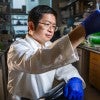
Rice lab develops protein assembly road map for gas vesicles
Rice bioengineers developed a road map for the protein-protein interactions that give rise to gas vesicles, naturally occurring nanobubbles with potential use in biomedical applications.

New Rice research center takes on challenge to break down, replace ‘forever chemicals’
Rice inaugurated a new research center dedicated to ‘forever chemicals’ on Wednesday during a visit to campus by representatives of the United States Army Engineer Research and Development Center.

Interdisciplinary Rice graduate program earns $3M NSF grant
A research traineeship program developed by a team of Rice faculty led by Junichiro Kono has received an award of $3 million over five years from the National Science Foundation to equip a new generation of scientists and engineers with the skills needed to serve as leaders in quantum technology innovation.

Annual Rice event explores AI innovation in health care
Rice’s Ken Kennedy Institute is hosting the third annual AI in Health Conference Sept. 9-12 with themes this year including foundation models in medicine, LLM applications, AI in neuroscience and neurotechnology, digital twins in health care and patient engagement and equity in health AI.
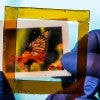
Thermochromic material could make indoor temperature control more energy-efficient
Rice engineers have developed a smart material that could significantly enhance energy efficiency for indoor space cooling. The new thermochromic polymer blend has an estimated lifespan of 60 years and is lower cost than existing thermochromics.