Rice junior Ankhi Banerjee spent 10 weeks over the summer building a data-analysis pipeline to help NASA Johnson Space Center scientists track microbes aboard the International Space Station.
Researchers led by Rice’s Yong Lin Kong have developed a soft but strong metamaterial that can be controlled remotely to rapidly transform its size and shape.
Rice's César A. Uribe is developing computational tools to help scientists better understand ecosystems with recent studies using AI to glean new insights from different kinds of ecological data — from African mammal food webs to tropical forest soundscapes.
The Ken Kennedy Institute at Rice will host the fourth annual AI in Health Conference this month, aiming to forge interdisciplinary, cross-institutional collaborations and showcase innovative AI advancements for health research, medicine and data-driven technology.
Recent research from Rice and Houston Methodist shows how data-driven methods can sharpen doctors’ decisions for patients with aortic regurgitation, a common heart condition where the heart valve doesn’t close properly and blood leaks backward into the heart.
Rice scientists have developed a new drug delivery platform that could make it easier for patients to take their medications and may even boost drug efficacy.
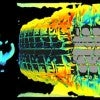
For more than three decades, Tayfun Tezduyar has been developing and refining space-time computational flow analysis, a framework he introduced in 1990 for solving some of the toughest real-world problems in fluid dynamics.
Rice computer scientists have developed algorithms that account for quantum noise that is not just random, but malicious interference from an adversary.
Researchers at Rice and collaborators have developed a wireless network of miniature bioelectric implants that could transform treatment for heart failure, spinal cord injury and other chronic conditions. The system would integrate with patient anatomy easier than conventional medical implants, eliminating the need for batteries and invasive wiring.
Rice scientists have discovered that tiny creases in two-dimensional materials can control electrons’ spin with record precision, opening the path to ultracompact, energy-efficient devices.