

Rice researchers develop new way to quickly recycle electronic waste
Rice’s James Tour recently published an improved method to recover antimony from this electronic waste stream.
Rice researchers develop new way to quickly recycle electronic waste
Rice’s James Tour recently published an improved method to recover antimony from this electronic waste stream.
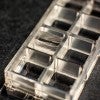
Improved precision microscopy method developed by Rice professor
Rice’s Anna-Karin Gustavsson published a method in Nano Letters expanding the use of light sheet microscopy to include a single objective in commercially available sample chambers.
A softer porous material could help improve solid-state batteries
Rice researchers have developed a relatively soft, flexible material that can selectively transport lithium ions — offering a new approach to porous solid electrolytes that combine efficient ion movement with better mechanical adaptability inside a battery.
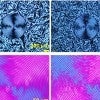
Liquid crystal takes page from steel in surprising phase transition
Rice researchers have shown that an organic semiconductor can transform from a liquid crystal into a solid crystal through a rapid, highly coordinated process resembling a Martensitic transformation.
Researchers develop inexpensive, fast and environmentally friendly method for organic synthesis
Rice’s Julian West has been developing a less expensive, faster and more environmentally friendly way to catalyze carbon bonding to carbon-carbon double bonds with a breakthrough recently published in the journal Nature Catalysis.

New method turns harmful environmental waste into useful synthetic reagent
James Tour’s lab developed a method to capture the fluoride from these waste streams and recycle it into a useful reagent, silver fluoride, that could be used in other manufacturing processes.
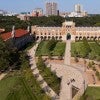
Niche ranks Rice among nation’s best across academics, research and student experience
Rice is once again among the nation’s leading universities, earning the No. 10 spot in Niche’s 2027 Best Colleges in America rankings while placing in the top 10 across 18 academic disciplines and university categories.
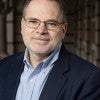
Rice professor advises computational chemistry researchers to prepare for new AI tools
David Sholl, Rice’s executive vice president for research and professor of chemical and biomolecular engineering, recently published an opinion piece in ACS Central Science, where he and co-author Andrew Medford, associate professor of chemical and biomolecular engineering at Georgia Institute of Technology, share their perspective on machine learning tools expected to bring radical changes to the field of computational chemistry.
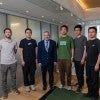
Rice lab develops new technique for rapid production of advanced materials
Rice professor James Tour developed an ultrafast method for producing MXenes.
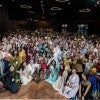
‘Experience like no other’: Rice professor serves as program chair for Lindau Nobel Laureate Meeting
Rice professor Pernilla Wittung Stafshede recently served as a co-organizer of the 75th Lindau Nobel Laureate Meeting, where she co-represented the field of chemistry.

New method opens cheaper pathways to increased drug stability
Hans Renata’s team recently developed a method that significantly reduces the cost of adding thiophosphate to chemical structures, opening up new pathways for drug design.
New CPRIT awards expand Rice cancer research efforts
New funding from CPRIT will help Rice advance cancer research on several fronts, from strengthening a core genetic engineering facility that serves researchers across Texas to supporting new studies in cancer immunotherapy, next-generation radiation therapy and ovarian cancer.

New model helps understand why most human pregnancies are singletons
Rice researchers develop new model of follicle selection that suggests its chance, not size, that selects a follicle during the menstrual cycle.
An internal seed funding initiative will support 12 projects exploring brain health research.

Faculty, staff, students honored for excellence in teaching, mentoring, service
Each year, Rice honors members of its community who have served students through outstanding teaching, dedication and service.