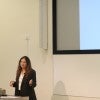
Ahead of the Innovation for Healthcare Access Conference hosted by Rice360, Rebecca Richards-Kortum shares insights on advancing equitable health care solutions across Texas and the United States.
New research from Rice suggests that the giant planet Jupiter reshaped the early solar system in dramatic ways, carving out rings and gaps that ultimately explain one of the longest-standing puzzles in planetary science: why many primitive meteorites formed millions of years after the first solid bodies.
Rice researchers and collaborators developed a computational tool that can help identify which specific types of cells in the body are genetically linked to complex human traits and diseases, including in forms of dementia such as Alzheimer’s and Parkinson’s.
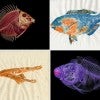
A new display at Rice’s Moody Center for the Arts showcases work led by Kory Evans, assistant professor of biosciences, whose research examines how bony fish adapt, diversify and survive amid a rapidly changing climate.
Peter Rodriguez, the Houston Endowment Dean of the Jones Graduate School of Business and the Virani Undergraduate School of Business at Rice, has been named the 2025 Poets&Quants Dean of the Year, a national honor recognizing visionary leadership and outstanding contributions to business education.
Sonali Korde, the MD Anderson Visiting Fellow at Rice’s Baker Institute for Public Policy, kicked off the Rice360 Institute for Global Health Technologies Seminar Series Oct. 8 with a talk exploring the intersection of global health, foreign policy and humanitarian affairs.
Rice's Rebecca Richards-Kortum has been elected to the National Academy of Medicine (NAM), one of the nation’s highest honors in health and medicine. She is one of two Rice faculty who are the only Texas researchers to share membership across the national academies of medicine, science and engineering — an honor held by fewer than 35 researchers nationwide.
Rice researchers are working with physician scientists at Houston Methodist to develop a soft, wearable “sleep cap” designed to measure and improve deep sleep, a process critical for protecting the brain against dementia and related diseases.
A new interactive tool created at Rice shows that the vast majority of people aren’t relying on FEMA buyout program, which has major implications for resilience.
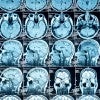
LLMs and the Brain, a symposium featuring researchers from Rice, Baylor College of Medicine, the University of Texas, the Georgia Institute of Technology, the University of Montreal and other institutions explored the intersection between neuroscience and AI. The conversation around brain research extends beyond the university and is unfolding at the state level. On Nov. 4, Texas voters will decide on Proposition 14, which would fund the Dementia Prevention and Research Institute of Texas (DPRIT) with $3 billion over 10 years, creating the largest state-funded dementia research program in the country.
The concert will open with John Adams’ high-octane “Short Ride in a Fast Machine,” followed by Ottorino Respighi’s shimmering “Fontane di Roma” and Johannes Brahms’ deeply expressive Fourth Symphony.