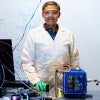
Researchers at Rice have found a new way to improve a key element of thermophotovoltaic systems, which convert heat into electricity via light. Rice engineer Gururaj Naik and his team designed a thermal emitter that can deliver high efficiencies within practical design parameters.
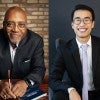
Jonathan Mak, a third-year Doctor of Musical Arts student at Rice’s Shepherd School of Music, recently earned the top prize at the inaugural Sorel-Tracy International Piano Competition in Quebec, winning a $20,000 scholarship.
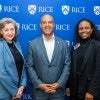
Senior officials from the Cancer Prevention and Research Institute of Texas visited Rice Nov.11 for a firsthand, comprehensive look at the university’s cancer-focused collaborative research initiatives and innovation-driven facilities and labs.
Rice’s Center for Quantum Materials and Smalley-Curl Institute recently held two successive events aimed at advancing the field of quantum materials research.
Rice Emergency Medical Services recognized the 26th annual National Collegiate EMS Week Nov. 11-17 by hosting community education efforts and spirited activities to increase public awareness of collegiate EMS.
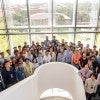
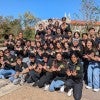
More than 100 students from local community colleges visited Rice’s campus Nov. 8 as part of a transformative pathway program meant to increase STEM degree completion and educational access for Houston-area students from under-resourced and historically excluded communities.
Longtime Houston restaurateur Benjy Levit debuted Local Foods Market at Rice, situated in the newly renovated Brochstein Pavilion, during a soft opening Nov. 19. Its hours of operation will be weekdays from 8 a.m.-6 p.m. and weekends 9 a.m.-5 p.m.
Rice drew more than 400 of the nation’s brightest undergraduate researchers to its campus Nov. 8-10 for the 16th annual Gulf Coast Undergraduate Research Symposium.
Health, religion and public policy experts discussed the challenges of vaccine hesitancy as well as the upcoming Texas legislative session at the 2024 Texas Vaccine Policy Symposium, hosted by the Center for Health and Biosciences at Rice University’s Baker Institute for Public Policy Nov. 15.
The Global Consortium of Entrepreneurship Centers (GCEC), headquartered at the Rice Alliance for Technology and Entrepreneurship in Rice University’s Jones Graduate School of Business, brought leading university entrepreneurship programs together to celebrate creativity and innovation in university-based entrepreneurship education for its annual conference Nov. 14-16. GCEC also announced the top programs in higher education at the event.
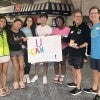
The Rice community joined together at the grassy knoll outside the Memorial Student Center and Brochstein Pavilion to celebrate Rice’s first Southeast Asian and Pacific Islander Night Nov. 8. More than 800 people took in an evening of entertainment, fellowship and food and beverages from local businesses operated by people with SEAPI heritage. The evening was a collaboration between the Rice Vietnamese Student Association, Rice Filipino Student Association and Rice Southeast Asians United at Rice.
Research led by a Rice University political scientist finds that residents living in neighborhoods that hosted at least one block party in prior presidential election years were nearly 2 percentage points more likely to vote in that year’s presidential election compared to those who lived on blocks without such events.
On Nov. 19-20, anyone with unpaid parking citations issued on or before Nov. 15 may pay them off while simultaneously benefitting the Rice community through a donation program.
The In-Space Physical AI Workshop convened top scientists, engineers, entrepreneurs and government leaders to explore the role of AI in space exploration.