
New priming method improves battery life, efficiency
Rice University engineers have developed a readily scalable method to optimize a silicon anode priming method that increases lithium-ion battery performance by 22% to 44%.
New priming method improves battery life, efficiency
Rice University engineers have developed a readily scalable method to optimize a silicon anode priming method that increases lithium-ion battery performance by 22% to 44%.
Strong ultralight material could aid energy storage, carbon capture
Rice U. materials scientists and collaborators at the University of Maryland showed that fine-tuning interlayer interactions in a class of 2D polymers can determine the materials’ loss or retention of desirable mechanical properties in multilayer or bulk form.
Rice flashes new life into lithium-ion anodes
Rice chemists use flash Joule heating to recover graphite anodes from spent lithium-ion batteries.

The global push to convert the world to electric vehicles will cause supply chain complexities that could undermine the alternative energy transition in the United States, according to a new report from Rice University’s Baker Institute for Public Policy.
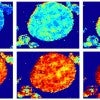
Lithium’s narrow paths limit batteries
Study suggests that lithium batteries would benefit from more porous electrodes with better-aligned particles that don’t limit lithium distribution.

Graphene gets enhanced by flashing
Rice University scientists who developed the flash Joule heating process to make graphene have found a way to produce doped graphene to customize it for applications.

Inaugural class of Rice Innovation Fellows announced
The Provost’s Office and the Liu Idea Lab for Innovation & Entrepreneurship (Lilie) have announced the inaugural class of Rice Innovation Fellows, a program that will provide educational and financial support to the next generation of scientist- and engineer-led spinout ventures.

Rice’s Technology Development Fund backs faculty projects
Nine projects proposed by Rice researchers have been granted seed funding by Creative Ventures' Technology Development Fund.
Soft shell makes hard ceramic less likely to shatter
Coating ceramic schwarzites, 3D-printed lattices, with a thin polymer helps keep them from shattering under pressure.
Absorbent aerogels show some muscle
A simple chemical process developed at Rice University creates light and highly absorbent aerogels that can take a beating.

Neural nets used to rethink material design
The microscopic structures and properties of materials are intimately linked, and customizing them is a challenge. Rice University engineers are determined to simplify the process through machine learning.

Earth grows fine gems in minutes
Aquamarine, emerald, garnet, zircon and topaz are but a few of the crystalline minerals found mostly in pegmatites, veinlike formations that commonly contain both large crystals and hard-to-find elements like tantalum and niobium. Another common find is lithium, a vital component of electric car batteries.

Fast calculation dials in better batteries
A simpler and more efficient way to predict performance will lead to better batteries, according to Rice University engineers.

Rice lab helps power electric car research
Rice University researchers will contribute to a new project to make better batteries for electric vehicles.

Tale of the tape: Sticky bits make better batteries
Rice University scientists use an industrial laser to turn adhesive tape into a component for safer, anode-free lithium metal batteries.