Rice University has won a Phase I National Science Foundation grant to establish the NSF Center for Adapting Flaws into Features to investigate nanoscale chemical phenomena and optimize the structures and electronic properties of materials.
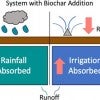
Biochar’s benefits for long-term storage of carbon and nitrogen on American farms are clear, but new research from Rice University shows it can help farmers save money on irrigation as well.
Rice University engineers make 2D materials for valleytronics, a platform for information processing and storage that relies on the manipulation of electrons’ positions in energetic “valleys.”
Researchers at Rice University and Baylor College of Medicine develop an antibody conjugate called BonTarg that delivers drugs to bone tumors and inhibits metastasis.
Rice University chemist Julian West has won a five-year, $1.8 million National Institutes of Health grant to advance his lab’s efforts to simplify the synthesis of organic chemicals.
Rice scientists enhance models that could be used to detect magnetosphere activity on exoplanets. The Rice model adds data from nightside activity that could increase signals by at least an order of magnitude.
The “flash” process developed at Rice University can turn carbon black into functionalized nanodiamond and other materials. The carbon atoms evolved through several phases depending on the length of the flash.
A Department of Energy grant to Rice geoscientists enables development of fiber-optic sensors to find and evaluate small faults at underground carbon dioxide storage reservoirs.