
From a reusable surgical stapler designed for low-resource hospitals to an AI-powered tool that helps mothers detect neonatal jaundice early, student innovators from across the globe gathered at Rice University’s BioScience Research Collaborative to tackle some of the world’s most urgent health challenges.
The 16th annual Rice360 Undergraduate Global Health Technologies Design Competition, held April 24, brought together 22 teams from seven countries to present low-cost, scalable solutions aimed at improving care in resource-limited settings.
“This is some of the most serious work, what we do,” said keynote speaker Dr. Joseph Lubega, an internationally recognized leader in global child health. “I don’t want you to underestimate the impact you are making on the world.”

The competition, hosted by the Rice360 Institute for Global Health Technologies, challenges undergraduate students from any discipline to design technologies that address real-world health needs while accounting for the constraints faced in low- and middle-income settings.
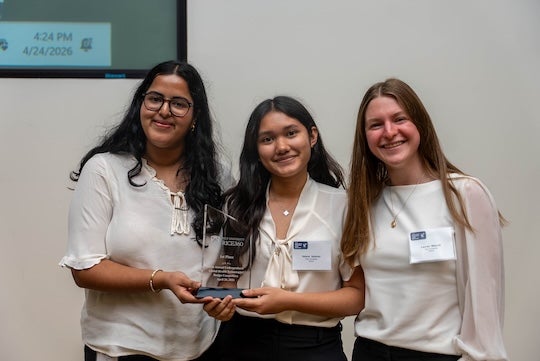
Taking first place was Rice’s AGILE (Accessible Gynecologic Innovation and Learning Equipment), a low-cost uterine training model designed to improve education around endometrial biopsy procedures. The device integrates with an existing cervical cancer training platform and uses locally accessible materials to enable scalable, hands-on learning in clinical settings.
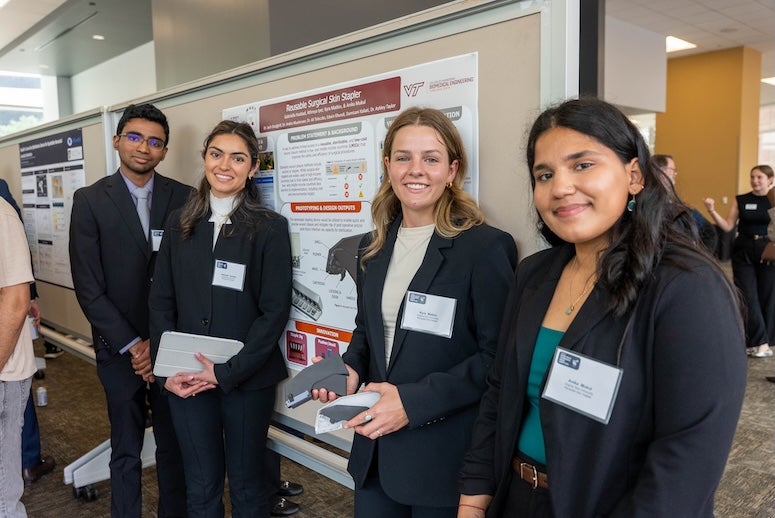
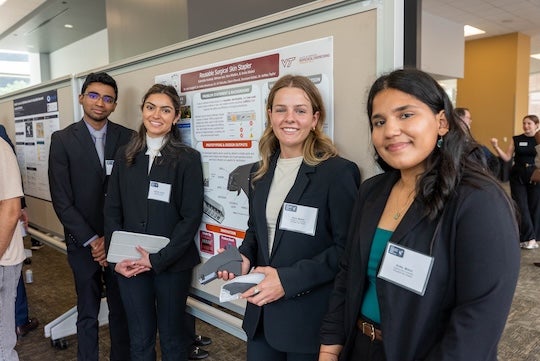
Second place went to a team from Virginia Tech for a reusable surgical skin stapler designed to reduce procedure times and expand access to care.
“Our project came from a clinical adviser who had practiced in Malawi and saw a lack of surgical equipment to close large wounds,” team member Anika Mukul said. “They use sutures, but those tend to prolong operating time and limit how many patients physicians can treat each day. We wanted to create a reusable, sterilizable, low-cost solution that can be manufactured locally.”
The team developed not just a device but an entire ecosystem, including locally producible staples and a reloadable cartridge, aimed at reducing reliance on costly, single-use supplies.
“It’s about elevating visibility of these challenges,” Mukul said. “A lot of our work is based on needs people don’t even realize exist.”
Third place went to AnkleGlide from Bangladesh University of Engineering and Technology for an affordable device that helps prevent dangerous blood clots by restoring circulation in immobilized patients.
Beyond the top three awards, teams were recognized for innovations spanning maternal health, neonatal care and open-source design.
Boston University’s MaternalScreen, which won the Crystal Sea Award, enables single-visit diagnosis of infections during pregnancy without requiring refrigeration — a major barrier in many regions.
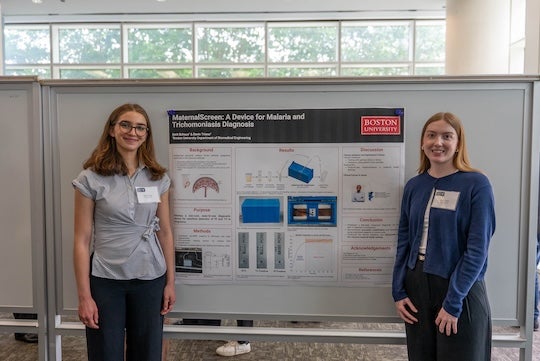
“For me, this project has been something I’ve worked on for almost three years,” team member Berit Schaus said. “The opportunity to present it in a global health context and highlight how it could improve maternal care in resource-limited regions is incredibly meaningful.”
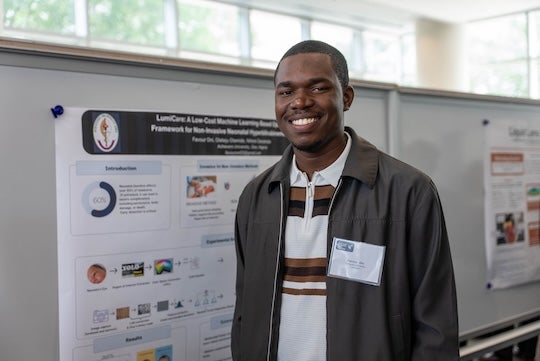
The Diversity, Equity and Inclusion Award went to LumiCare from Achievers University in Nigeria for an AI-powered screening platform that detects neonatal jaundice using images of the eye.
“Many mothers are far from medical centers and need a way to detect jaundice early,” said team leader Favour Oni, who traveled more than 20 hours to attend the competition. “We designed a model that works across different populations and helps guide mothers to care when it’s needed.”
Oni said the competition has helped bring visibility and validation to the project. “It’s been a joy to share this work,” he said. “It shows that this solution has real potential.”
Other winners included a portable retinal screening device from Rice (Retinex), which won the Public Invention Incremental Improvement Award; a low-cost IV automation system developed at Bangladesh University of Engineering and Technology (BioDrip), which won the People’s Choice Award; and the Virginia Tech team’s open-source surgical stapler design, which won the Public Invention Open Source Award.
Rice360 co-director and the Malcolm Gillis University Professor Rebecca Richards-Kortum presented Lubega with the 2026 Rice360 Innovation and Leadership Award before he gave his keynote address. During his talk, Lubega emphasized that global health innovation must be grounded in a deep understanding of inequality.
“So much is said about disparities in health in the U.S.,” he said. “But the greatest disparities are in the poorest countries in the world.”
Drawing on his experience working across Africa, Lubega highlighted how disease, poverty and access to care are deeply interconnected, and how thoughtful innovation can help break that cycle.
“If we can solve even part of the disease burden and help end that cycle, we should do it,” he said.
He also encouraged students to design with long-term sustainability in mind.
“When you succeed in global work, you have to learn to let go,” Lubega said. “If you don’t, you create dependence.”
Through mentorship, rapid-fire presentations and feedback from judges across medicine, engineering and public health, the competition provides students with both technical and real-world experience. Teams are evaluated on problem definition, design effectiveness and feasibility with a focus on solutions that can be implemented in the environments where they are needed most.
As the competition continues to grow, organizers say its mission remains clear: empowering students to develop practical, scalable innovations that improve health outcomes worldwide.