Ethics is rarely the first thing built into a rocket. Yet as space increasingly becomes the domain of commercial contracts, national rivalries and questions about who owns what beyond Earth, a new Rice University initiative argues those questions deserve their own infrastructure, not a footnote in someone else’s research agenda.
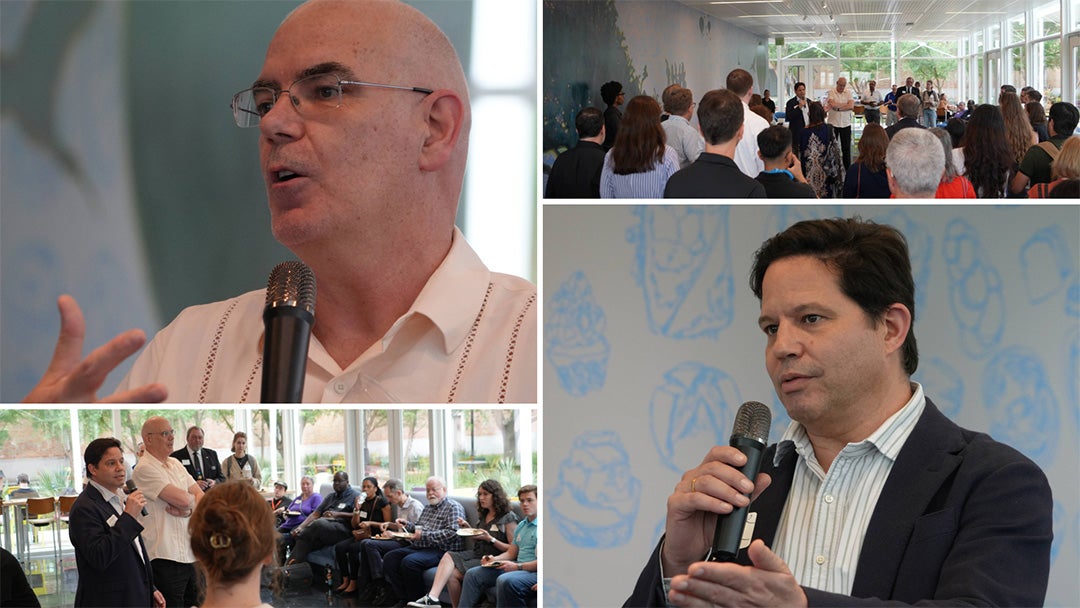
The Space Humanities Initiative officially launched May 7 at an event featuring more than 125 registerees. Co-led by Alexander Regier, the William Faulkner Professor of English and chair of the Department of English and Creative Writing, and David Alexander, director of the Rice Space Institute and professor of physics and astronomy, the initiative brings scholars across disciplines together to examine how culture, language, ethics and imagination shape space exploration, and how space exploration shapes them in return.
The initiative recently received seed funding from the Office of Research to support unconventional, early stage projects with the potential to grow into large-scale external grant proposals. Regier and Alexander’s long-term aim is to establish a permanent Center for Space Humanities at Rice, building on the university’s historical ties to space exploration, including President John F. Kennedy’s 1962 “We choose to go to the moon” speech delivered on campus.
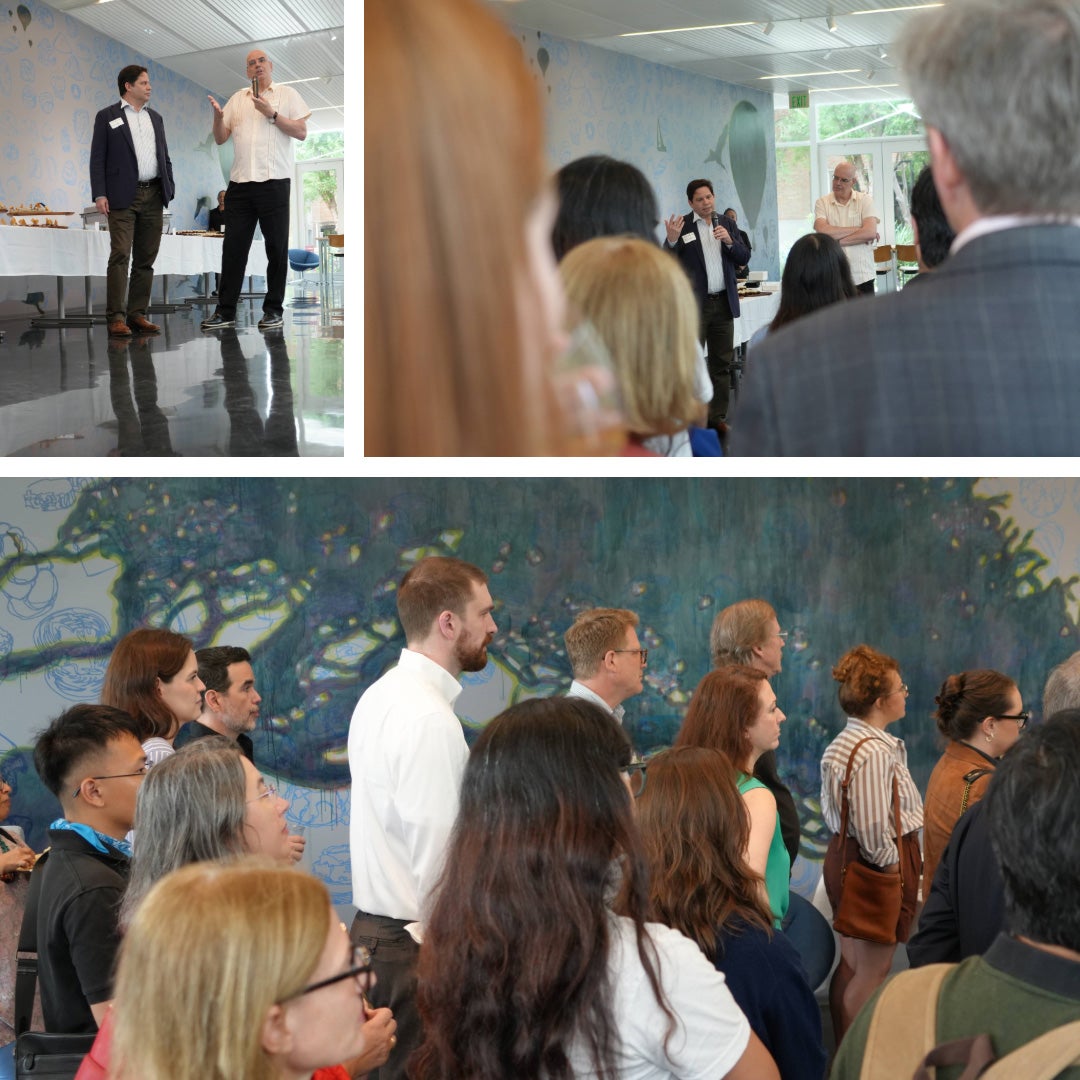
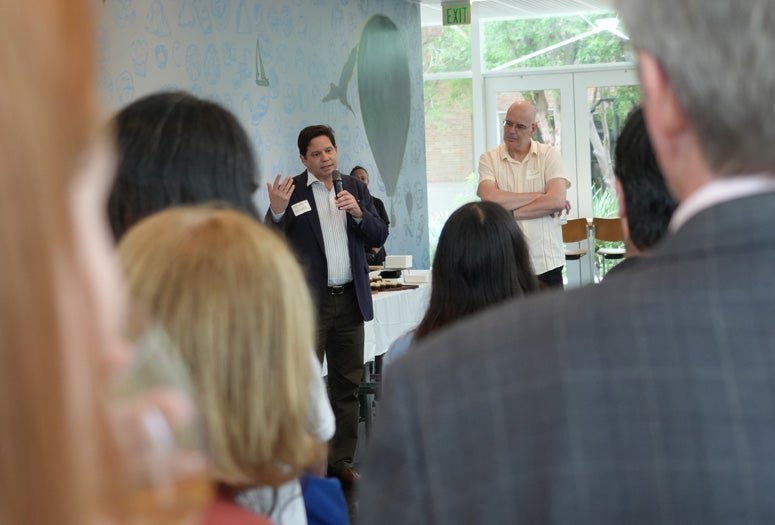
“This is for you to tell us what captures imagination,” Alexander said to the crowd at the launch event. “We want you all to be an active part of this. Maybe it is an idea that brings several people together, and once it is together, something new becomes possible.”
Plans include interdisciplinary workshops, visiting scholars, public programs and partnerships with NASA, the Museum of Fine Arts, Houston and Villa Albertine. (Those interested can submit their ideas here.)
“There is a very particular reason we are doing this in Houston,” Regier said. “Rice and this city remain an international community that continues to attract people not only for its history but also for its future and the different versions of thinking through what it means to relate to space.”