
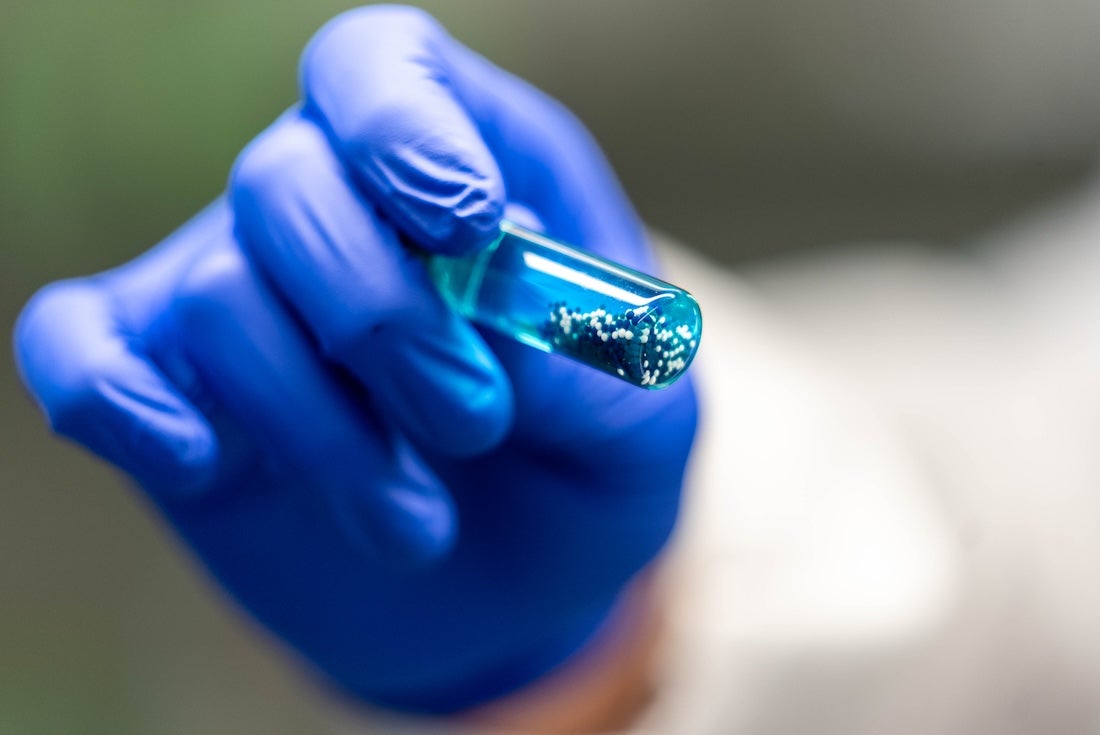
A protein known as interleukin 10 (IL-10) is the lynchpin of a new method to protect transplanted cells from host immune system aggression. Rice University researchers engineered a living factory to produce a localized biochemical halo of IL-10 to suppress immune rejection of pancreatic beta cells.
In a study published in Science Advances, the Rice team and collaborators report that the new approach helped implanted insulin-producing cells keep blood sugar under control in diabetic mice for more than 100 days, nearly five times longer than cells implanted without protection. The findings could enable the development of a cure for Type 1 diabetes (T1D) and improve outcomes for implantable therapies.
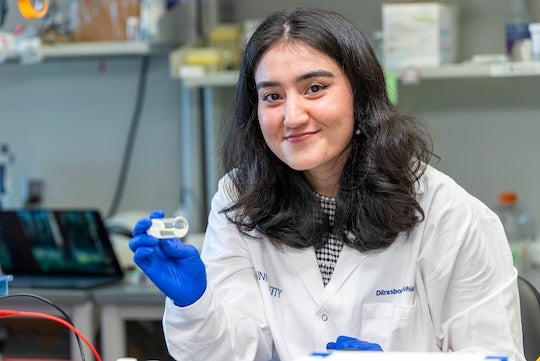
“This work addresses the critical problem of graft rejection without compromising systemic immunity,” said Dilrasbonu Vohidova, a doctoral student in the Department of Bioengineering at Rice who is a co-first author on the study. “It could lead to a scalable and off-the-shelf therapeutic solution to restore natural glucose regulation and transform the quality of life for millions living with T1D.”
Omid Veiseh, a Rice bioengineer who is a corresponding author on the study, said the work “marks an important step forward for cell-based therapies” that builds on prior work from his lab and researchers at the Rice Biotechnology Launch Pad made possible in part with support from Breakthrough T1D, the leading global Type 1 diabetes research and advocacy organization.
The team first tested several different cytokines, proteins that interact with immune cells and help keep them in check. Results from lab cultures and an animal model identified IL-10 as the best at helping control immune response. They next packaged IL-10-producing cells as well as insulin-producing cells inside protective hydrogel capsules and implanted both in diabetic hosts.
Normally, the immune system sees implanted materials as foreign and walls them off with scarlike tissue, a process called fibrosis. Over time, that buildup can suffocate implanted cells and cause treatments to fail. However, the researchers found that IL-10 changed the local immune response around the implant, reducing fibrotic buildup.
“This localized effect is great because systemic immunosuppression — currently a requirement for islet transplantation and other implantable treatments — can increase the risk of infection, cancer and organ failure,” Vohidova said. “For the T1D community, this approach could shift the paradigm from daily insulin management to lasting metabolic freedom.”
The researchers also tested the platform in nonhuman primates, where the implants continued producing IL-10 without signs of harmful effects elsewhere in the body. That result suggests the approach could eventually be suitable for human therapies.
“This study shows we may be able to protect implanted ‘living pharmacies’ by working with the immune system instead of against it,” said Veiseh, professor of bioengineering at Rice, a Cancer Prevention and Research Institute of Texas Scholar and director of the Rice Biotech Launch Pad. “With the support of BT1D, we are pushing this technology further towards clinical trials in the coming years.”
Although the research is still in the preclinical stage, the findings could have implications beyond diabetes. The same strategy may eventually help improve implanted therapies for autoimmune diseases, inflammatory disorders and organ transplantation.
Other first authors on the paper are Boram Kim, a former doctoral student at Rice who is now a postdoctoral researcher at the Massachusetts Institute of Technology, and Amanda Nash, assistant professor of bioengineering at Rice.
The research was supported by Breakthrough T1D (3-SRA-2022-1255-S-B, 3-SRA-2023-1398-S-B, 3-SRA-2024-1564-S-B, 3-SRA-2024-1557-S-B, 3-SRA-2025-1640-S-B), the Advanced Research Projects Agency for Health (1AY1AX000003, 140D042490003) and the National Institutes of Health (R01CA272769). The content in this press release is solely the responsibility of the authors and does not necessarily represent the official views of funding entities.