
The immune system of people with Type 1 diabetes targets and destroys the pancreatic cells that produce insulin, which is needed to regulate blood sugar levels. Transplanting pancreatic islet cells in a way that ensures they can function shielded from immune system attack could transform how the 9.5 million people living with Type 1 diabetes worldwide manage the disease, significantly easing treatment burden and improving quality of life.
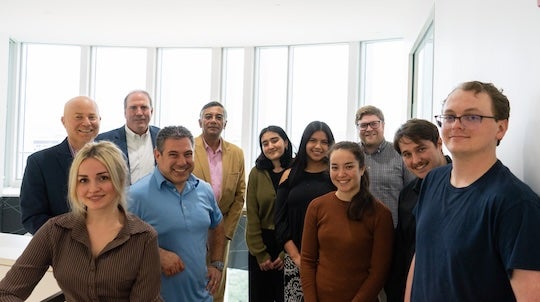
With a new two-year award from Breakthrough T1D, the leading global Type 1 diabetes research and advocacy organization, researchers at the Rice Biotech Launch Pad will refine and test an encapsulation platform designed to protect transplanted pancreatic islet cells and reduce the scarring resulting from immune inflammation, which often causes implants to fail.
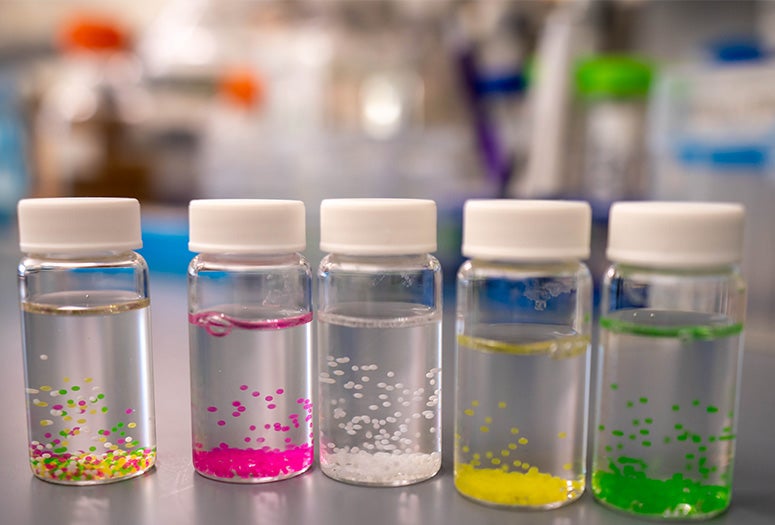
The team, led by Rice University bioengineer Omid Veiseh, is developing small alginate capsules that house islet cells alongside engineered support cells that secrete anti-inflammatory proteins. The capsules are designed to shield the transplant from immune attack while locally calming inflammation and limiting fibrotic buildup.
The project builds on prior work by the Veiseh lab on developing biomaterials that can mitigate the foreign body response locally at the transplant site, thus eliminating the need for systemic immunosuppressant therapy, which comes with unwanted side effects.
Specifically, Veiseh and his team have previously shown that modulating the local immune environment using cells engineered to produce anti-inflammatory proteins is a viable strategy, and the award from Breakthrough T1D will allow the researchers to further test and optimize the approach.
“We want to take our work further and refine our approach based on what we can learn from models that more closely mimic human immune responses and transplantation environments,” said Veiseh, who is a professor of bioengineering at Rice, a Cancer Prevention and Research Institute of Texas Scholar and director of the Rice Biotech Launch Pad. “This is a critical next step if we hope to see this approach translated into an actual treatment. We are grateful for the support from Breakthrough T1D that is making this work possible.”
The work addresses one of the central barriers to durable islet transplantation.
“Providing a cell replacement therapy that is durable and does not require long term, systemic immunosuppression would represent the equivalent to a functional cure for Type 1 diabetes,” said Dr. José Oberholzer, a surgeon-scientist and co-investigator on the project with the University of Illinois Chicago and CellTrans Inc. “With the support of this grant provided by Breakthrough T1D, we hope to get a lot closer in achieving this goal.”