
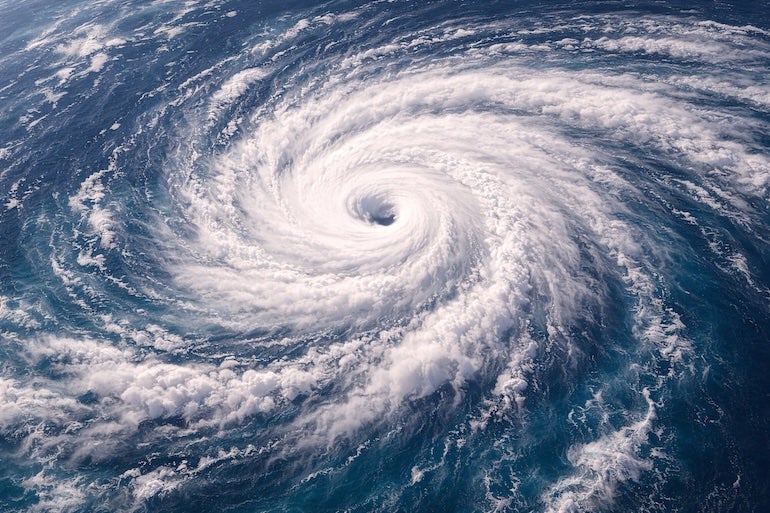

June 1 marked the start of another hurricane season, a time when Gulf Coast residents begin paying closer attention to weather forecasts, evacuation plans and flood risks. But for researchers at Rice University, preparing for the next storm means looking beyond hurricanes alone.
Flooding, extreme heat, aging infrastructure, housing pressures and public health concerns are increasingly interconnected, creating a web of challenges that can make communities more vulnerable and recovery more difficult. Understanding those connections was the focus of the Center for Coastal Futures and Adaptive Resilience’s (CFAR) Spring Workshop on Green Infrastructure and Polycrisis, which brought together researchers from across the country to explore how nature-based solutions can help communities build resilience in the face of overlapping risks.
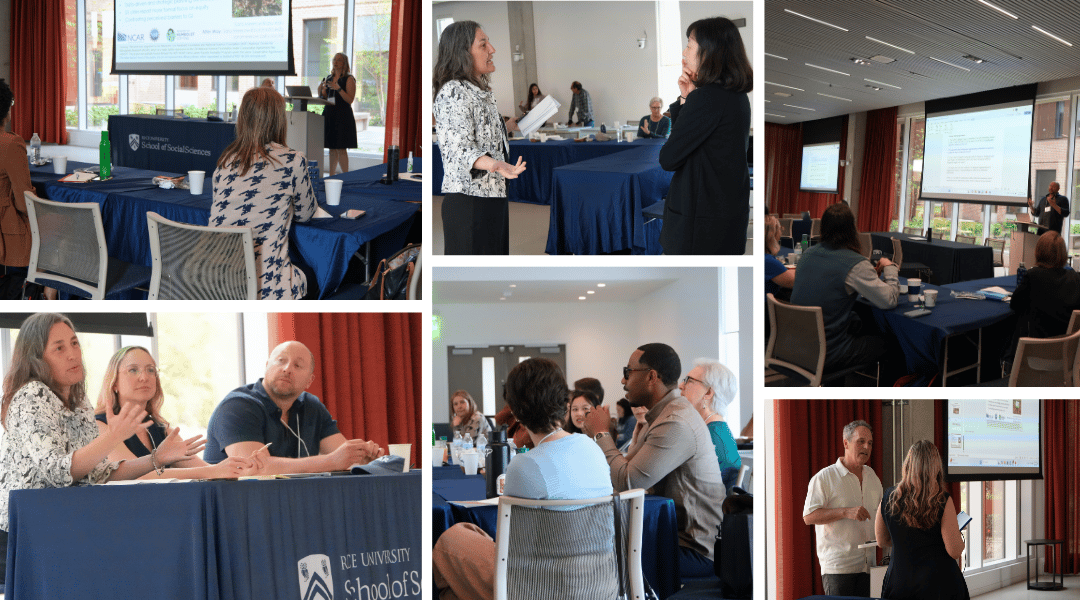
The workshop drew around 60 participants from 14 institutions, including universities, nonprofit organizations and public sector agencies. Organizers designed the workshop as a collaborative working session aimed at generating new ideas and partnerships around some of the most pressing challenges facing coastal communities.
At the center of those discussions was the concept of “polycrisis,” a term researchers use to describe multiple crises that occur simultaneously and interact with one another. A hurricane, for example, does more than test flood control systems. It can expose weaknesses in housing, transportation, public health systems and local economies while disproportionately affecting vulnerable populations.
For communities along the Gulf Coast, those risks are becoming increasingly familiar.
“Polycrisis describes a situation where multiple crises are happening at once and amplifying one another in ways that make them harder to solve,” said Dominic Boyer, professor of anthropology and CFAR co-director.
Unlike traditional infrastructure projects that often address a single challenge, green infrastructure can deliver multiple benefits at once. Examples include wetlands that absorb floodwaters while filtering pollutants, urban tree canopies that cool streets and clean the air, green spaces that support public health while creating shared community spaces and stormwater systems that manage runoff while working with the natural landscape.
“The beauty of green infrastructure is that it is usually less capital intensive and expensive than conventional gray infrastructure,” Boyer said. “This means that green infrastructure is often faster to design and deploy and more open to community engagement. Green infrastructure can’t solve the polycrisis on its own, but it is impressively multifunctional, so it can help address issues like flooding and heat islanding while also enhancing biodiversity and supporting a wide range of community amenities at the same time.”
The workshop brought together scholars working in fields ranging from environmental studies and sociology to urban planning, architecture and engineering. Participants explored how communities can better integrate natural systems into future resilience strategies while balancing environmental, economic and social priorities.
Those conversations are continuing well beyond the workshop itself. Organizers say the gathering will serve as the foundation for a collaborative essay project that will bring many of the contributors back together to further develop ideas discussed during the event and identify new directions for research and practice.
“A workshop like this generates a lot of ideas in a short time, but ideas fade quickly if there’s nothing to carry them forward. That’s what the collective essay project is for,” said Yilei Yu, CFAR postdoctoral researcher. “By bringing many of the contributors back together to write, we can take the threads that emerged here and develop them into something more rigorous and lasting.
“My hope is that it leaves behind not just a record of what we discussed but a set of clear directions for the research and practice that should come next.”
The collaborative essay project reflects a growing recognition that resilience challenges cannot be solved within a single discipline. Addressing climate change, infrastructure vulnerability and social inequities requires expertise from across sectors and fields of study.
“This is why it was so important to bring colleagues from across engineering, architecture, planning and the social sciences to the workshop,” said Jim Elliott, the David W. Leebron Professor of Sociology and CFAR co-director. “Doing so, and sitting alongside our community partners, allowed us to co-envision new pathways to resilience from a wide range of expertise. That’s invaluable for solving today’s increasingly complex environmental challenges.”
As hurricane season begins, organizers hope the workshop’s conversations will encourage policymakers, planners and residents to think more broadly about resilience.
“We were thrilled that so many community leaders participated in the workshop,” Boyer said. “Green infrastructure gains more advocates each year in Houston as a promising set of tools that can help communities catalyze positive change. CFAR looks forward to working with those communities to help realize their goals.”
CFAR brings together researchers from across disciplines to study the environmental, social and economic challenges facing coastal communities and identify solutions that support long-term resilience.
Rice experts are available to discuss hurricane preparedness, forecasting, infrastructure resilience and coastal impacts as the 2026 hurricane season gets underway. Read the latest hurricane season expert advisory here.