

Astronaut and alumna Peggy Whitson tapped as Rice’s 2024 commencement speaker
Alumna Peggy Whitson ’86, America’s most experienced astronaut, will deliver the address at Rice’s 111th commencement during the undergraduate ceremony May 4.
Astronaut and alumna Peggy Whitson tapped as Rice’s 2024 commencement speaker
Alumna Peggy Whitson ’86, America’s most experienced astronaut, will deliver the address at Rice’s 111th commencement during the undergraduate ceremony May 4.

Faster and simpler point-of-care malaria test developed by Rice researchers
Rice University researchers have developed a rapid, accurate test for diagnosing malaria that is significantly faster and easier to use than traditional tests. The advancement has the potential to improve patient outcomes, especially in rural regions with limited health care resources.

Miguel Harth-Bedoya to lead Rice Shepherd School symphony, chamber orchestras March 2-3
Miguel Harth-Bedoya, music director laureate of the Fort Worth Symphony Orchestra and director of orchestral studies at Baylor University, will lead the Rice Shepherd School of Music symphony and chamber orchestras March 2 and 3, respectively.

Energy and computing collide at annual Rice event
The 17th annual Energy High Performance Computing Conference hosted by Rice University’s Ken Kennedy Institute March 5-7 is the premier meeting place for the energy industry to engage in conversations about challenges and opportunities in high performance computing (HPC), computational science and engineering, machine learning and data science.

Data-processing tool could enable better early stage cancer detection
A team of Rice researchers has developed a tool that is better at integrating single-cell DNA and RNA data than more recent, state-of-the-art technologies. The findings could lead to better early stage cancer detection.

In September 2023, Secretary of Education Miguel Cardona issued a warning call stating “Public schools are approaching a ‘make or break moment.’” This week, several North Texas schools announced potential school closures and staff position eliminations. Nationally, public schools lost over 1.2 million students to private and charter schools over the first two school years of the COVID-19 pandemic with Texas witnessing a 2.2% decline.

Rice’s Office of Innovation awards inaugural One Small Step Grants
The Office of Innovation at Rice announced four awardees of the inaugural One Small Step Grants, marking a significant milestone in accelerating the transition from lab to market for Rice-developed technologies. Launched in September 2023 the grant aims to support lab-stage projects across Rice, providing crucial capital for projects to spin out of the university and successfully attract investment from angel investors and venture capital.

According to new research from Rice University and the University of Nebraska at Omaha, conservative-leaning job applicants indicate being less likely to pursue positions that require personal statements on diversity, equity and inclusion (DEI), and those negative reactions are not independent of anti-Black racism.

To address nursing staff shortages, OpenStax, a nonprofit educational initiative of Rice University, in partnership with the Texas Higher Education Coordinating Board (THECB), is creating the first Open Nursing Education (ONE) Summit. The two organizations are building upon their shared goal of addressing staffing shortages by reducing financial barriers for nursing students while facilitating discourse around important issues faced by the field.

Rice to host groundbreaking for new visual arts building Sarofim Hall
Rice University will host a groundbreaking ceremony for the Susan and Fayez Sarofim Hall, a new home for the Department of Art, at 3 p.m. Feb. 29. The building will be named for Susan and Fayez Sarofim, the lead donors for the project.

Rice joins federal consortium on AI safety
Rice has joined the nation’s leading artificial intelligence stakeholders to participate in a Department of Commerce initiative to support the development and deployment of trustworthy and safe AI.

Houston-based organizations join forces for inaugural Houston Energy and Climate Startup Week 2024
Greentown Labs, Halliburton Labs and the Rice Alliance for Technology and Entrepreneurship are joining forces to launch the inaugural Houston Energy and Climate Startup Week 2024.
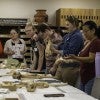
Old bones come alive at Rice archaeology workshop
Old bones from long-dead animals came alive at the Zooarcheology and Osteology Academy, a hands-on archaeology workshop held Feb. 10-11 at Rice University — just days before World Anthropology Day Feb. 15.

Condoleezza Rice to speak at Rice Feb. 15, event available on livestream
Former Secretary of State Condoleezza Rice will speak with David Satterfield, U.S. special envoy for Middle East humanitarian issues and director of Rice University’s Baker Institute for Public Policy, on Rice’s campus Feb. 15 about leadership in the U.S. and the world.

Taylor Swift and Travis Kelce are all anyone is talking about heading into Super Bowl weekend, but how is the pop superstar affecting the National Football League ’s bottom line as legions of ‘Swifties’ become football fans?