
By the time Steve Jobs unveiled the iPad in January 2010, the idea behind it was 38 years old. For nearly all of that time, the tablet computer was a failure that people refused to stop building.
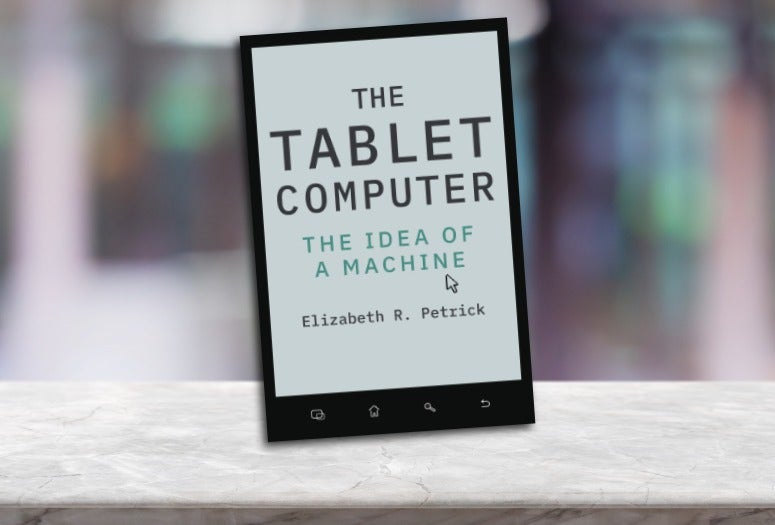
Elizabeth Petrick, an associate professor of history at Rice University, wanted to know why. In “The Tablet Computer: The Idea of a Machine,” she follows the device from computer scientist Alan Kay’s 1972 Dynabook, an envisioned book-sized, networked computer imagined for children, through generations of prototypes and false starts.
Even Apple had been circling the idea for a long time. According to Petrick’s research, the company had a proposal for a tabletlike project called the Magic Slate in the mid-1980s, and it quietly trademarked the name around the time the iPad launched.
“The tablet became an ideal of future computing,” Petrick said. “Something flat, hand-held and always connected to a global network was the thing to strive for. When we have that, we’ve hit the future.”
The hardware lagged far behind the vision. Tablets that reached the market in the late 1980s and 1990s couldn’t do much, Petrick said, and before Wi-Fi, even a networked tablet had to be plugged into a wall.
“The companies building tablets weren’t building them for children’s education,” Petrick said. “They were building them for C-suite executives, and the tablet became more of a status symbol. Consumers just weren’t interested, and no one thought it would become something everyone owns. Yet only 20 years later, nearly everyone does.”
Petrick doesn’t credit any single breakthrough for the turnaround. The app store model, which Apple launched for the iPhone in 2008 and Android soon matched, opened mobile devices to outside developers. Wi-Fi spread, processors caught up and the tablet settled in as the smartphone’s bigger-screen sibling. In 2025, manufacturers shipped 151.9 million tablets worldwide, according to market research firm IDC.
“Everyone seems to use tablets for different things,” Petrick said. “There’s something genuinely convenient about a computer that is flat, hand-held, touch-driven and networked. It seems good for whatever you can imagine, even if it doesn’t excel at anything.”

For Petrick, though, the more revealing story lies in the decades before the iPad. Money drove some of those efforts, she said, but the tablet also had a long hold on the imagination, turning up in science fiction of the 1950s and 1960s, including the original “Star Trek.”
“There’s a nonstop failure story running through the book,” Petrick said. “Startups with a lot of money behind them came close to releasing a successful tablet and then failed entirely. And yet people kept trying. That’s what I found so interesting: Some people wanted this technology to exist, and they worked at it over and over again.”
Artificial intelligence has traveled a long road of its own. Researchers have pursued it since the 1950s through decades of bold predictions and stalled projects, and today it’s built into phones, search engines and office software. Is AI this era’s tablet?
“There are definitely aspects of AI that are like that,” Petrick said. “AI has always been one of those technologies that’s perpetually in the future.”
Her tablet research turned up a case in point in 1990s records from several tablet makers, including Apple.
“They were all talking about AI,” Petrick said. “They all wanted AI to be part of the tablet’s interface, and none of them really pulled it off. That drove me into a new project asking why so many companies in the ’90s wanted to build AI, particularly AI agents, into their interfaces.”
The project has become Petrick’s next book idea. If the tablet is any guide, the failures will tell her as much as the successes.