
In jails and prisons across the country, punishment can arrive on a tray.
Corrections systems serve Nutraloaf, a loaf that is ostensibly nutritionally complete and deliberately unpalatable, to incarcerated people in solitary confinement or to those they consider to be misbehaving. Chin Jou, associate professor of history at Rice University, first read about it in late 2015 in a New York Times story on New York’s ban on using the loaf as discipline.

“I had never heard of Nutraloaf before, and as a food studies researcher, I wanted to learn more about the idea of food as punishment,” Jou said.
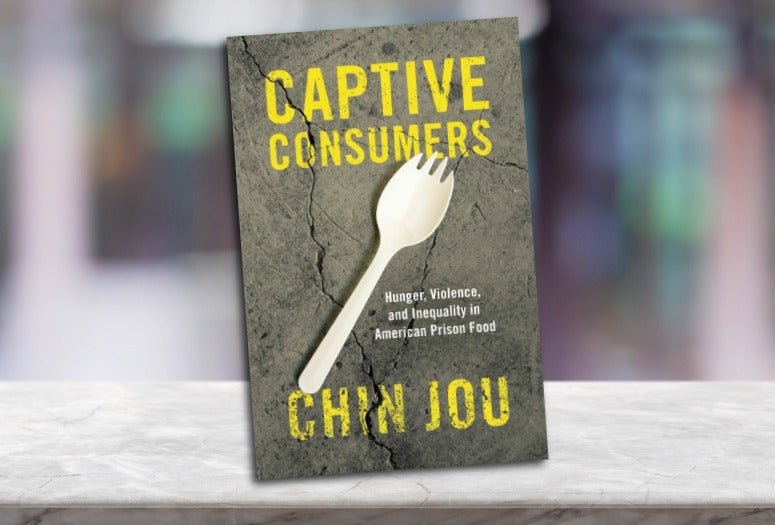
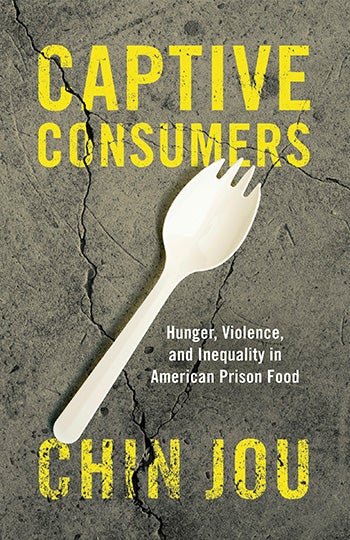
Her curiosity grew into a decade of research and her new book “Captive Consumers: Hunger, Violence and Inequality in American Prison Food.” Drawing on historical records, prison newspapers, state audits and accounts by incarcerated people, the book shows how food has become a tool of punishment and source of profit and inequality behind bars.
The project extends a question that runs through Jou’s career: the historical development of public policies that affect what people eat and who bears the cost. Her first book “Supersizing Urban America: How Inner Cities Got Fast Food With Government Help” traced how government programs since the 1960s helped fast-food chains spread through urban neighborhoods.
Inside prisons, Jou found a food economy that can work against the people it purports to serve. Many states and localities pay private companies to provide meals in their jails and prisons. Commissaries, where incarcerated people buy items like ramen noodles, potato chips, beef sticks and honey buns, can be run by the same contractors.
“It is astonishing that the same companies that are responsible for providing regular jail and prison meals can also sell food to incarcerated people,” Jou said.
When one company holds both contracts, Jou said, many have pointed out that it stands to gain from leaving people hungry and needing to buy food from prison commissaries. She noted the arrangement is a conflict of interest that states and localities should prohibit when awarding contracts.
According to Jou’s research, incarcerated people commonly report chronic hunger, foodborne illness and meals that are rotten, infested with maggots or procured from questionable sources, including boxes labeled “not for human consumption.” Her research follows those conditions to consequences that have drawn far less attention.
“There is the violence of chronic hunger, the violence that can erupt between incarcerated people when some have the means to supplement regular rations with commissary items while others do not and the violence of jail and prison uprisings throughout U.S. history that have been linked to inadequate food,” Jou said.
The burden also falls unevenly. Religious minorities and people with medical conditions often cannot obtain the diets their faith or health requires, which Jou said adds another layer of punishment, one that some people carry and others do not.
The costs reach people who have never been incarcerated.
“People with loved ones behind bars are also subsidizing the U.S. carceral state by sending money to their incarcerated loved ones, so they can have enough to eat,” Jou said.
Privatization carries its own toll, according to Jou’s work. Public sector food service workers, local farmers and suppliers can lose their livelihoods when private companies arrive with their own labor and sourcing arrangements. Some states have reported being overbilled by those companies, meaning that taxpayers are paying more than they should for prison food services.
“We also have to contend with the consequences of people traumatized by their incarceration — and poor food and hunger are part of that — re-entering society,” Jou said.