
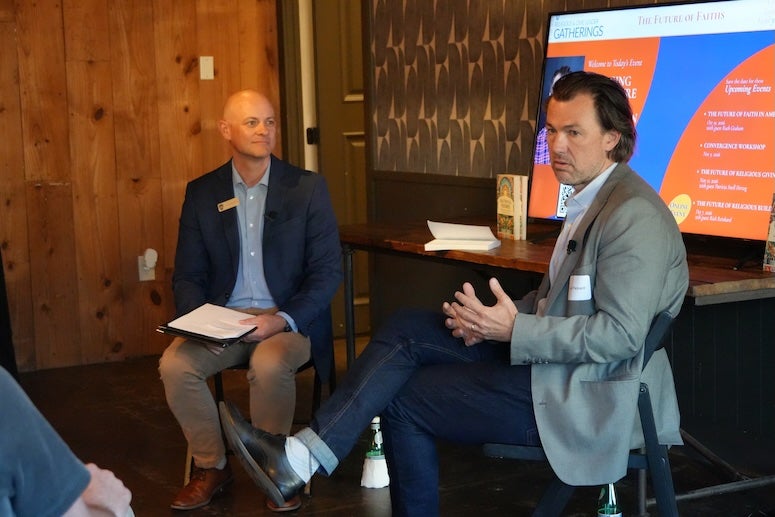
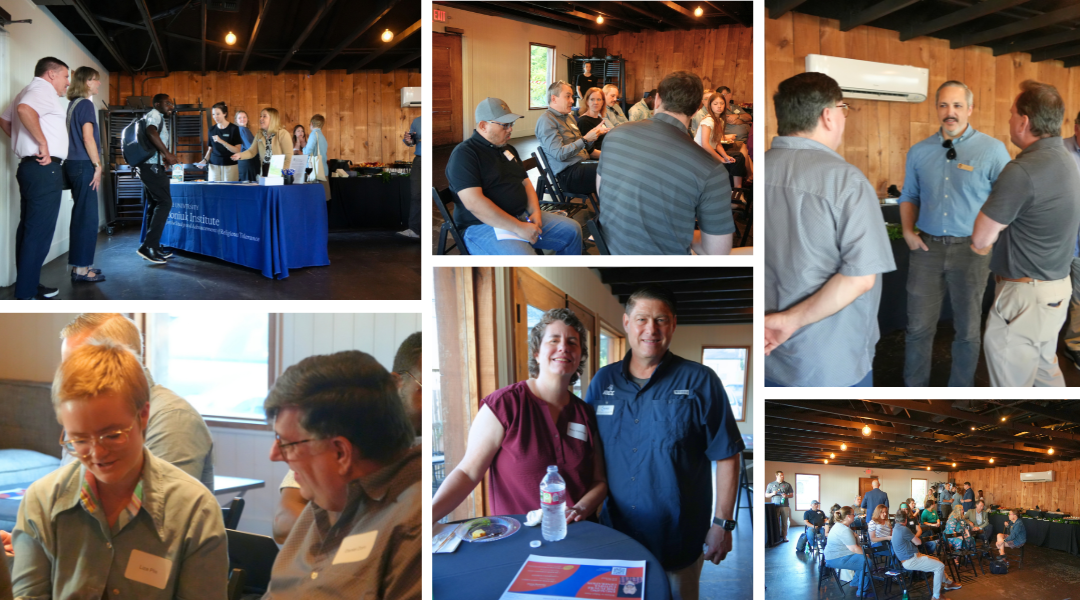
A crowd of Houston-area religious and civic leaders gathered at Assembly HTX to consider a question that reaches across congregations and faith traditions: What does the future of faith look like?
It is a question many of them are already confronting as they navigate changing attitudes toward religious institutions, new ways of finding community and belonging and questions about what religious life will look like for generations to come.
“Religious leaders are experiencing a lot of change right now,” said Todd Ferguson, director of the Religion and Public Life Center at Rice University’s Boniuk Institute for the Study and Advancement of Religious Tolerance. “We wanted to give a series of talks where they could learn about the changes they’re already experiencing.”
That idea is behind “The Future of Faiths,” the theme of this fall’s Religious and Civic Leader Gatherings. Hosted by the Religion and Public Life Center, the series connects Houston-area leaders with researchers and practitioners whose work can help them understand changes affecting the communities they serve.
“We don’t want to keep research in the ivory tower,” Ferguson said. “Our motto is building common ground for the common good. And we can’t do that unless we’re talking with leaders.”
The first conversation began with the next generation.
Sociologist Josh Packard, co-founder of “The Future of Faiths,” challenged leaders to look beyond familiar generational labels and instead consider the experiences and social forces shaping young people’s lives.
One of the biggest challenges, Packard said, is a shift in trust.
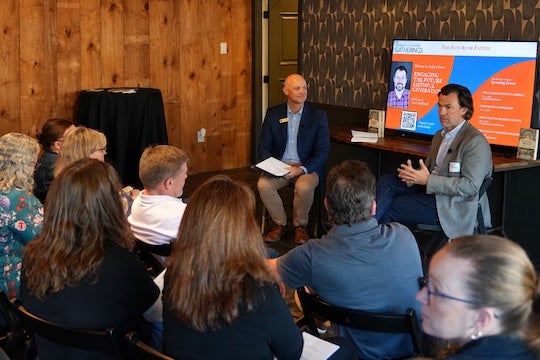
He illustrated the difference through a conversation with his father, who told him that growing up Catholic, he would have trusted “the priest.” Packard assumed his father meant a particular priest. He didn’t. His father meant whoever held the position.
“That’s a high-trust world,” Packard said. “We trusted institutions. We thought they had our best interests in mind.”
Today, Packard said, trust works differently.
“Trust is really just moved,” he said. “It has moved from institutions down to relationships.”
The shift has implications for religious communities trying to engage younger people. Religious leaders are no longer the only source of information about faith, Packard said. Young people can seek answers online and increasingly through artificial intelligence.
For leaders accustomed to more traditional approaches, Packard offered a simple way to think about the difference.
“A low-trust tool looks less like a sermon and more like coffee,” he said.
That emphasis on relationships runs through what Packard calls “sacred listening,” an approach rooted in research showing the importance of young people feeling heard by adults.
He recalled a teenager telling him, “I don’t really know what I believe until I say it out loud.”
Packard put that idea into practice during the gathering, asking participants to find a photo on their phones that represented “belonging” and share it with someone else in the room. The exercise opened a conversation about whether belonging might sometimes come before believing and the role relationships can play in sustaining faith through life’s transitions.
The discussion about younger generations is only the beginning.
Upcoming gatherings will explore the future of religion in America with The New York Times religion correspondent Ruth Graham, the future of religious giving with Patricia Snell Herzog and the future of religious buildings with Rick Reinhard.
The topics approach the future of religious life from different directions, including how communities may change, sustain themselves and use the physical spaces they occupy.
For example, Ferguson said the discussion about religious buildings will consider what happens when congregations shrink but their buildings remain the same size, including whether those spaces could serve other community needs such as housing or medical clinics.
The series also intentionally takes a broad view of faith.
“We want to think about the future of faiths as broadly as possible,” Ferguson said. “We want to talk with leaders and scholars from different religious traditions or no religious tradition, because religion still impacts the world.”
For Ferguson, bringing those voices together is central to the Boniuk Institute’s mission of advancing religious tolerance and helping people navigate differences.
“We want to live in a world where we might not agree but we can live peacefully together,” he said. “We conduct research on tolerance and pluralism. We talk with leaders. We get leaders to connect across interfaith lines so that we can make Houston and our world a better place.”
The series’ conversations ahead will tackle different pieces of religious life, but they begin from the same premise: The future of faith is not a distant question. For the leaders gathered in Houston, many of those changes are already here.