
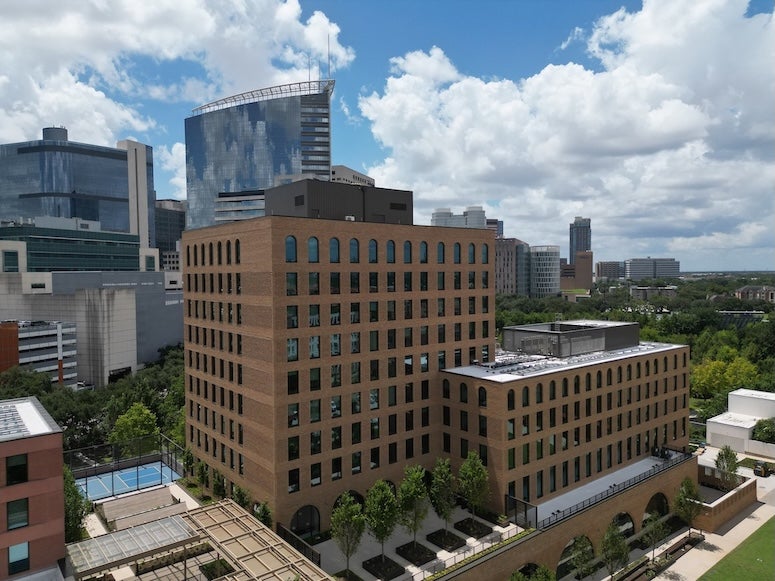
When Rice University’s newest residential college opened its doors this week, its first students didn’t simply move into a new building. They’re helping create a community — and an identity — that will shape the college for generations.
Ting Tsung and Wei Fong Chao College, known as Chao College, is Rice’s 12th residential college, made possible by a generous gift from the Chao family foundation led by Houston business leaders and siblings Dorothy Chao Jenkins, James Chao and Rice trustee emeritus Albert Chao.
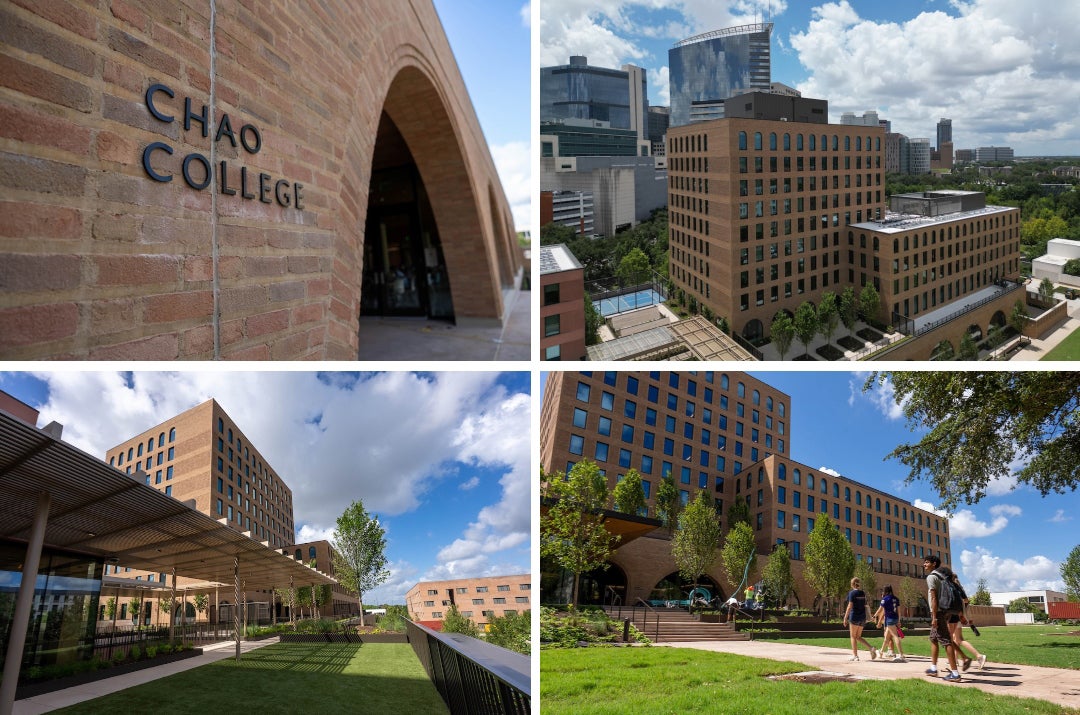
The college will welcome its first members during Orientation Week, culminating in several years of planning, design, construction and community-building. Chao features 10- and five-story towers with nearly 300 on-campus beds and a total community of more than 400 undergraduate students. Built alongside the new Lovett College, the two complexes add 269,000 square feet of modern, sustainable residential space to campus.
But while the building has only recently become a physical reality, the work of creating Chao’s identity began long before students arrived.
The opening is part of Rice’s broader investment in its residential college system, a defining feature of the undergraduate experience since 1957 that serves as the heart of student life in place of a traditional Greek system.
“It’s one of the most important things we’ll ever do,” said Bridget Gorman, dean of undergraduates. “The residential college system is the heart of the undergraduate experience at Rice, and so it’s really important for us as we grow to continue that tradition.”
As Rice expands — the undergraduate population has increased by 25% since 2020 — the university is intentionally preserving the residential experience that distinguishes it from many peer institutions, Gorman said.
“Rather than making the decision that we’re going to get bigger but let the proportion of our population who live on campus decline, that’s not the decision that we’re making,” she said. “We are doubling down on our residential college system.”
Students, faculty and staff involved in Chao’s founding have already created the framework for a distinct community — a crest, color scheme, mascot, floor identities and the beginnings of traditions — while deliberately leaving room for the first residents to decide what Chao ultimately becomes.
“Starting a new college is nothing short of a magical experience in the sense that this wonderful structure is a beautiful building, but a building is not a community, and it’s not a college,” said Luis Duno-Gottberg, the Lee Jamail Professor of Latin American Studies and Chao’s founding magister.
“They are giving us a building, and we’re going to very shortly give them a community and a college, which is something that is alive, living, changing.”
Rice magisters are tenured faculty members who live in the residential colleges with their families, helping guide student life, self-governance and mentorship.
One home, many paths
At the center of Chao’s emerging identity is its crest, which brings together elements representing the college’s place within Rice and its connections to the Chao family.
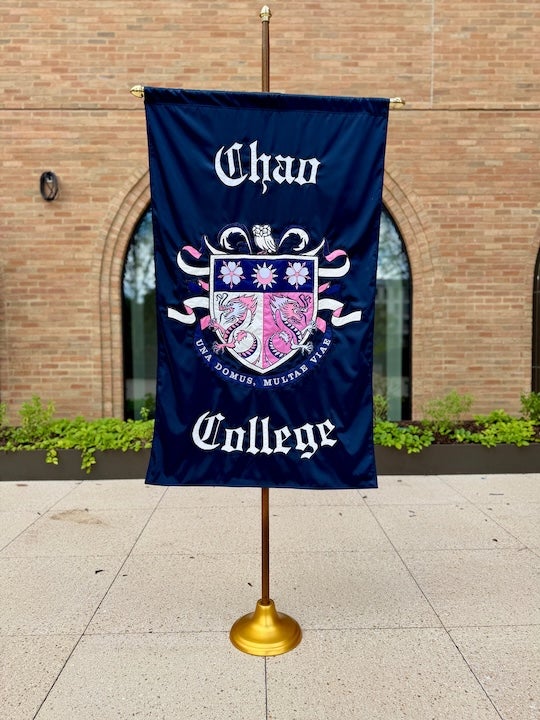
Its motto, una domus, multae viae — “one home, many paths” — reflects the idea that students can arrive at Chao from different backgrounds and pursue different paths while sharing a common home.
“We all come from different places but live under the same roof, under the same community,” Duno-Gottberg said.
The crest features two dragons, each with five claws, a reference to traditional Chinese symbolism of nobility. It also incorporates the sun and moon, a nod to Chao being Rice’s 12th residential college — representing noon and midnight — along with azaleas reflecting the building’s connection to nature and the Rice campus.
Chao’s official colors are pink, ivory and navy blue. Pink and ivory serve as the primary colors, while navy provides a connection to Rice and helps distinguish Chao from its neighbors.
The crest and visual identity were developed with substantial student input. Tamara Jones, Chao’s founding resident associate, co-chaired the founding committee and intentionally brought students from each of Rice’s existing residential colleges into the process.
“We knew we needed all of the existing colleges for that to happen,” Jones said.
That approach reflected the importance of residential college identity at Rice, where students often identify themselves by their college as much as by the university.
“For a lot of Rice students … they will lead with what college they’re a member of rather than ‘I’m a Rice student,’” Jones said.
Gorman said that distinctiveness is part of what makes the system special.
“One of the things I always tell people when they talk about Rice, what makes Rice such a unique experience is the college system because it’s the same and totally different at every college,” she said.
The dragon finds its home
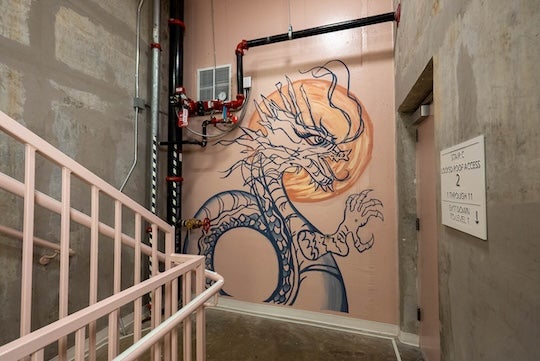
The dragon was not always the obvious choice for Chao’s mascot.
When the founding committee began meeting in January 2025, students considered several possibilities, including a toucan and a seahorse. The toucan initially won a vote because of its colorful, playful nature and symbolism of diversity.
The dragon, however, was already among the finalists when the Chao family became involved. During a dinner with the founding committee, family members shared the cultural significance of the dragon and their enthusiasm for it as Chao’s mascot.
Students voted again, and this time the dragon won.
“It’s such a fun mascot to have,” Jones said. “It’s also different from the other colleges. It’s fierce. You know, you can do a lot designwise with it.”
The Chao family’s involvement has remained an important part of the process without displacing student ownership of the college’s identity.
“The Chao family has just been so warm, so gracious, sharing their backstory and how excited they were to see what would happen with the building — their design ideas, their favorite colors,” Jones said. “The whole experience has been just a joy to work with them, so I’m very thankful to have them as a collaborative partner with this and their generosity for this building.”
A history built into the walls
Some of Chao’s most distinctive features connect the new college to a history that predates the building itself.
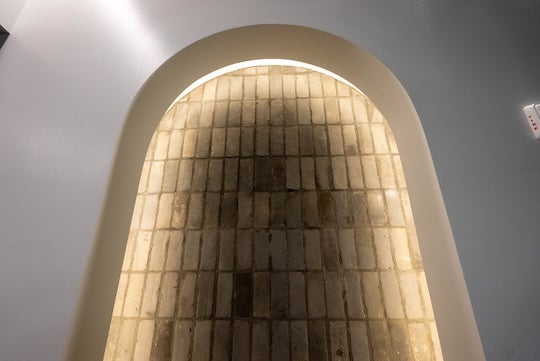
Under five interior arches on the first and second floors of the building are vintage gray bricks salvaged in Shanghai and shipped across the ocean to the United States. The bricks were donated by Frank Liu, a Rice donor, alumnus and friend of the Chao family.
Florence Tang ’09, senior project manager with Facilities, Planning and Capital Construction who earned her master’s degree in architecture at Rice, said the bricks were incorporated into the building after the project team learned of the family’s desire to donate them.
“When you touch them, you’ll feel the difference between what bricks are like today,” Tang said. “What’s special is they were gifted to us by the families, and they crossed the ocean just as many generations ago these families crossed the ocean. Now they’re gifted to us to be part of this heritage and this legacy.”
The building itself was designed with a similar emphasis on connection — to daylight, greenery and the outdoors. Large windows, gardens, trees and views of the grove were intentional elements of the design.
“There are a lot of features with human health — mental health and understanding that having access to daylight, the gardens and the sky and the reflections of the quad and the trees that we planted here,” Tang said. “Those were all very intentional moves, so students would have that sense of peace but also a connection to nature.”
In keeping with Rice’s commitment to sustainability, the project is targeting LEED Gold certification, which is awarded to projects for sustainable design and construction. Design elements include solar panels, a rainwater cistern and the use of reclaimed and bird-friendly materials, among many other sustainability factors.
Every floor has a story
For Chao’s founders, creating a sense of community within a 10-story tower presented another challenge: How could each floor develop an identity of its own?

Their answer was the Chinese zodiac.
Each floor is associated with a zodiac animal, brought to life in stairwell murals by local artist and Rice alumnus Rachel Gonzales ’10. The second floor is home to the dragon with the remaining animals following the zodiac sequence. Because some floors contain more beds than others, some incorporate two animals.
“One way to just set the tone immediately is to use the Chinese zodiac,” Jones said.
The concept is already generating ideas. Students have begun discussing events and traditions tied to their floor animals. But the floor identities are intended as a starting point, not a finished product.
“We know that we can’t force the culture, but how do we aid in the building of that culture?” said Elijah White, a rising junior studying business management and cognitive sciences and Chao’s first student president.
The traditions are just beginning
For all the thought that went into Chao’s design and identity, its founders deliberately resisted creating a ready-made collection of traditions. Those, they believe, should belong to the students who actually live there.
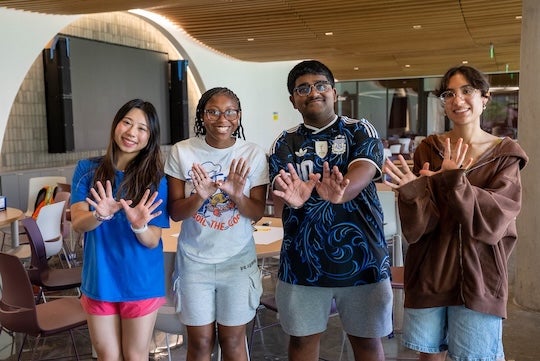
“It wasn’t as important for us to come with templated traditions already done,” Jones said. “We knew those grow over time, and the people who actually would live in the college would create their own.”
Some ideas are already circulating, including traditions built around the dragon, eggs “hatching” to represent new students and playful word associations between “Chao” and “chaos.”
Jones said the traditions that endure will likely emerge naturally.
“I think it has to just go with the flow and synergy and see what happens,” she said.
That philosophy reflects a broader principle of Rice’s residential college system: Ultimately, the people who live in a college give it its character.
“It’s the community, it’s the people who are there,” Gorman said. “They’re going to get to put such an imprint on the college.”
That imprint has already begun.
Chao’s initial transfer population — students moving from Rice’s existing residential colleges — was selected through an application process designed to bring together students with different interests and visions. Some wanted the chance to build something new. Others were drawn by opportunities to create traditions for future students, find a community or take on leadership roles.
“They already came in with so many ideas and visions for themselves as leaders,” Jones said.
The group has organized mixers, developed a student government, selected Chao’s first Orientation Week coordinators and created its first merchandise. Students have even chosen a name for their citizens: the Chaosens.
Brianna Bogar, an incoming freshman at Chao College and a Rice soccer player, said she was ecstatic when she learned she would be housed there.
“I found out when I was training with one of our teammates, and I remember I was jumping up in the air for joy,” she said. “It’s so exciting to be part of something so new — a new building, a beautiful facility. I was just really ecstatic to be a part of it.”
A home students get to build
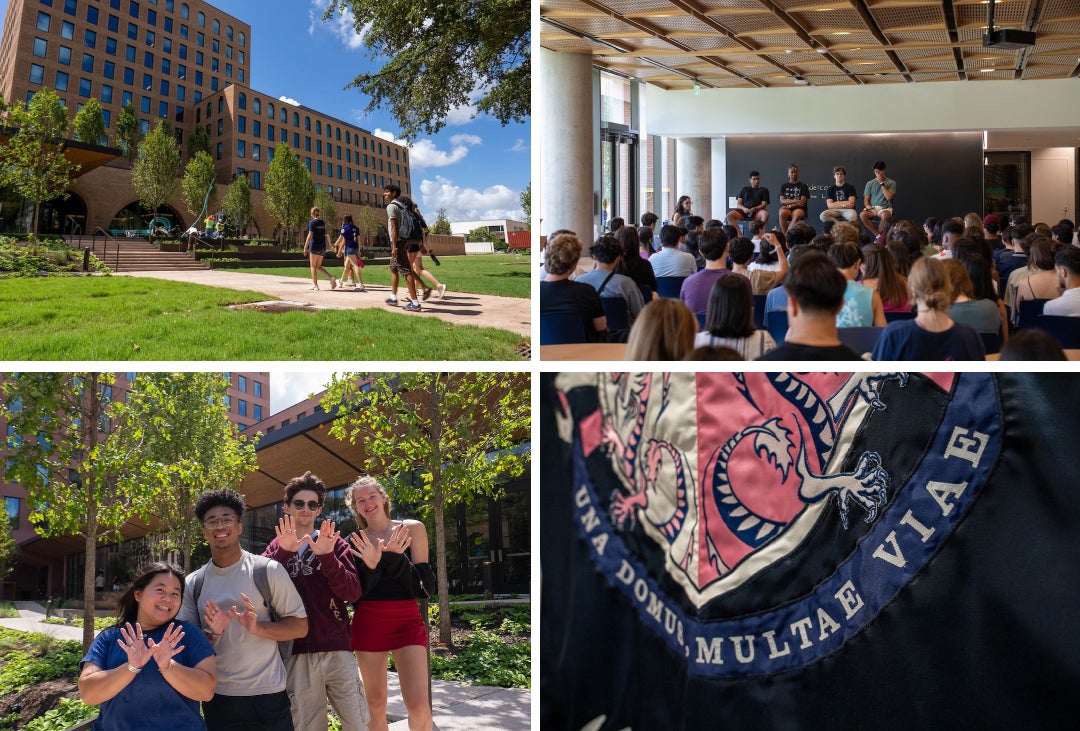
For White, being Chao’s first student president is less about establishing his own legacy than helping create something that will last well beyond his time at Rice.
“It has just been incredibly humbling being a part of this process and knowing that I’m a part of something that’s so much bigger than myself,” he said.
White said he understands future students may not remember who held Chao’s first leadership positions. What matters, he said, is what those students leave behind.
“In 20 years, people may not know my name or know that I was the first president, but I hope that they’re impacted by the culture that we created from the beginning,” he said.
The arrival of Chao’s first class will be the biggest test yet of that work.
“We want them to feel like it’s home, but it’s a home that they get to build with us,” White said.
For Chao’s founding team, that is precisely the point.
Jones has spent the past two years helping turn an idea into a functioning college. Duno-Gottberg has watched students begin creating a community before the building itself was complete. White has watched architectural renderings become a place where students can live, study and gather.
“This is real,” White said. “This isn’t a mockup anymore.”
Now, as Rice’s newest residential college welcomes its first students, the identity carefully sketched over the past two years will begin to belong to them.
“Traditions are all invented,” Duno-Gottberg said. “The important thing is embracing a series of values collectively and creating them collectively.”