
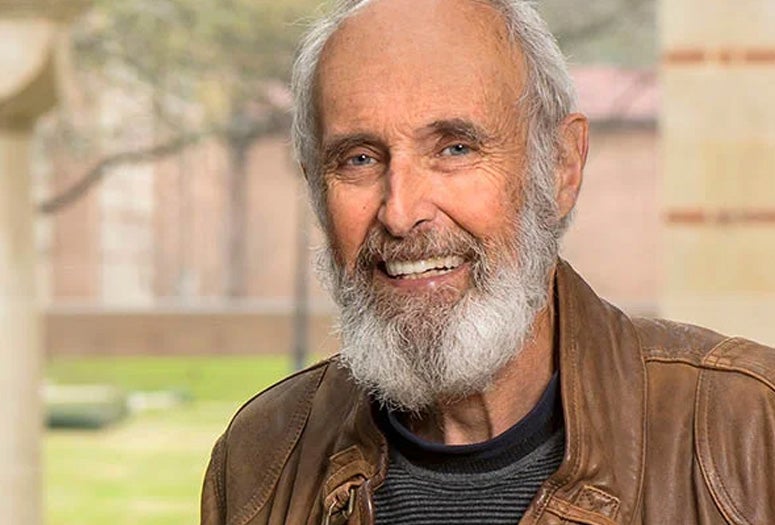
Few faculty members become synonymous with a department. Klaus Weissenberger, who arrived at Rice University in 1971 and retired half a century later, was one of them. Weissenberger, professor emeritus of German studies, died in the early hours of May 24 at St. David’s Medical Center in Austin surrounded by family.
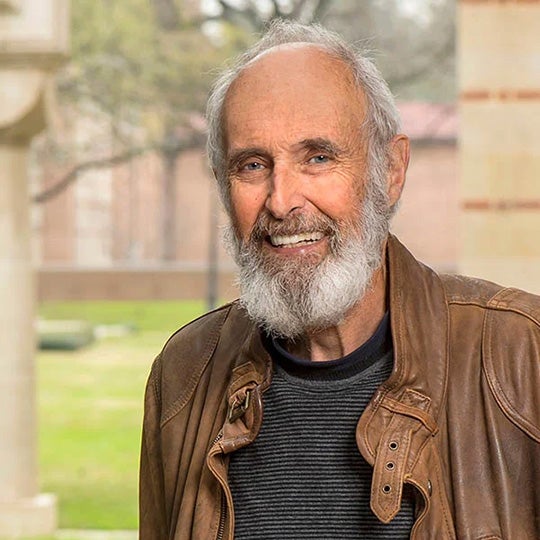
“Klaus was the kind of scholar and colleague every university hopes to have and rarely keeps for 50 years,” said Kathleen Canning, dean of the School of Humanities and Arts. “He believed deeply in the slow, careful work of reading literature and he believed even more deeply in the students who walked into his classroom. His legacy at Rice is measured in the generations of minds he sharpened.”
Born in Germany, Weissenberger spent part of his childhood in an Australian internment camp during World War II before going on to study medieval and modern German literature, ancient and modern history and philosophy at the University of Hamburg. He earned his doctorate at the University of Southern California and joined Rice’s faculty in 1971.
Over the next five decades, Weissenberger chaired what was then the Department of German and Slavic Studies for 16 years, served alongside his wife Eugenia as magister of Hanszen College and was a member of the Program in Jewish Studies. He authored or edited eight books, including the much-cited “Formen der Elegie von Goethe bis Celan” and “Die Elegie bei Paul Celan,” both published in 1969, and more recently the 2017 study “Die Gattungen der nicht-fiktionalen Kunstprosa im NS-Exil” examined nonfictional prose by writers exiled from Nazi Germany.
Weissenberger’s scholarly range stretched from 18th-century lyric poetry to the evolution of the fairy tale and the distinctions between German and Austrian literary traditions.
“Resisting theoretical fads and fashions, Weissenberger was a serious and untimely scholar who could spend hours taking apart a single line in a poem with a keen attention for seemingly peripheral details and unexpected connections,” said Christian J. Emden, the Frances Moody Newman Professor of German Studies
That sensibility was something Weissenberger urged younger scholars to protect in themselves. In an interview near the end of his career, he passed along the counsel he had once received from his own mentor.
“My advice for junior faculty today is exactly the same that I received from my mentor: Do research about subjects that you are really invested in, that you feel enthusiastic about, regardless as to whether they are fashionable or popular,” Weissenberger said. “Simply following the latest fashion will not lead to good research.”
Students responded to that conviction. Weissenberger’s courses on fairy tales and German poetry drew steady enrollments across decades, and many of those who took his seminars became lifelong friends. Emden noted that Weissenberger was the rare scholar who could still weave Shakespeare, Goethe and Plato into a single sentence.
Weissenberger’s warmth extended well beyond his own department. Jacqueline Couti, the Laurence H. Favrot Professor of French Studies and chair of the Department of Modern and Classical Languages, Literatures and Cultures, said that warmth was the first thing she noticed about him when she met him at a faculty gathering shortly after she was hired in 2018.
“He was one of those colleagues who truly believed in being part of the Rice family, and that warmth stayed with everyone around him,” Couti said. “He was obviously a great scholar, but he was also someone genuinely curious about people and open to what they had to bring.”
Weissenberger remained active in scholarly life until his retirement. In 2020 he hosted an international conference on the poetry of Paul Celan that drew participants from both sides of the Atlantic Ocean, and in 2023 he returned to Rice’s Moody Center for the Arts for a public conversation with Swiss artist Christina Forrer on the enduring power of fairy tales.
Away from the seminar room, he was an avid tennis player, a longtime participant in the Houston-Leipzig Sister City Association and, by Emden’s account, the owner of what was very likely the finest Märklin model train set in Texas.
A funeral service is scheduled for 11 a.m. June 6 at The Chapel in the Hills in Wimberley. A memorial at Rice will be announced at a later date.