
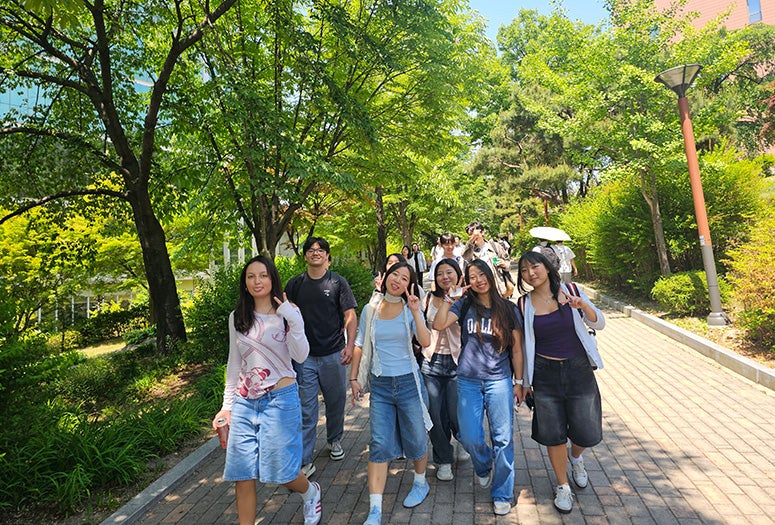
Field trips to the demilitarized zone, 9 a.m. Korean classes and shadowing sessions with traditional Korean medicine faculty filled Rice University junior Abbie Wang’s six weeks in Seoul this summer. Wang, a Chao College student double-majoring in biosciences and Asian studies, traveled with Rice in Korea. Led by Eun Young Oh, lecturer in Korean, the program is one of eight Rice in Country offerings, faculty-led summer study abroad experiences run through the School of Humanities and Arts.
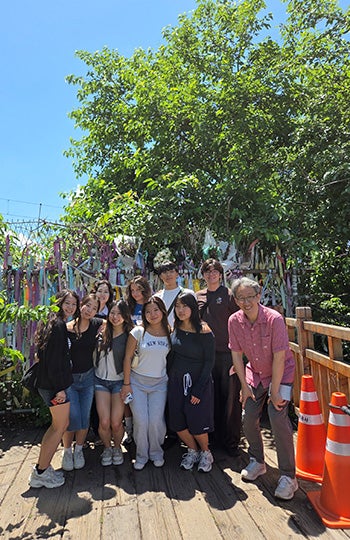
“Rice in Korea is thoughtfully designed, so students can experience Korea’s rich traditions and its innovative future at the same time,” Oh said. “You truly get to immerse yourself in Korea’s past, present and future all at once.”
This year, Wang joined a pilot medical track for premed students. Jaesu Choi, also a lecturer in Korean, led the track. Each week, participants met with medical faculty including practitioners of traditional Korean medicine, shadowed clinicians and observed treatments such as acupuncture.
Some of the differences Wang noticed were practical. In Korea, she said, patients can often pick up prescriptions at a pharmacy next door to the doctor’s office, where staff sort medication into daily packets marked for morning and evening. She found the system convenient and efficient.
“Modern medicine focuses more on tackling the disease itself,” Wang said. “Traditional Korean medicine tackles the person. They look at the person as a whole and take everything else into consideration. Seeing how different those approaches are was remarkable.”
The comparison has Wang, who calls herself a people person, leaning toward a more holistic approach to medicine. She said she is still working out how that will shape her plans after Rice.
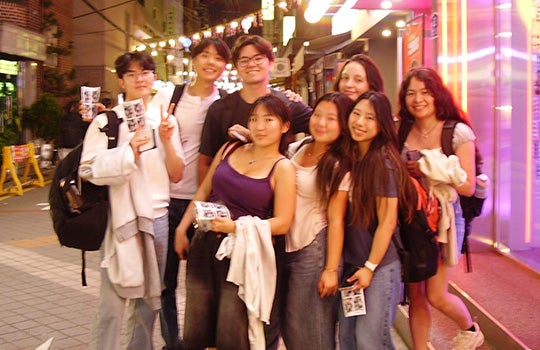
The medical track ran alongside the program’s core curriculum. Students live with host families and take two courses — Korean in Action and Understanding Korean Society and Culture — taught by Oh and an instructor from partner Seoul National University.
“I wanted our students to experience the ‘real’ Korea, beyond what is covered in textbooks,” Oh said. “My goal was for them to pick up street-smart Korean for everyday situations, so they could build the confidence to navigate and truly thrive while living in Korea.”
Wang had visited Korea before but always with her parents. Rice in Korea was her first time traveling alone. The group went on field trips every week including one to the Demilitarized Zone.
“The DMZ was something I had only ever seen in K-dramas, and I never imagined myself going there,” Wang said. “Being in that area and seeing everything up close was surreal.”
Other outings were lighter. One of Wang’s favorites was “Nanta,” a nonverbal percussion show that kept her laughing from start to finish. The schedule also left time for shopping, and Wang laughed when she shared that she came home with two overweight suitcases.
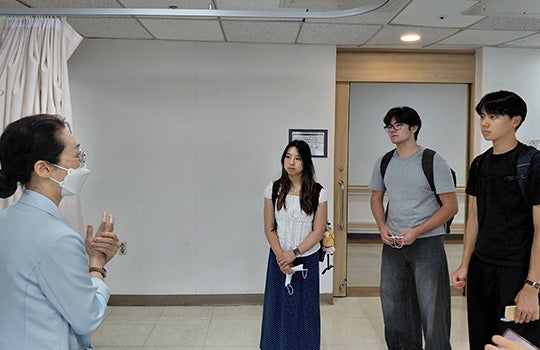
Rice in Korea will expand its offerings for premed students next summer. Oh said the program will build on Rice’s Medical Korean curriculum, giving students the chance to sit in on classes at a Korean medical school, visit hospitals and experience traditional Korean medicine such as acupuncture.
“It will be a fantastic opportunity for premed students to gain direct exposure to Korea’s health care system,” Oh said.
As in every Rice in Country program, students earn six credits in six weeks, and the program fulfills the experiential learning requirement for the Certificate in Language and Intercultural Communication. Wang will receive the certificate in Korean. Students interested in next summer’s program can watch the Rice in Korea website for application updates.
“Rice has been my dream school since I was 3, and I’m very involved on campus,” Wang said. “Even so, Rice in Korea is my favorite Rice memory. Everyone should do it if they have the chance.”