

For all its urgency in the real world, climate change is largely absent from the stories shaping contemporary culture, according to new research by scholars at Rice University and Colby College. “To Delight and Misinstruct: Strategic Environmental Narratives in New Yorker Fiction” published in the journal Environmental Communication finds that more than 90% of short stories published over the past decade in The New Yorker magazine do not meaningfully engage with climate change or other major environmental problems. The findings raise pointed questions about how elite fiction reflects what study authors call the defining crisis of the present moment.

“In addition to ecological and geophysical impacts, climate change exacerbates economic, political and social problems. Domestic and global concerns — rising fascism, economic inequality, mass migration and more — rightly draw the attention of the media, storytellers and people around the world,” said lead author Matthew Schneider-Mayerson, associate professor of English and creative writing at Rice and director of the university’s Program in Environmental Studies. “Yet climate change will amplify these challenges and make it more difficult to respond to them. Avoiding, marginalizing and minimizing the climate and nature crises in popular storytelling makes unimaginably catastrophic futures more likely.”
Schneider-Mayerson collaborated with faculty and student researchers from Colby College and its Buck Lab for Climate and Environment. Together, the team analyzed 474 original short stories published by The New Yorker between 2014 and 2023 using a new analytical framework designed to systematically evaluate how narratives include and portray environmental issues.
While environmental issues are frequently covered in journalism and nonfiction, the researchers wanted to understand whether fictional narratives, which play a powerful role in shaping cultural norms and public imagination, reflect those realities.
“Research on literature and the environment has focused almost exclusively on criticism of individual novels, short stories, plays and poems that engage with environmental issues,” Schneider-Mayerson said. “However, in an era saturated with narratives across media, it is the collective presence — or absence — of environmental content that exerts the most powerful and lasting impact on public attitudes, beliefs and behavior in relation to climate change and other environmental challenges.”
To address the gap, the research team developed the Strategic Environmental Narratives codebook, a tool that allows scholars to assess the presence, framing and significance of environmental perspectives, problems, actions and behaviors across large collections of stories. Applying the codebook to a decade of short fiction revealed a striking pattern of absence.
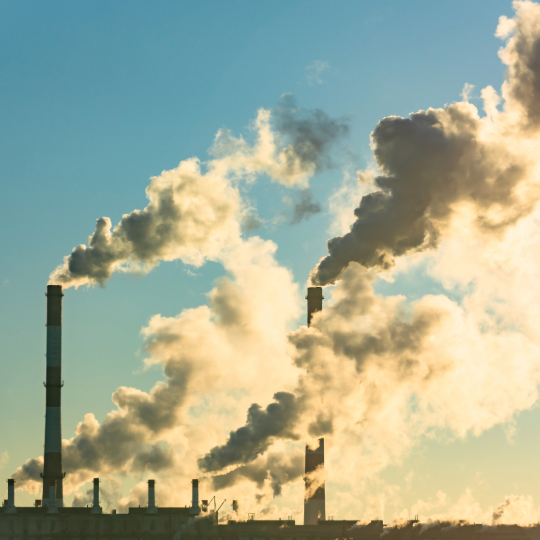
Only 10.1% of the stories included climate change at all. Roughly 20.9%mentioned any major environmental problem such as pollution, deforestation or species loss. Even when environmental issues appeared, they were often minimized, mentioned only in passing or detached from human responsibility or meaningful action.
The findings also surprised the research team when compared with earlier work analyzing popular films. Given the literary magazine’s readership and reputation for publishing climate-focused nonfiction, the researchers expected environmental issues to appear more frequently in its fiction than in mainstream movies.
“We found that the presence of climate change was nearly the same in the overlapping years, suggesting that there is an unspoken ‘cultural climate consensus’ about how often to include it,” Schneider-Mayerson said. “Additionally, one of the major takeaways from the film study was that the rate of inclusion increased significantly over time. Surprisingly, we did not see that trend in the short stories — the trend was flat.”
Beyond documenting absence, the study raises broader questions about storytelling itself, including what responsibilities writers, editors and publishers may bear in an era of escalating environmental crisis.
“What qualifies as a ‘good story’ in the midst of a climate crisis that threatens everything we hold dear?” Schneider-Mayerson said. “Our results suggest that contemporary fiction is failing to even acknowledge what is happening to and around us. If literature continues to largely ignore the climate and nature crises, it is, at best, distracting readers from the real world and, at worst, deluding them about it.”
The authors argue that fiction need not become didactic or polemical to engage meaningfully with environmental realities. Even small narrative choices, from depicting sustainable behaviors to acknowledging environmental consequences, can help recalibrate what readers perceive as normal or imaginable.