
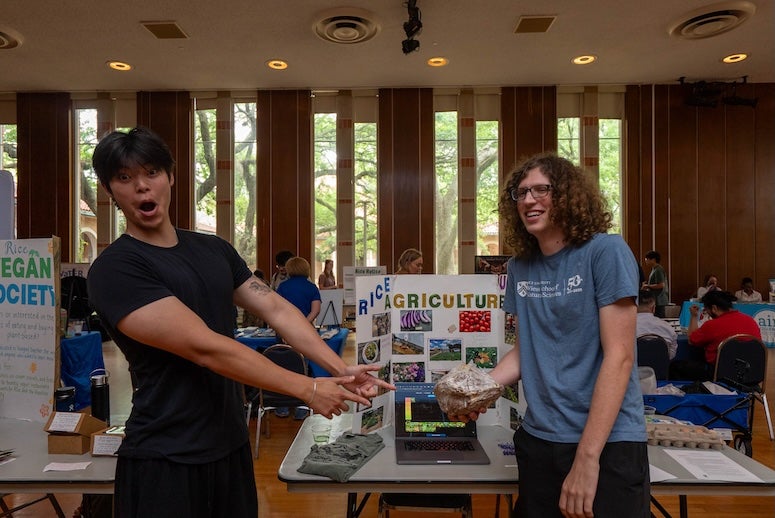
Rice University kicked off Earth Month with its third annual Earth Month Festival, a celebration hosted by the Office of Sustainability. Student groups, Rice departments and external partners gathered to share tips, tricks and knowledge about building a more sustainable future.
“It’s a chance for us to highlight the various campus and community organizations that advance sustainability, both here on our campus as well as within the greater Houston area,” said Kristianna Bowles, associate director for sustainability.
Rice students don’t have to be Earth, environmental and planetary studies (EEPS) majors to be part of making a difference, although the EEPS department had a booth staffed for any students interested in its courses and research. Student groups like the Rice Vegan Society, Rice ReUse and the Rice Urban Agricultural club highlighted opportunities for students to get involved and make a difference regardless of their major. And the Office of Sustainability was there to help with its student representatives working to share ways in which the university can, and has, made positive impact.
“It sounds technical and like a lot of data points,” said senior Desiree Duron, a student representative of the Office of Sustainability. “But it’s more about engaging students, seeing that they can eat more delicious vegan food or use so many different modes of transit.”
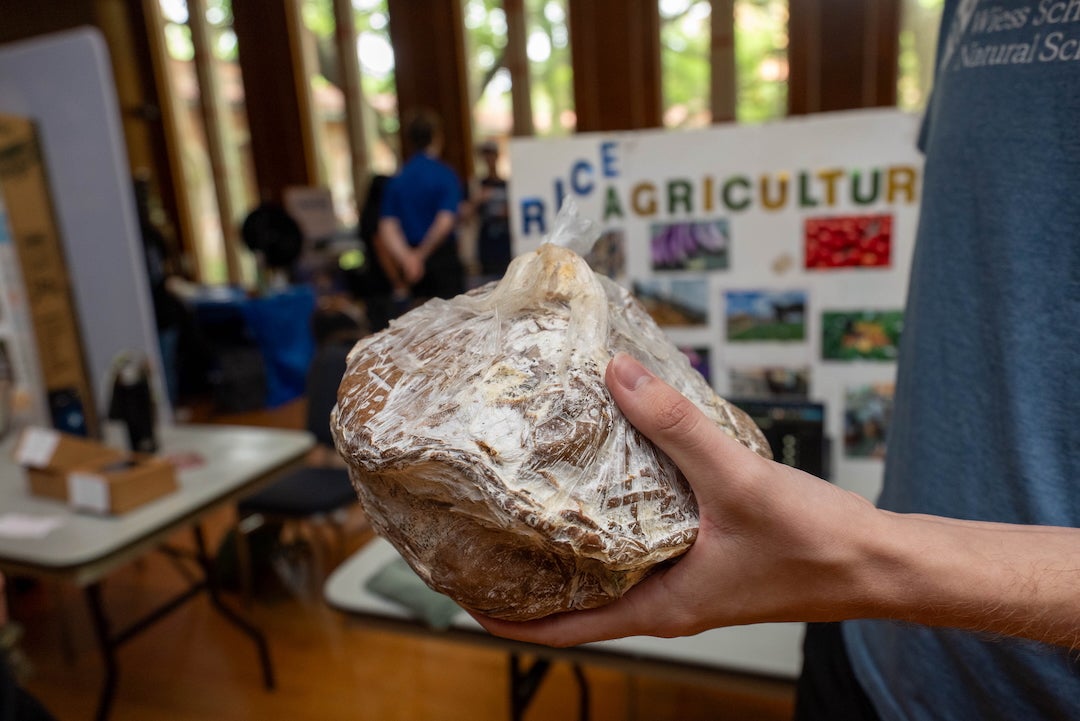
Some clubs, like the Agua Vida club sponsored by the WaTER Institute, highlighted research opportunities for students.
“I think a lot of students would be surprised to find that their interests align with the WaTER Institute if they knew more about the research done there,” said sophomore Dylan Yoon, a member of Agua Vida.
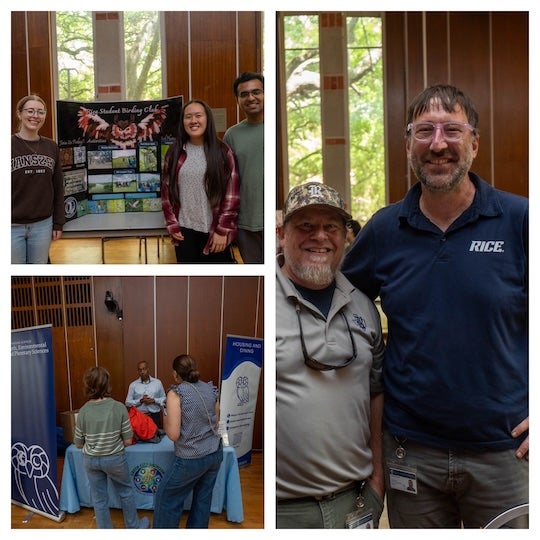
Other tables highlighted Rice’s efforts to build a greener campus. Hospitality Services highlighted its environmentally friendly practices, including compostable takeaway containers and using produce grown in the Friedman Holistic Garden. The Fondren Library offered visitors packets from its seed library and pamphlets on extreme weather preparation, while Environmental Health and Services offered information on its lab electronics recycling services. Arborist Dawn Roth-Ehlinger was there to answer questions about the 4,500 trees gracing campus.
Of course, Rice isn’t in this alone. External partners like Moonshot and Green City Recycles are essential to a sustainable campus. Green City Recycles provides campuswide clothing recycling services for the last two weeks of every semester. Moonshot, a composting company, has diverted 1.87 million pounds of the university’s food waste from the landfill. Moonshot also provides data that helps Rice adjust its purchasing to reduce its overall food waste.
“Rice has such a great attitude about this work,” said Moonshot’s Josh Connelly. “They were one of our first customers when we opened in 2020.”
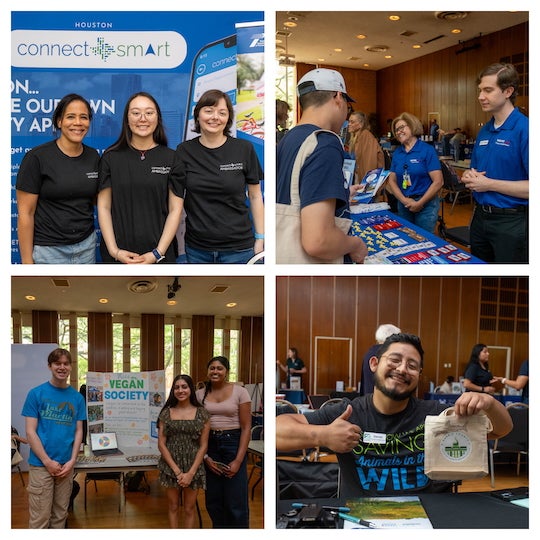
Neighbors like the Houston Zoo and Houston Metro showed up to help students learn of citywide opportunities to make a difference. The Houston Zoo’s free electronic recycling program, with a drop-off location right outside its front gate, provides a place to safely dispose of old cell phones. Metro highlighted multiple public transit and carpooling options that allow students to cheaply navigate Houston while reducing their carbon footprint.
One thing was clear: At Rice, there are many ways to make a difference.