
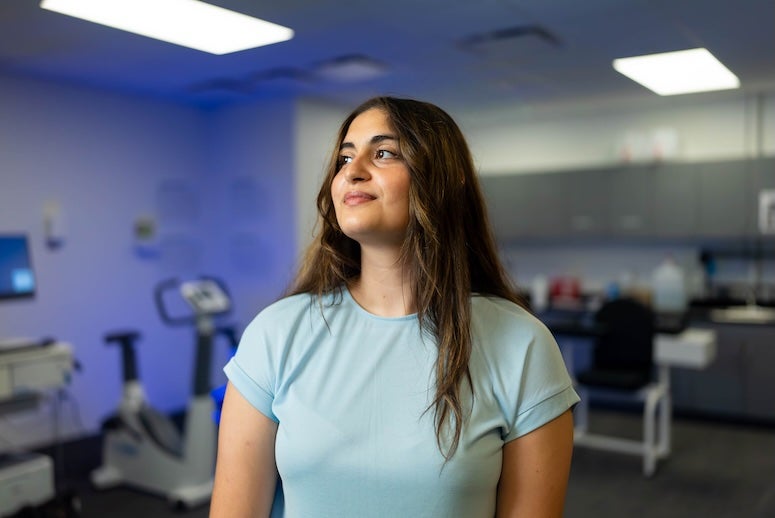
Failure, it is said, is an essential part of growth. For Rice University senior Lupita Frias, failure was the thing that unmasked her greatest strength: resilience.
“I had a project where things just didn’t go as planned,” said Frias, who is majoring in kinesiology. “I was beating myself up about it: I shouldn’t have done this; I should have done that right from the start. And my professor, Dr. Nadia Agha, sat down with me and said, ‘Look. This didn’t go correctly. But guess what? I gave you feedback, and you didn’t stop. Instead, you tried to fix your problem. You tried to do better. That makes you resilient, and that is an important quality in a person.’”
That wasn’t a moment that changed Frias. She had always been a resilient person. She was a low-income first-generation college student from a small town in South Carolina. Rice was far away from home, and in her first two years, she struggled to find others who shared her experiences and background.
This was a moment, however, that changed how Frias saw herself.
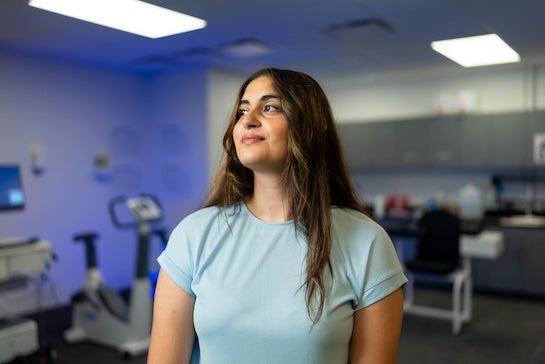
“It helped me realize I had strengths that not everyone does,” Frias said. “It helped me become the leader that I am now. I tell the interns I lead, it’s OK, you’re only human. But what you can do is improve on this next time.”
Frias leaned into her strengths, using her resiliency to create change. She joined Owl Access as a Peer Leader, providing connection and support to freshmen who, like her, were first-generation students from low-income families. It was important to Frias that these students knew there were people with similar backgrounds on campus from the first day they arrived, that they didn’t experience the same isolation she had felt. And this again exposed something she hadn’t realized: the value Frias and her background brought to Rice’s campus.
“Being a Peer Leader for Owl Access helped me realize that I add to this community, and so do all of my mentees,” said Frias. “And that’s what makes Rice, Rice — having so many diverse cultures and backgrounds.”
Frias wasn’t just supporting freshmen. Her leadership skills and resilience serve her well in the lab, where she serves as the intern lead in Agha’s group, helping to understand the physiological response to maximal exercise tests, which include “fake hills” on a treadmill.
“Houstonians do not like hills at all,” Frias said with a laugh. “That incline goes up on the submaximal test, and you can see the struggle begin.”
Frias, who decided on the prephysical therapy track during her freshman year, is ready for the next chapter of her life. A physical therapy internship in South Carolina during her sophomore year confirmed she was on the right career path. Rice, and especially her kinesiology professors, had prepared her well for the work needed to get there. She recently accepted a spot in Duke University’s doctorate program in physical therapy, where she’ll be starting in the fall.
“I feel confident and prepared,” Frias said. “Especially when I started meeting my classmates at Duke, I realized I have this. We’re on the same playing field.”