
A common test for Parkinson’s disease involves drawing a spiral on a sheet of paper. The tremor in the line and the particular way it glides and turns can help a physician assess the extent to which a patient is impacted by the disease.
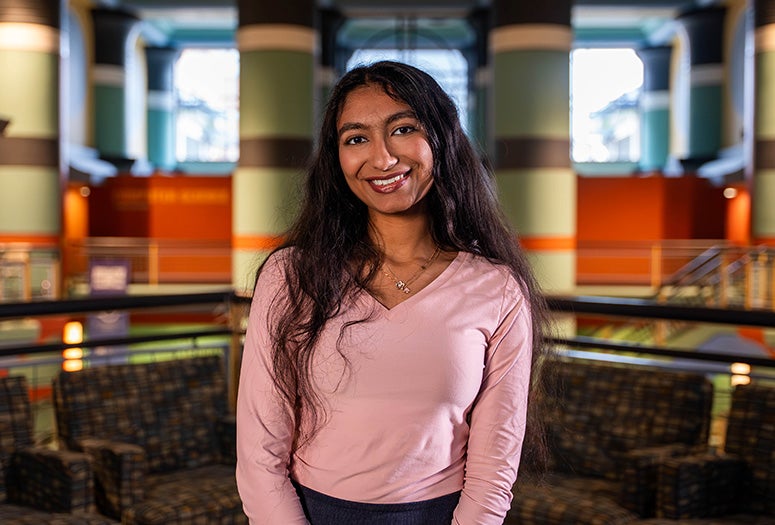
“Currently, this is done through a very subjective visual assessment,” said Pankti Mehta, a senior at Rice University majoring in computer science who aspires to a career practicing medicine.
Mehta is co-president of Rice Medical Design, a student club advised by bioengineer Maria Oden, director of the Oshman Engineering Design Kitchen and co-director of the Rice360 Institute for Global Health Technologies. As part of the club, undergraduates collaborate with faculty and clinicians, including partners across the Texas Medical Center, in order to engineer solutions to needs that arise in the clinic.
“We have about 30 members this year from several different majors,” Mehta said.
The spiral test is just one example of the kinds of problems the club takes on: In partnership with a neurologist, some of the group members have teamed up to develop software that can more objectively assess tremor severity. By making longitudinal tracking easier, the app could support a physician’s assessment.
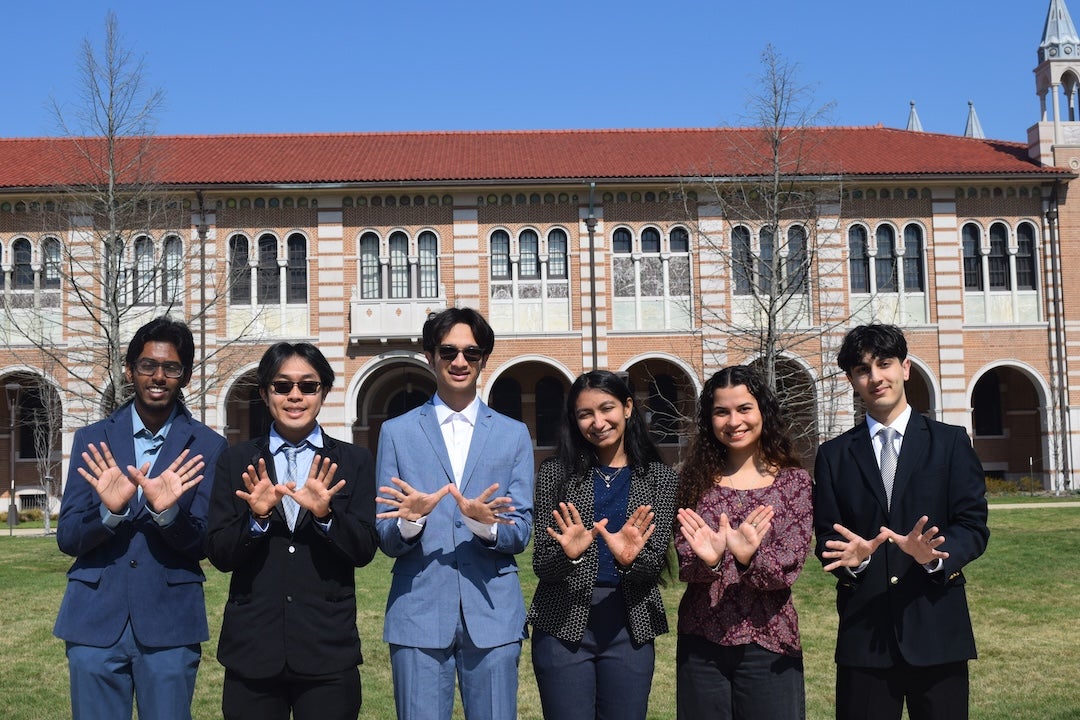
Some projects are guided by conversations with physicians about challenges in their day-to-day practice, while others take shape after students identify areas of improvement in clinical tools or workflows. Once Rice Medical Design commits to a specific clinical challenge, club members break into teams and begin to engineer a solution. They follow a process of stakeholder engagement and scope finding, prototyping ⎯ supported by resources at the OEDK ⎯ and refining their designs through iteration and feedback.
Mehta brims with enthusiasm as she describes different projects club members have tackled in the past or are working on at the moment. They include a low-cost spirometer aimed at expanding screening for asthma and chronic obstructive pulmonary disease; an infant assessment station designed to allow newborn evaluations to occur near the mother’s bedside; a sensor system to let people using a walker know how to best manage weight-bearing for rehabilitation; a gravity-based IV autostop device that prevents pediatric overhydration in low-resource settings; and a functional electrical stimulation system that streamlines rehabilitation for people with neurological deficits.
“These are just a few of the many projects we have worked on over the years, and each project has incredible impact. Some even go on to patent filing and win awards at acclaimed competitions,” Mehta said.
Mehta’s role is to oversee the club as a whole, serving as an ad-hoc resource for the group ⎯ the connective tissue that keeps the work organized and moving.
“I’m kind of everywhere,” Mehta said.
That vantage point has given her a broad view of how ideas move from something that happens in the clinic to a prototype on a workbench or a computer algorithm. With the Texas Medical Center so close to campus, there is no shortage of real-world exposure for the students to draw on for project initiatives. Mehta herself spent hundreds of hours shadowing physicians and volunteering at hospitals across the U.S. and rural communities in India, paying attention not only to diagnoses but also to what happens after patients are discharged. The patterns she observed sank in, fueling a resolution to help drive change.
“I would see a lot of patients coming back to the hospital system,” Mehta said. “Maybe they were experiencing homelessness, or they were in a food desert or didn’t have transportation for their initial appointment. … At most what a physician can do is prescribe medications, but they have a harder time addressing the social determinants of health.”
When she witnessed, time and again, patients returning to the hospital after being discharged because they lacked the support they needed to continue their healing journey outside hospital walls, she helped develop a digital platform to connect hospital systems with local nonprofits, creating a searchable system that matches specific patient needs with nearby organizations.
“Our algorithm is like a social worker who goes through every single nonprofit in all of Houston to find the right ones,” Mehta said.
In one test case, a 5-year-old patient with Guillain-Barré syndrome was matched with a nonprofit specializing in neurological conditions specifically for pediatric populations within two miles of their home. The research aspect of Mehta’s project, supported by associate teaching professor of computer science Mack Joyner, won first place in the Rice Undergraduate Neuroscience Symposium, received a startup award from Microsoft, was selected for the National Science Foundation’s innovation accelerator and was subsequently presented at the American Cancer Society’s National Lung Cancer Roundtable conference.
That project and its success is just one example of how Mehta has managed to weave her passions into a meaningful path.
For Mehta, translating lived patterns into algorithms is almost second nature, but what appears as deep-set instinct is in fact skill honed with dedication and genuine curiosity. She recalls block coding “to get the alien to the home planet” as a child, and by the time she had finished high school, Mehta had twice won the annual Congressional App Challenge — a districtwide competition hosted by members of the U.S. House of Representatives to encourage students “to learn to code and [inspire] them to pursue careers in computer science,” according to the initiative website.
That instinct soon extended beyond competitions. During a summer volunteering at a hospital in rural India, Mehta began noticing a recurring barrier: After dark when emergencies struck, there were often no rickshaws available to transport patients. One night, a mother arrived on foot carrying her feverish child after walking miles because no drivers could be reached.
“I kept thinking, this isn’t a medical problem,” Mehta said. “It’s a coordination problem.”
She took action, developing a digital rickshaw-coordination portal linking drivers with patients in urgent need. Thus far, the platform has provided lifesaving timely assistance to over 50 users, and that number continues to grow.
As a freshman at Rice deciding what to study, she felt torn at first.
“Do I do computer science or do I pursue medicine?” she recalls wondering.
In time, she found hers was not an either/or story, and that the two interests complemented each other in ways she had not foreseen.
Mehta’s experience is endemic of a broader shift in health care, which is undergoing a profound transformation thanks to advances in computing and artificial intelligence. From AI medical scribes that make medical record-keeping easier, freeing up doctors to be more present in their conversations with patients, to streamlining administrative tasks more broadly as well as fast-tracking drug discovery and improving diagnostic imaging ⎯ medicine is an area of practice where AI is demonstrating transformative potential. Provided ethical considerations around data privacy, computational bias and regulatory oversight are carefully weighed in the process, the positives of incorporating AI in medicine seem to outweigh downsides.
Mehta’s academic journey plays out some of these systemic changes at a more intimate scale. Alongside her premed coursework and exposure to clinical work, Mehta steeped herself in computer science through competitive internships at companies like Capital One and Progressive. There, she learned about tools that organize and rank information, subsequently applying her data-wielding skills in medical contexts. Inevitably, the different streams of experience converged, and now Mehta views her computer science background as one of her greatest assets as a future physician.
“Having this background in computer science is so empowering,” she said. “When you come across challenges in health care systems, there’s something you can do about it.”
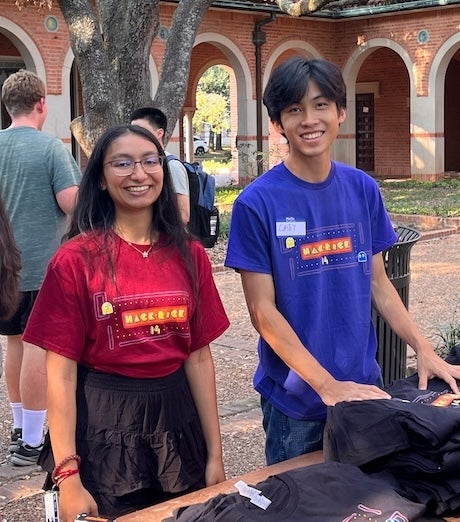
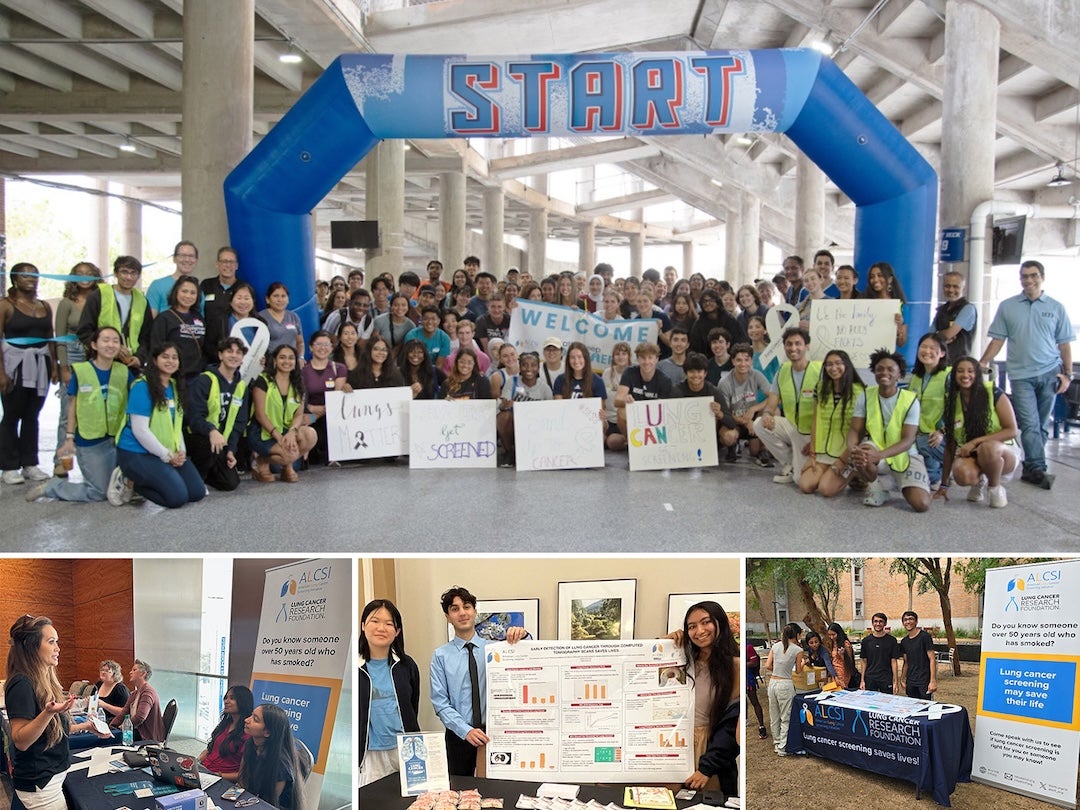
One of Mehta’s distinguishing qualities is to convene community around a cause: She previously co-directed HackRice, helping raise roughly $20,000 and coordinating hundreds of participants for the university’s annual hackathon. As co-president of the Rice American Lung Cancer Screening Initiative, she helped organize a large awareness walk at Rice Stadium in collaboration with hospital systems across the Texas Medical Center.
“There were community members, there were students, even a lot of physicians from across the Texas Medical Center, a lot of companies as well ⎯ we did this to raise awareness for lung cancer screening,” Mehta said. “It is the leading cause of cancer-related deaths in the U.S., and there is a lot of stigma associated with it.”
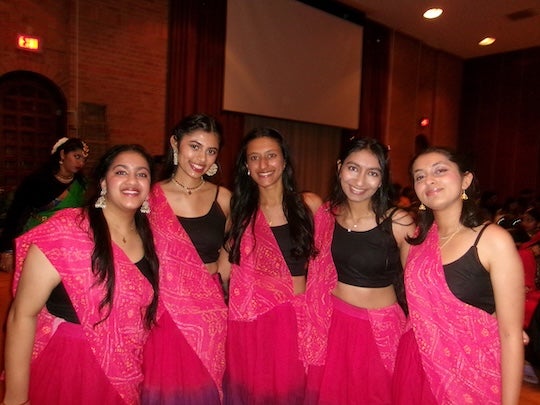
Alongside her clinical and technological work, Mehta contributes as a fellow in the Baylor College of Medicine Biodesign program, conducts computational diabetes research at Houston Methodist and brings equal energy to the arts and advocacy as a member of Rice Rangilas and the Rice Vegan Society.
Mehta credits her intrepidness to the surrounding community.
“I very much think that being a part of the Rice community was how I was able to take on so many projects, because every single person here that I interact with is so passionate and so enthusiastic, and they have so much potential to do so many great things,” she said. “One of the reasons I chose Rice was because it gives you so much flexibility in terms of pursuing what you’re passionate about. Going forward, even as I become a physician, I definitely want to still use computer science in different ways to help as many people as I can. The interpersonal aspect of medicine is really important to me ⎯ it’s about the impact of it and doing something meaningful.”