
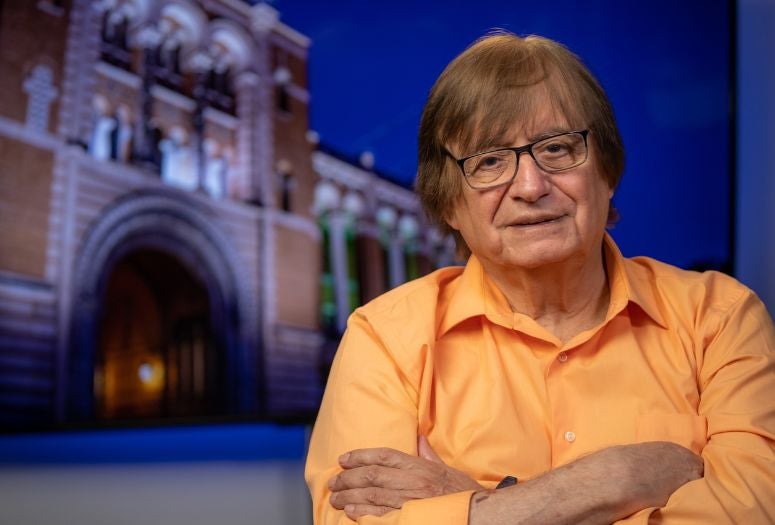
Richard A. Tapia, a distinguished professor at Rice University and a trailblazing mathematician renowned for his dedication to increasing the participation of underrepresented minorities in science and engineering, has passed away at age 88.

“There are a handful of people that have truly shaped the trajectory of Rice University in our nearly 115-year history. Richard Tapia was one of them,” President Reginald DesRoches said. “Richard’s influence at Rice extends beyond his academic contributions as a world-renowned mathematician, encompassing diversity, advocacy, mentorship and incredible leadership. He was truly a pioneering figure in computational mathematics and a champion for expanding access to science and engineering education.”
Tapia joined the Rice faculty in 1970 as an assistant professor of mathematical sciences before the department name was changed to computational and applied mathematics. He was promoted to full professor in 1976 and chaired the department from 1978 to 1983.
He founded the Tapia Center to empower underrepresented students and educators to pursue excellence in science, technology, engineering and mathematics. The center hosts residential summer camps for students and offers professional development programs for K-12 educators that emphasize project-based learning and mentorship. The Tapia Center focuses on building skills, confidence and community among students who have historically been underrepresented in STEM fields while helping educators create more inclusive and engaging science and engineering classrooms.
“In addition to Richard’s impressive research contributions, his legacy will live on through the generations of STEM students he inspired through his teaching as a university professor and his enduring commitment to the Tapia STEM Camps, which have grown to reach more than 1,600 rising eighth through 12th graders,” said Amy Dittmar, the Howard R. Hughes Provost and executive vice president for academic affairs. “We are grateful for his lasting influence on engineering teaching, research and service at Rice and beyond.”
During his time at Rice, Tapia led the Rice Graduate Education for Minorities and Empowering Leadership Alliance Programs. He also served as associate director of graduate studies in the Office of Research, directed the Center for Excellence and Equity in Education and received the Y. Ping Sun Award for Outstanding Community Engagement. He held the title of University Professor, Rice’s highest academic honor.
“Richard Tapia’s legacy is immense,” said Luay Nakhleh, the William and Stephanie Sick Dean of Engineering and Computing. “His contributions to the field of mathematics are profound, but equally important is his unwavering commitment to mentoring and supporting minority students in STEM. His impact will be felt for generations.”
Illya Hicks, professor and department chair of computational applied mathematics and operations research, echoed those remarks. “Richard was not just a brilliant mathematician; he was a tireless advocate for diversity and inclusion. His leadership and dedication have inspired countless students and colleagues. He was a great mentor to me and many others."
Tapia’s contributions to his community are reflected in his latest honor: Houston’s Ship Channel bridge was renamed the Richard A. Tapia Bridge on March 20. The bridge that now carries his name represents a major investment in the region’s infrastructure and economic future, as Tapia invested in the future of his community and field.
“Richard Tapia worked tirelessly to champion the Hispanic community. His influence extended far beyond the hedges and resonated throughout higher education,” said David Medina, retired director of multicultural community relations. “Tapia helped countless people, including me, by guiding us and inspiring us to pursue our dreams.”
“Dr. Richard A. Tapia changed the face of STEM education as ‘the Lion’ of underrepresented communities,” said Nicolás Medina, chair of the Tapia Center Board of Advisors. “We will miss his indefatigable ‘roar’ to increase the number of minority students and women entering and succeeding in STEM, insisting that ‘yes we can’ and ‘yes we belong.’ The Tapia Center at Rice University is committed to keeping his legacy alive: STEM is for everyone.”
Born in Santa Monica, California, to parents who emigrated from Mexico, Tapia was the first in his family to attend university. He earned his bachelor’s, master’s and doctorate degrees from the University of California, Los Angeles. During his tenure at Rice, he served as adjunct faculty at Baylor College of Medicine and the University of Houston.

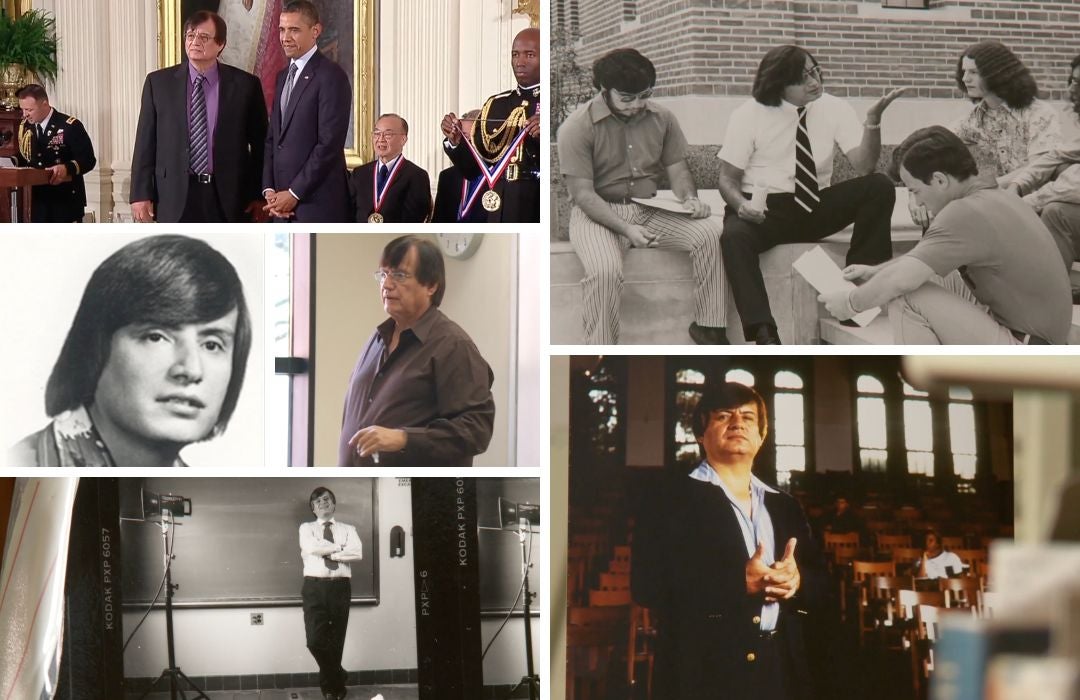
In 1992, Tapia became the first Hispanic person elected to the National Academy of Engineering. In 1996 former President Bill Clinton appointed him to the National Science Board, where he served until 2002, and from 2001 to 2004 he chaired the National Research Council’s Board on Higher Education and the Workforce. In 2011 in a White House ceremony, former President Barack Obama presented Tapia with the National Medal of Science, the highest award given to a scientist or engineer by the United States government.
Tapia received numerous awards, including the National Science Foundation’s inaugural Presidential Award for Excellence in Science, Mathematics and Engineering Mentoring; the Lifetime Mentor Award from the American Association for the Advancement of Science; the Distinguished Service to the Profession Award from the Society for Industrial and Applied Mathematics; the Distinguished Public Service Award from the American Mathematical Society; and the Distinguished Scientist Award from the Society for the Advancement of Chicanos and Native Americans in Science.
Tapia’s research focused on numerical optimization methods. He authored or co-authored two books and more than 100 research papers and supervised over 30 doctoral candidates.
Tapia is a founding member of the Society for the Advancement of Chicanos and Native Americans in Science, the premier professional organization for Hispanic and Native American scientists. He is also an original member of The Academy of Medicine, Engineering and Science of Texas and a member of the Texas Science Hall of Fame. In 2005, he was recognized as one of the 50 most important Hispanics in technology and business by Hispanic Engineer and Information Technology Magazine.