
Rice University’s new Center for Space Technologies, or CSTx, is strengthening Texas’ leadership in the space economy, supported by a $14.1 million Texas Space Commission grant.
The center, within the Rice Space Institute, brings together research, technology transfer and innovation, statewide partnerships, workforce development and space-focused education to move space technologies from university discovery toward usable systems, commercial applications and a stronger Texas workforce. The latter goal will be supported by workforce training, including graduate certificates in aerospace engineering and systems engineering management at Rice, space workforce training at San Jacinto College and an astronaut camp at Texas A&M International University.

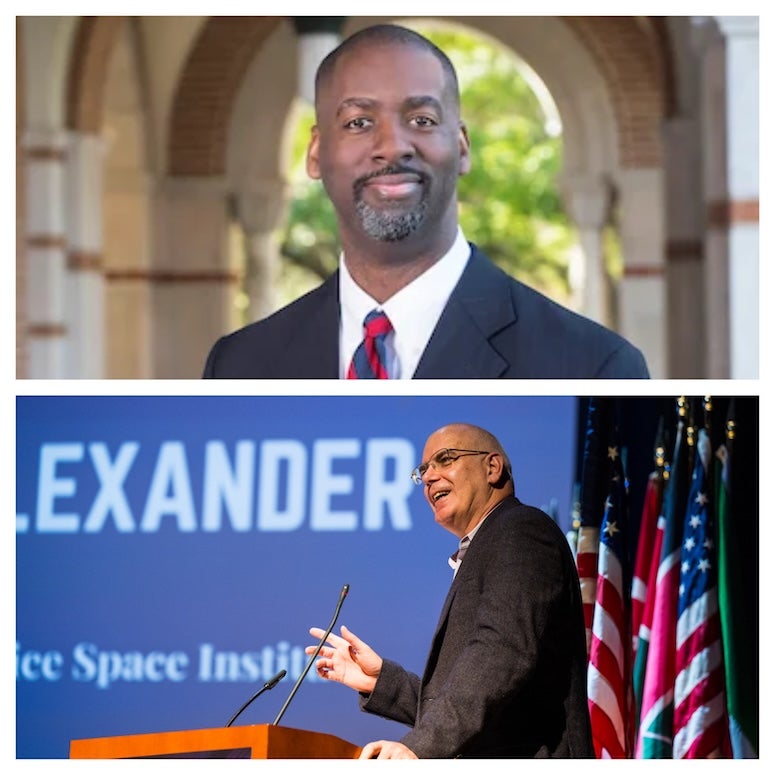
“CSTx will translate technology into the marketplace, create the space workforce of the future, attract new business to the state and foster lasting international partnerships,” said C. Fred Higgs III, the principal investigator on the grant and the John and Ann Doerr Professor of Mechanical Engineeringat Rice. “We will leverage Rice’s innovation infrastructure to support robust work in Earth’s orbit, lunar orbit, the lunar surface and beyond.”
Rice first initiated research collaborations with the then-newly established NASA in 1959. In the ensuing decades, the university has maintained a leadership role in advancing space science and technology through initiatives such as the Rice Space Institute and partnerships with other leading space organizations.
“CSTx is launching at a timely and exciting moment for the space industry, as private-sector advances are energizing new expectations for what commercial space activity can become,” said David Sholl, executive vice president for research. “Rice has always played a central role in the space ecosystem, and we are excited to continue this leadership into the next age of space science.”
The next era of space exploration, exemplified by NASA’s Artemis program aimed at going to the moon and beyond, depends on building technologies that allow for humans to exist away from the planet Earth. CSTx will support efforts to turn lunar or Martian materials into construction materials, oxygen and water; develop technologies for harsh space environments and long missions; and build AI-enabled platforms that can monitor astronaut health, generate designs for space needs, curate mission data and more.
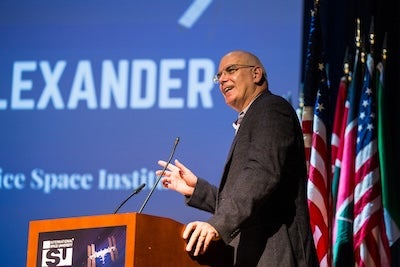
“We are excited to take advantage of the incredible Houston and Texas space ecosystems by welcoming NASA, industry and academic partners into CSTx,” said David Alexander, director of the Rice Space Institute. “Together, we will help build a Texas-wide space technology pipeline that connects universities, government, industry and workforce education into one coordinated ecosystem."