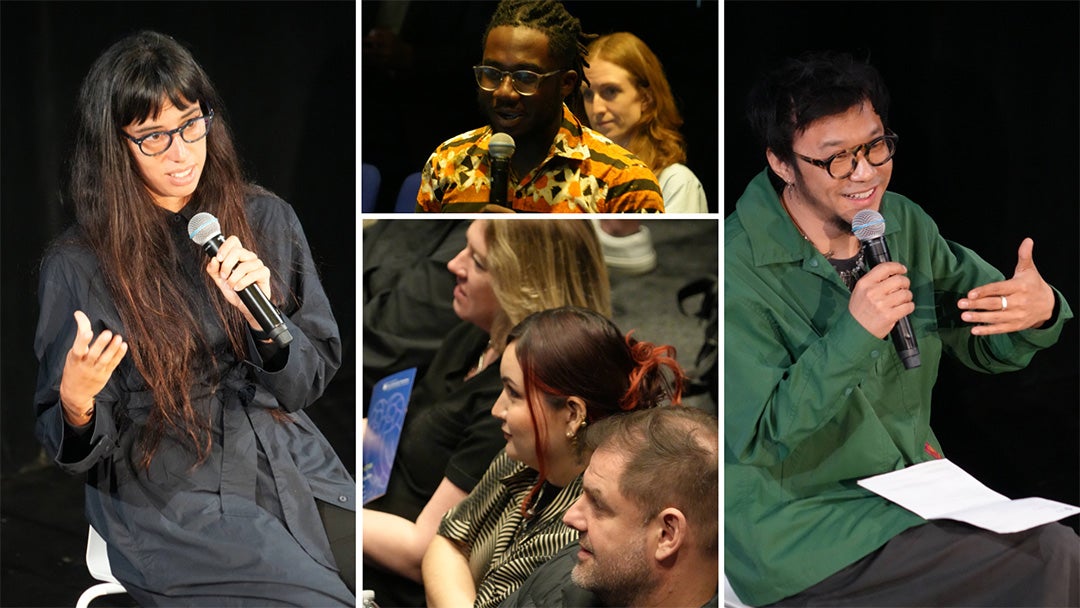
Artists, scholars and technologists gathered at Rice University’s Moody Center for the Arts March 6 for the “Imaging after Photography” Symposium, a half-day program exploring how artificial intelligence is reshaping visual culture, creativity and ethics. Inspired by the Moody’s spring 2026 exhibition examining the relationship between AI and photography, the event brought together international artists, critics and researchers for a keynote talk and two panel discussions that examined how emerging technologies are transforming the ways images are created, interpreted and understood.
“The impact of AI on imagemaking is fast-moving and far-reaching, often generating more questions than answers. A very intentional complement to the exhibition, the Moody’s symposium gave our campus and Houston community an opportunity to delve into those lingering unknowns with thinkers at the forefront of this technology,” said Alison Weaver, the Suzanne Deal Booth Executive Director of the Moody Center for the Arts.
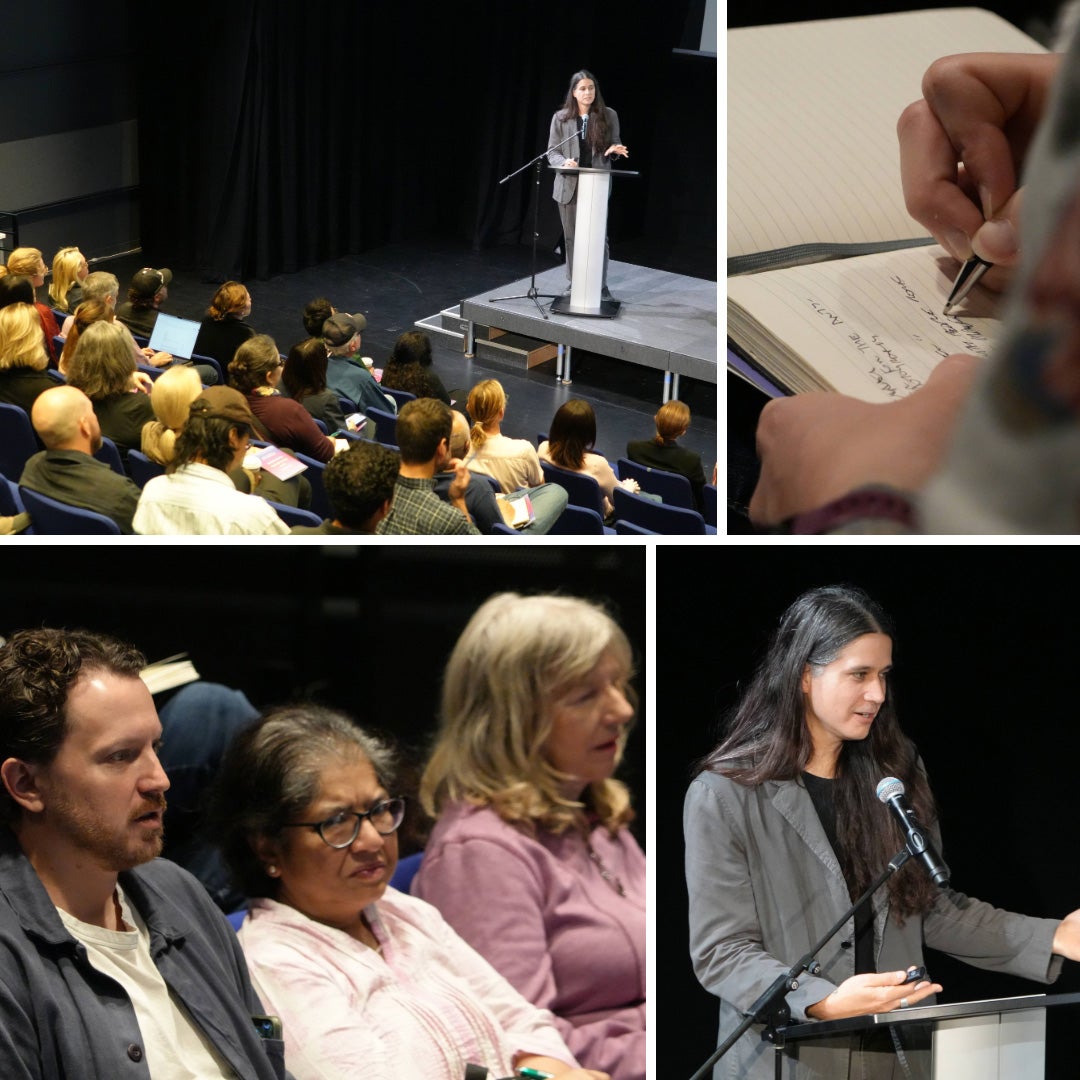
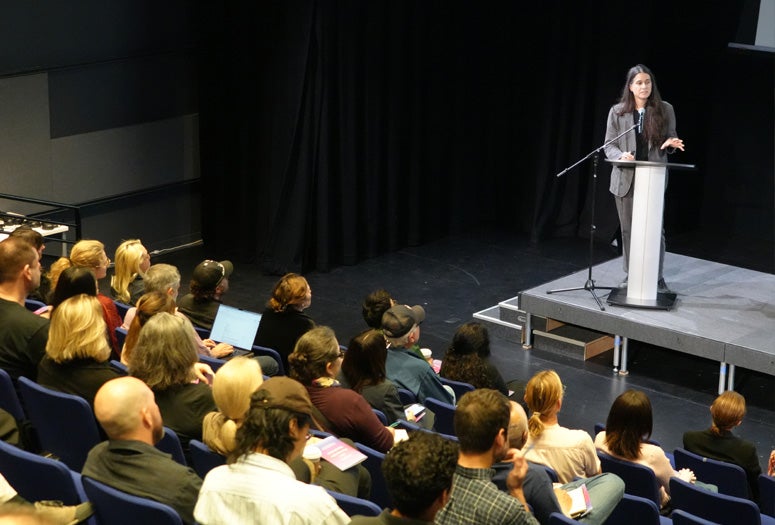
Keynote speaker K Allado-McDowell, an artist, writer and founder of Google’s Artists + Machine Intelligence program, delivered a presentation titled “Image Zone,” which explored how contemporary images from generative AI outputs to scientific and geospatial visualizations complicate traditional assumptions about photographic truth. The talk examined how rapidly evolving image technologies challenge viewers to question what they see and reconsider the role images play in shaping knowledge and public understanding.
The keynote sparked lively discussion among attendees, setting the tone for the rest of the program. Audience members actively engaged with Allado-McDowell during the Q&A session, posing questions that extended the conversation about the evolving meaning of images in an AI-driven media landscape.
“It’s important to break down silos when navigating such precarious territory,” said Noor Alé, associate curator. “When we can have writers, artists, academics and technologists in conversation with each other and the public, we can develop a shared understanding of the opportunities and challenges. Thinking about Rice’s institutional goals, that is step one in building the critical mass required for responsible use of AI.”
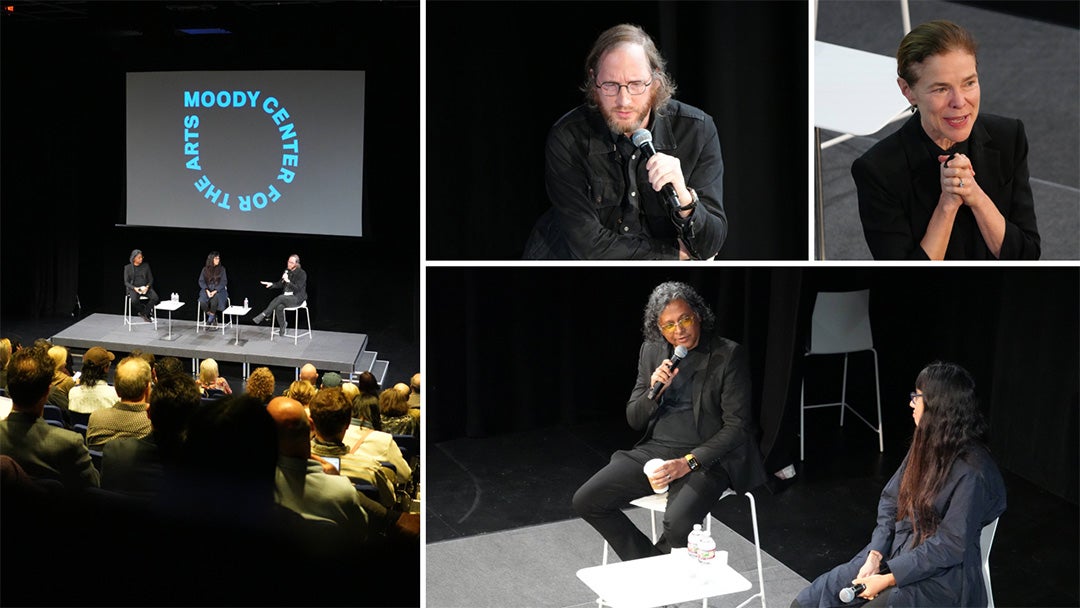
In the symposium’s first panel “Computational Creativity: AI as an Artistic Medium,” artist Sofia Crespo and Barry Threw, executive and artistic director of San Francisco’s Gray Area, engaged in a conversation moderated by artist and technologist Rashed Haq. Crespo’s work is featured in the Moody’s current exhibition “Imaging after Photography.” The discussion explored how artists are using generative tools and code as creative materials, raising questions about authorship, collaboration and responsibility in an era of machine-assisted creativity.
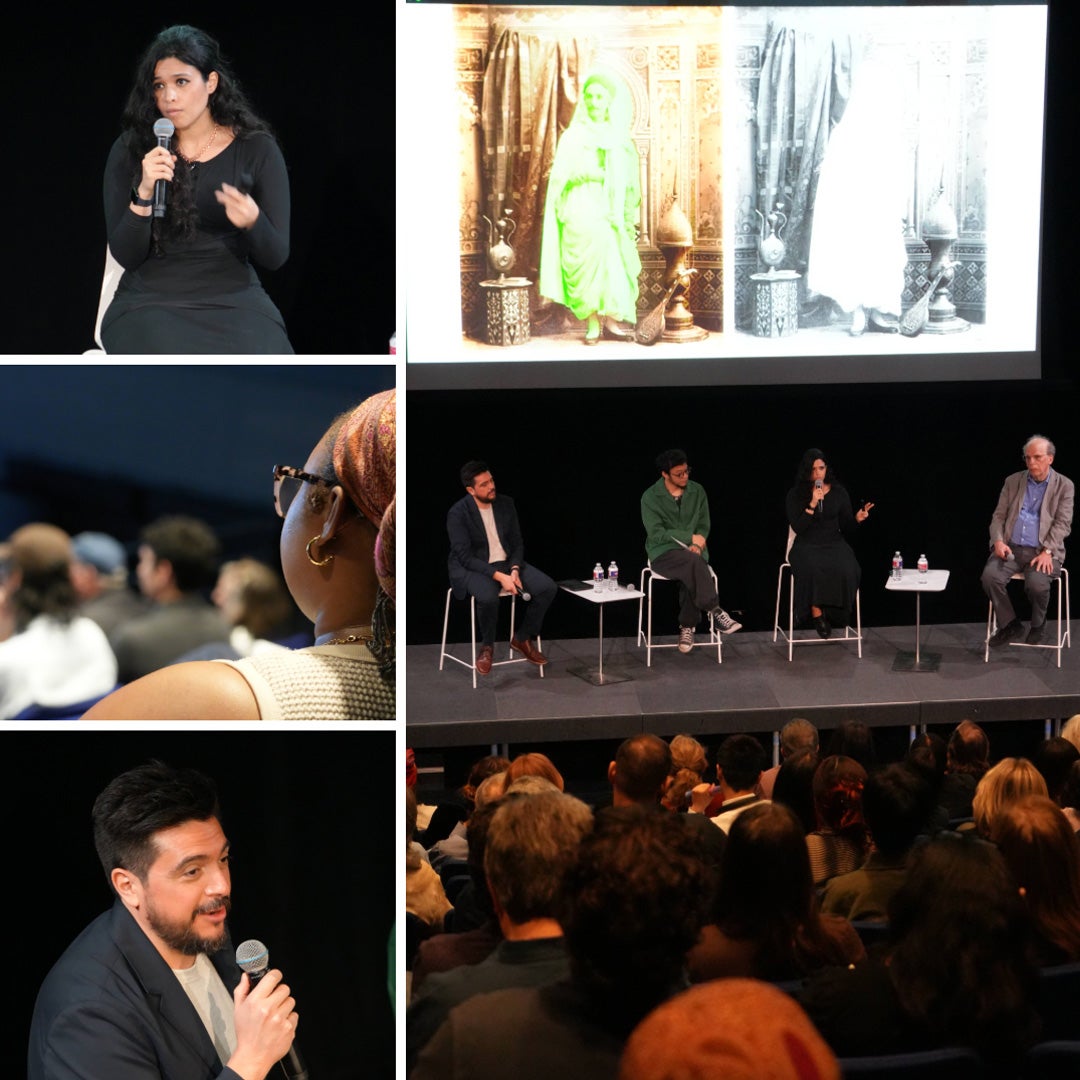
The second panel “AI: Art, Autonomy and Automation” was moderated by Rodrigo Ferreira, assistant teaching professor of computer science at Rice. It featured artists and scholars Kai-Luen Liang, Nouf Aljowaysir and Fred Ritchin, dean emeritus of the School at the International Center of Photography in New York. Aljowaysir also has work included in the exhibition “Imaging After Photography.” Panelists explored how AI-generated imagery is altering perceptions of authenticity and agency while prompting new ethical and political considerations for artists and audiences alike.
The symposium and the conversations it fostered align with Rice’s broader focus on responsible innovation. As part of Momentous, the university’s 10-year strategic plan, responsible AI has emerged as a key research catalyst, encouraging collaboration across disciplines to examine how AI is shaping society. By approaching these questions through contemporary art and photography, the Moody’s exhibition and symposium invite artists, scholars and audiences to consider how rapidly evolving image technologies influence perception, authorship and trust in visual media.
Learn about upcoming events at the Moody here.