
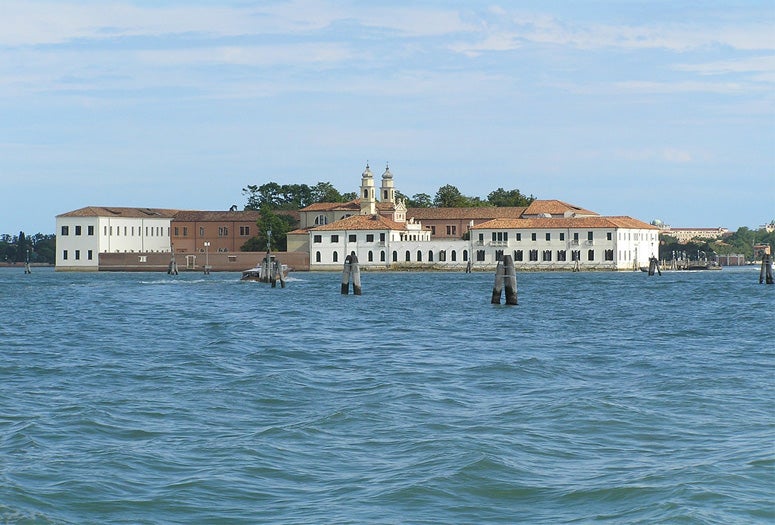
When Nia Georges stepped into her classroom on the island of San Servolo this spring, she became the first Rice faculty member to teach at Venice International University, a consortium of 23 universities and research institutions from around the world that share a single campus in the Venetian lagoon.
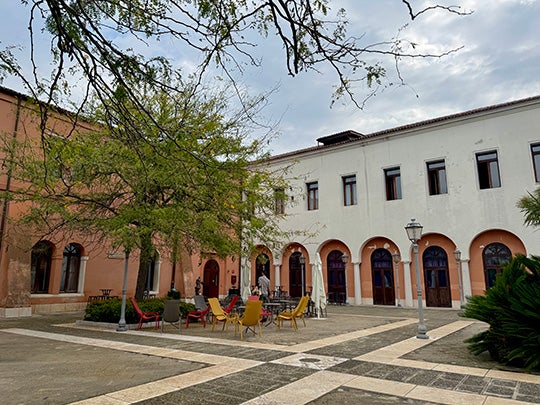
Georges, professor of anthropology, taught two courses during the spring semester: The Mediterranean Diet: History, Culture, Politics and a course on gender and the family in Italy. Her students, like the faculty who teach them, came to Venice from VIU's member institutions across the globe and the setting itself set the tone from the first day.
“It was a cozy environment,” Georges said. “The relatively small class sizes were conducive to discussion, and the students were excellent.”
Only one or two of those students had ever taken an anthropology course and hardly any were social science majors. By the end of the semester, art history, economics and engineering students alike had designed and carried out their own ethnographic research with Venice as their field site. Their projects took them into the city's fish market, the ecology of the lagoon and its food and questions of child care in Italian families.
“In all my courses, a major part of the grade depends on an original research paper based on fieldwork,” Georges said. “Students pick a topic, do the background reading, then use qualitative methods like interviewing and observation to gather their own data. A lot of them had never had that opportunity before and I know from their feedback how much they appreciated it.”
The research flowed in both directions. Because her students investigated such focused corners of Italian culture, Georges said she came away having learned a great deal herself about Italian food and family life.
The classroom conversation drew just as much energy from where the students came from as from where they were. With every seat filled by a different educational system and cultural background, Georges made those differences part of the syllabus, asking students to unpack the national dishes and family structures of their own home countries alongside the Italian material.
“As we got to know each other and the students read more, their insights became very sharp,” Georges said. “They would compare the preparation and role of soup in Japan with soup in Italy, down to specific kinds of soup. It was enlightening and it drew in the interest of the other students in the class.”
That discovery is coming back to Houston with her. Georges plans to revise how she runs discussion in her Rice courses this fall.
“I am going to be more direct about inviting students to think about their own personal experiences, their family and cultural backgrounds, and to relate where they come from to the topics we are covering,” Georges said. “This experience made me realize how strongly students respond to that and how engaged the rest of the class becomes listening and learning from it.”
Life on the lagoon offered its own education. Georges recalled realizing, three and a half months in, that she had not ridden in a wheeled vehicle since arriving, with everything in Venice moving by boat or push cart. Friday co-curricular excursions, faculty-led field trips open to everyone at VIU, ranked among her favorite parts of the semester.
Rice's presence at VIU continues to grow this fall when Luis Campos, the Baker College Associate Professor for History of Science, Technology and Innovation, teaches on San Servolo and three Rice undergraduates become the first Rice students to study there. Faculty interested in teaching at VIU can learn more through the Rice Global website.