
Imagine a jumbo jet carrying 400 passengers crashing every week for an entire year, killing everyone on board. The public outcry would be immediate. Investigations would follow and demands for action would be impossible to ignore.
Yet that is roughly the equivalent of the 20,000 infants who die before their first birthday each year in the United States, Dr. Michael Warren, chief medical and health officer for March of Dimes, told an audience at Rice University.
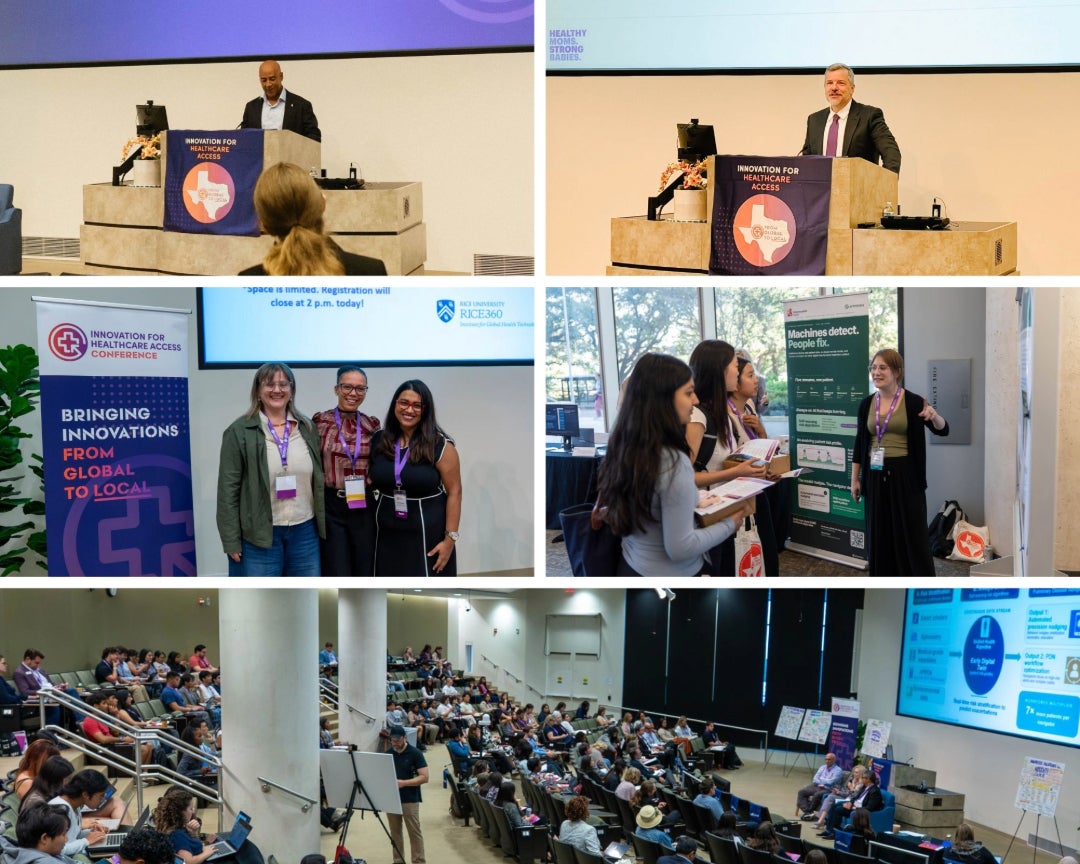
In a powerful opening keynote address at the Rice360 Institute for Global Health Technologies’ second annual Innovation for Healthcare Access Conference, Warren used the analogy to challenge how Americans think about maternal and infant mortality — and why preventable deaths do not always generate the urgency they deserve.
“In public health, I think we hide behind rates a lot,” Warren said, arguing that statistics can obscure the human lives behind them.
His message set the tone for the two-day conference, held Oct. 22-23, which brought together researchers, health care providers, engineers, nonprofit and community leaders, policymakers and innovators to confront persistent gaps in health care access for women and children across Texas.
Hosted by Rice360, the conference focused on translating promising technologies and research into affordable, practical solutions for underserved rural and urban communities, with an emphasis on building partnerships that can move ideas beyond the laboratory and into the places they are needed most.
“True progress requires more than design or discovery,” said Maria Oden, teaching professor of bioengineering and co-director of Rice360. “It takes deep cross-sector partnership and collaboration.”
Oden encouraged attendees to engage actively, share expertise and identify opportunities to work together on solutions capable of making a measurable difference.
Rice President Reginald DesRoches reinforced that message, emphasizing that meaningful innovation requires more than developing new technology. It also demands an understanding of the communities those technologies are intended to serve.
DesRoches urged participants to focus on “designing solutions with communities rather than simply for them” and ensuring those solutions are affordable, adaptable and sustainable.
By bringing together people who approach health care challenges from different perspectives, he said, the conference could help move promising research and designs into practice, improving lives across Texas and beyond.
Engineering new approaches to women’s health
Throughout the conference, speakers demonstrated how advances in engineering, biomaterials and digital health are creating new possibilities for addressing long-standing health challenges.
In a session on biomaterial innovations for women’s health, Shreya Raghavan of Texas A&M University described research aimed at understanding how the uterus contracts during labor and why those contractions sometimes fail after childbirth — a potentially life-threatening complication that can lead to postpartum hemorrhage.
Drawing partly on her own experience with postpartum hemorrhage, Raghavan and her team developed miniature, engineered uterine muscle tissues that mimic the structure and contractions of the human uterus. These laboratory models allow researchers to investigate how uterine muscle responds to oxytocin, a hormone used to induce or strengthen labor contractions, and how prolonged exposure may affect the tissue’s ability to contract effectively. The work could ultimately provide new insights into postpartum hemorrhage, premature labor and other complications of pregnancy.
Francesca Taraballi, director of the Center for Musculoskeletal Regeneration at Houston Methodist, approached women’s health innovation from another perspective: the importance of recognizing biological differences between women and men when designing treatments and medical devices.
Historically, she explained, much of biomedical research relied heavily on male physiology, leaving important gaps in understanding how treatments work in women. Taraballi highlighted opportunities to address those gaps through biomaterials research, including tissue reconstruction following cancer treatment, personalized cancer vaccines and orthopedic therapies. But she also emphasized that scientific advances mean little if patients cannot access them. Her goal, she said, is to help expand access to specialized treatments throughout Texas, so patients outside major medical centers can benefit from innovations being developed in Houston.
Harnessing technology without losing the human connection
The promise, and limitations, of emerging digital health technologies took center stage in another session examining how artificial intelligence and remote monitoring could improve chronic disease care.
Kim Bennion of Intermountain Health described an AI-supported monitoring program that combines connected medical devices, patient-reported symptoms and clinical data to identify warning signs of worsening respiratory disease before patients require emergency treatment. Rather than waiting for patients to become critically ill, the system helps care teams recognize changes in patients, intervene earlier and support patients in managing their conditions at home. Bennion reported reductions in hospital admissions and emergency department visits among patients participating in the program, including people living in remote communities who would otherwise face hours of travel for specialized care.
She stressed, however, that the technology itself is only part of the solution. Nurses and other care professionals remain essential to interpreting alerts, contacting patients and determining the appropriate next steps — that humans must remain in the loop, and care must continue to be prioritized.
“The AI didn’t change that. We did when we recognized the data,” Bennion said, underscoring the importance of keeping human judgment and relationships at the center of technology-enabled care.
Dr. Abhishek Kansara of Houston Methodist examined similar questions through the lens of diabetes management, highlighting advances in continuous glucose monitoring, insulin delivery systems and other digital tools.
While these technologies can significantly improve disease management, Kansara noted that their benefits remain unevenly distributed. Cost, insurance coverage, education, geography and access to specialists can all determine whether patients receive potentially life-changing technology. The challenge, he emphasized, is not simply making medical devices more sophisticated but ensuring that the people who need them can access and use them.
Turning conversations into collaborations
That distinction — between developing innovations and delivering them equitably — was a central theme throughout the conference.
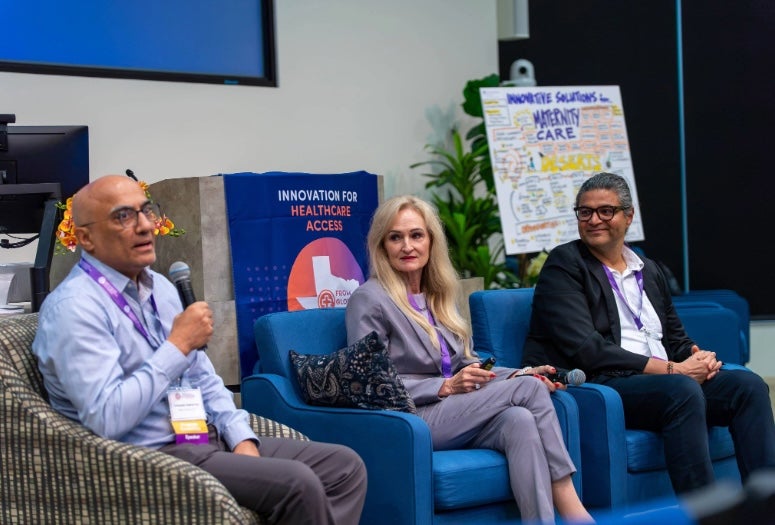
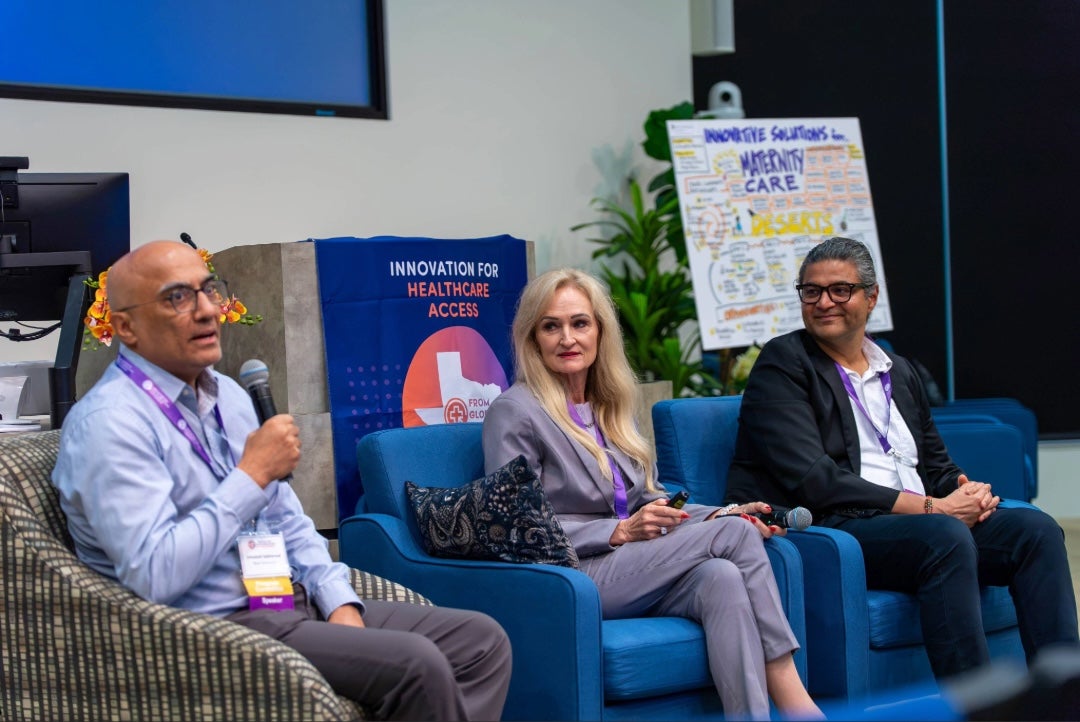
Other sessions explored innovative solutions for maternity care deserts, an examination of financing and realigning incentives for maternal and child health, how to co-design solutions with mothers, health policy considerations and more. The gathering also created opportunities for participants to identify shared priorities, connect across disciplines and lay the groundwork for new collaborative projects.
For Rice360, those connections are fundamental to the conference’s purpose: bringing together the scientific, clinical, engineering and community expertise needed to create solutions that are not only technically effective but also accessible, affordable and sustainable. As Warren’s opening analogy made clear, the stakes extend far beyond new research, programs or devices, because behind every statistic is a mother, a family and a community affected by gaps in care.