
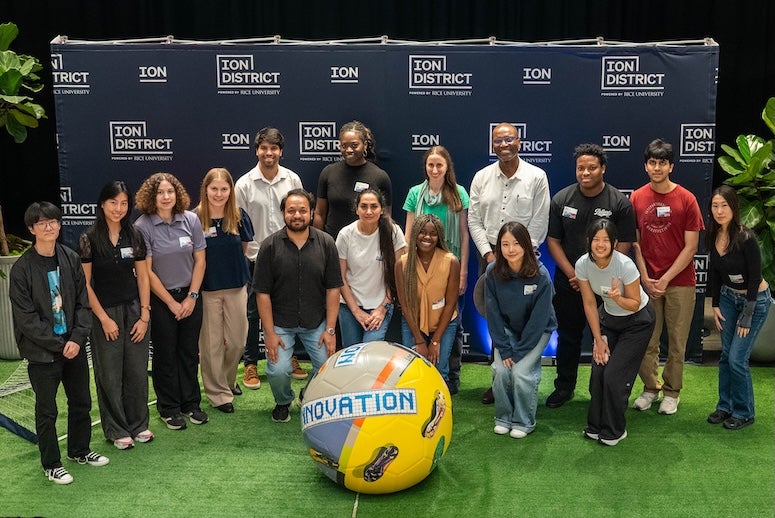
The Rice Urban Sustainability Hackathon, which kicked off this summer during the World Cup and brought together university students from across the country, has announced its two winning teams. First place goes to team “Pulse” and second place goes to team “SolOasis.” The entries were focused on developing prototypes for managing and measuring the sustainability impact of the FIFA World Cup 2026 games on the 11 U.S. host cities. David Abraham, sustainability lecturer at Rice University and Hackathon organizer, said this national competition was designed as a World Cup legacy project to create the foundation for building an Urban Sustainability Predictive Analytics Lab hosted at Rice. The Urban Sustainability Lab will support local governments with scenario modelling to more comprehensively analyze public policy impacts on cities and regions. Judges were invited from all across the country to ensure the success of the event.
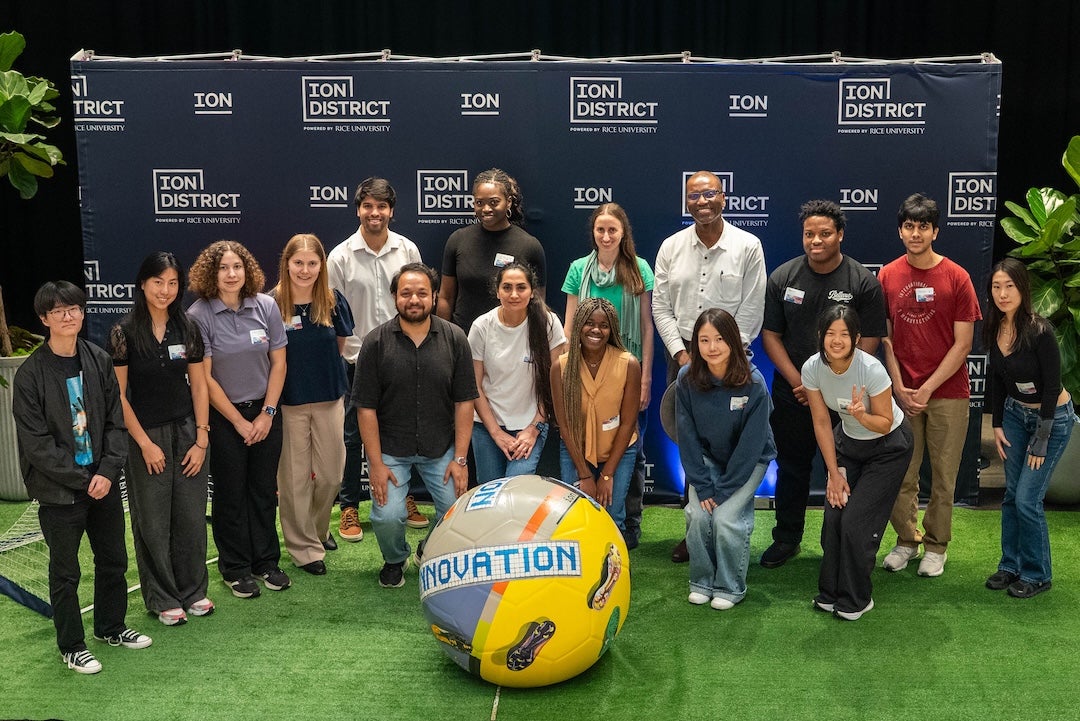
First Place: Pulse
Team members: Rishi Madhuvairy, Anirvin Srirajavatchavai, Ronak Kothari and Laksh Sarda
The winning team built “Pulse” as a command suite that monitors local energy, food and water demand, comparatively determines city readiness and models the impacts of resource interventions for legacy decision-making.
“We wanted to answer three questions. First, which host cities face the most strain on energy, water and food? Second, what can a city actually do about it, and third, how much would each action save?” the Pulse team said. “We built Pulse as an all-in-one command suite, which ensures that every administrator, manager, city planner, hotel group or sustainability expert can explore public policy impacts without having to read multiple spreadsheets. We also wanted the work to be replicable for cities that host large events in the future.”
2nd Place: SolOasis
Team members: Min Choi, Kaavin Balasubramanian, Daniel Jennings, Syed Fazail Haider and Saebyeok Keum
SolOasis helps map mobility to destinations. It simulates optional routes for local travel based on tree canopy, heat and infrastructure conditions. Users end up with more reliable routing options, and city leaders and experts have another tool to model the experiential impacts of infrastructure investment across a city.
“We believe it’s crucial to give the general public intuitive information about trip experience between venues. Our solution maps not only distance but how shaded the route is, how walkable it is and what amenities are along the way,” the SolOasis team said. “SolOasis compares real routes between any two points across four modes: walk, bike, METRO and drive. Each mode is evaluated through criteria such as green space, tree canopy, distance from traffic, directness, the local walkability index and the live heat index.”
“We had close to 500 participants and dozens of entries. They all demonstrated the incredible opportunity that more reliable and complex analysis of urban sustainability can produce for cities,” Abraham said. “They understood the 2026 FIFA World Cup as a unique opportunity to leverage ideas that can improve how cities plan for sustainability, measure impact and test new solutions. I am incredibly proud of every team, the lasting legacy we are building and the stellar cast of judges that assisted with ensuring the success of this event.”