
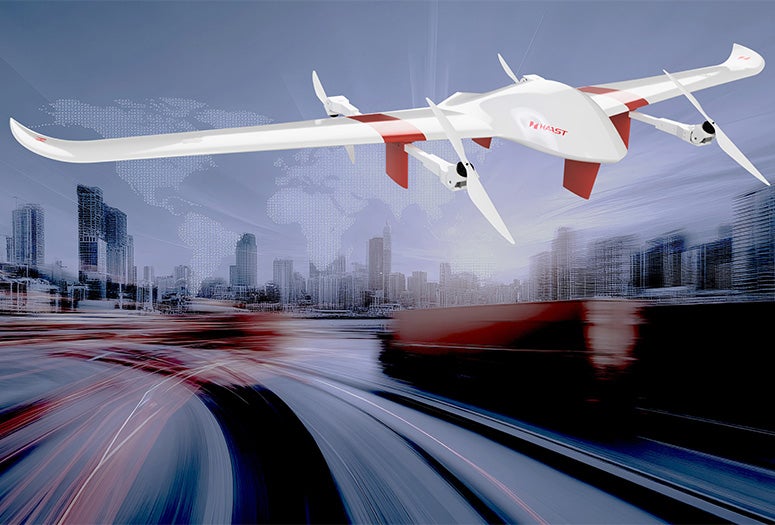
At Rice University, a student-founded startup is developing a drone-based system for sensitive medical supplies transport. Named after the Dutch word for “haste,” Haast Autonomous pairs a custom aircraft with software that manages dispatch, routing and chain of custody to improve how materials move between health care sites in increasingly centralized medical systems.
Graduating seniors Ege Halac, Jason Chen and Santiago Brent got their venture idea off the ground with help from the Liu Idea Lab for Innovation and Entrepreneurship (Lilie) Summer Venture Studio and developed the prototype at Rice’s Oshman Engineering Design Kitchen. Having raised $1.85 million in preseed funding, they will spend the first year out of college working on the startup full time.
“We all knew we wanted to build something together, so in September 2025 we decided to sponsor a capstone design project,” Chen said.
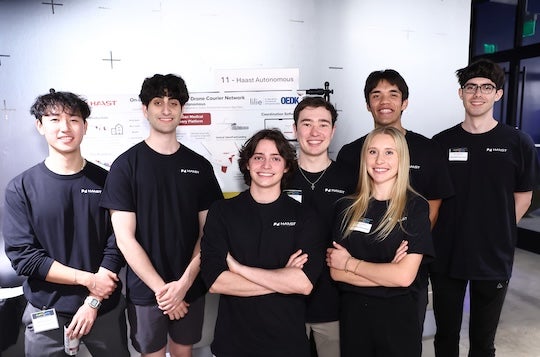
At the OEDK, they brought on a broader team of engineering students — Felix Hasson, Ethan Javedan, Kenna Sanders and Caden Schmidt — to help design, build and test the system.
The founders say the idea for Haast is to fill a gap that has widened as hospitals have consolidated: While laboratories, blood banks and specialty services are often centralized, transporting medical supplies and materials between facilities and points of care still relies heavily on ground couriers or costly air transport.
“We need better alternatives for a fast, safe and on-demand system of transport for life-critical cargo,” Halac said.
Haast’s aircraft can take off and land vertically, allowing it to use existing hospital infrastructure, but it shifts into horizontal flight for longer distances. The current aircraft is designed around a mission profile of 50 to 62 miles while carrying a payload of at least 5 pounds with future versions intended to scale up from there.
A built-in payload bay regulates temperature, pressure, vibration and tilt to protect sensitive contents such as patient samples, antivenom or poisoning kits and radioligands or other therapies.
“With our system, you can transport a lot of different biological samples from an outlying satellite hospital to the central facility for further testing, while also being able to provide critical supplies where they are needed faster, improving patient outcomes,” Halac said.
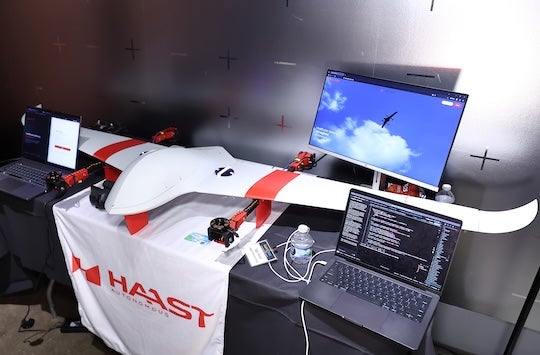
Haast plans to eventually deploy a whole fleet of aircraft, and the coordinating layer of software designed to oversee flight operations is a critical part of the system. Hospitals can request flights, track shipments in real time and document each step of the delivery process, while back end systems account for aircraft availability, telemetry data and airspace constraints.
“The drone is only part of the solution,” Chen said. “What matters is moving something from point A to point B in a way that fits into how hospitals already operate.”
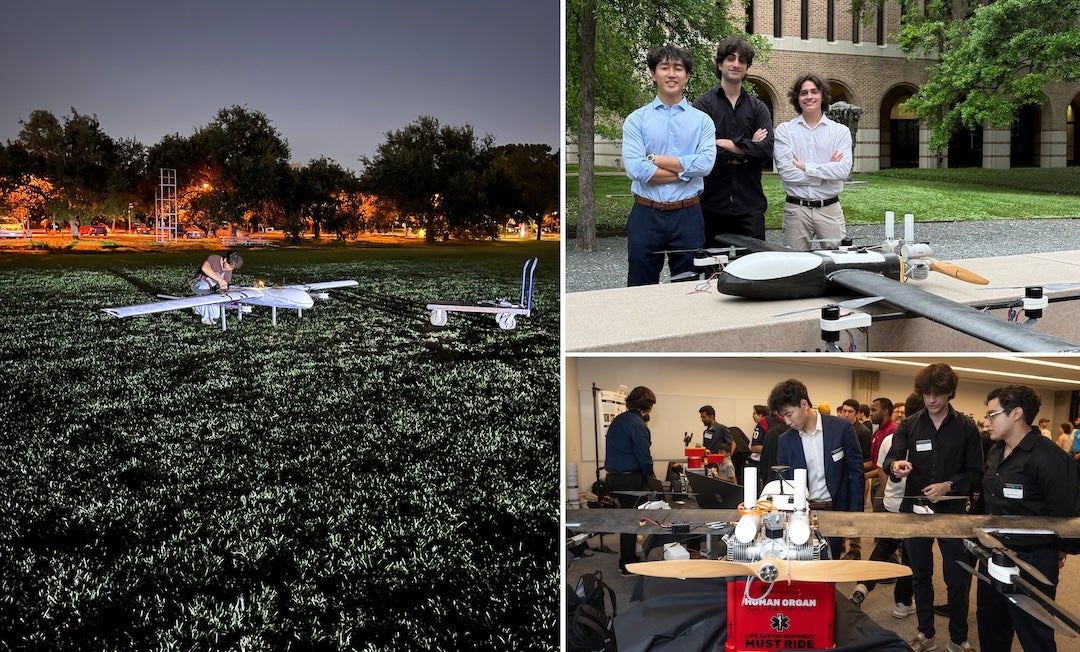
Haast’s approach to the engineering design process focused on building from the ground up and iterating rapidly to achieve desired functionality. Working out of the OEDK, the team has produced 13 aircraft iterations in 16 weeks, using 3D printing to test and refine the design while keeping per-prototype costs at less than $1,000.
The project has already drawn recognition. At the 2026 Oshman Engineering Design Showcase and Competition, the team placed third for the Willy Revolution Award for Outstanding Innovation and won Best Aerospace or Transportation Technology. Haast also received the Chan-Kang Family Prize for Bold Ambition and the Healthcare Innovations Prize at the 2026 H. Albert Napier Rice Launch Challenge.
Haast has also been building traction well beyond campus. The founders say they have spoken with hundreds of potential customers, secured letters of intent for their services and partnered with Airspace Link to support autonomous flight coordination. Haast was also selected as one of 35 teams nationwide for the Oregon UAS Accelerator, where it was later named a top 10 finalist.
“In our mission to scale autonomous aerial logistics, we have raised $1.85 million and aim to deploy this capital in early 2027 for pilot trials and then move to market later that year,” Chen said.
Initially, the target cargo for Haast was transplant organs, but while that remains a long-term goal, the founders say the platform could be deployed for a much wider range of applications.
“What we realized is that the platform we are building is suited for medicine, but it really underlies a much larger problem of mission-critical transport across industries,” Brent said. “We are building the fastest, most secure logistics chain for the world’s most sensitive cargo.”