
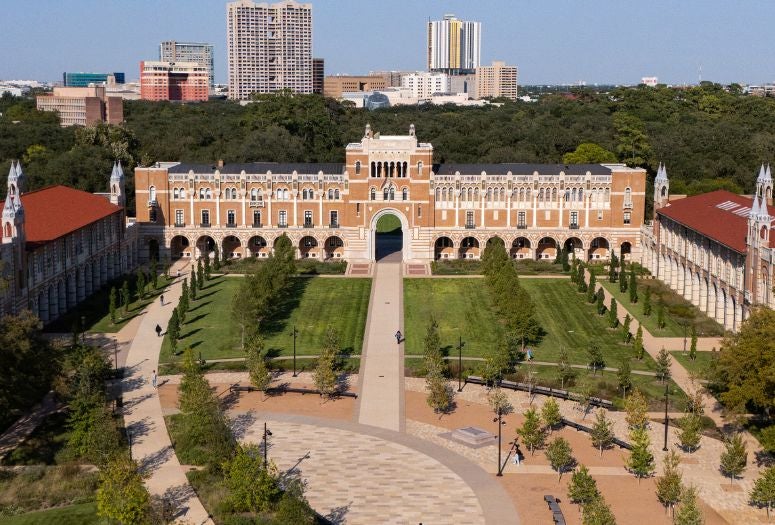
Rice University has set undergraduate tuition rates for the 2026-27 academic year, underscoring its continued commitment to academic excellence, student access and affordability as it strengthens its position among the world’s leading universities. Alongside the new rates, the university reaffirmed its long-standing pledge to meet the full demonstrated financial need of all admitted students through robust loan-free financial aid programs, including free tuition through The Rice Investment for those who qualify.
Undergraduate tuition for first-, second- and third-year students in the 2026-27 academic year will increase by $4,600 over the current year. For all other continuing undergraduate students, tuition will increase by $2,806. Even with these adjustments, Rice continues to charge tuition below the average of its peer institutions.
“Supporting a highly personalized, student-centered educational experience while responding to the evolving needs of our community and the world is central to Rice’s mission,” said Amy Dittmar, the Howard R. Hughes Provost and executive vice president for academic affairs. “As we invest in our academic programs and campus resources for student success, we are focused on sustaining our competitive strength and advancing Rice’s trajectory as a leading global teaching and research university with impact — ensuring every graduate is able to achieve their goals.”
For the 2026-27 academic year, undergraduate tuition will be $65,280 for all continuing students beyond their third year and $71,140 for first-, second- and third-year students. Room and board will total $20,530, with mandatory fees of $984 for all undergraduates.
More than half of Rice undergraduates receive financial assistance through a combination of guaranteed need-based and merit-based support. The university anticipates its total investment in financial aid will reach an all-time high in fiscal year 2026, with approximately $174 million in total grant aid allocated to undergraduate students, up from about $161 million in scholarships and financial aid in fiscal year 2025.
The Rice Investment, the university’s flagship financial aid program for domestic students, ensures that students from families with incomes below $75,000 pay no tuition, mandatory fees, room or board; those with family incomes between $75,000 and $140,000 pay no tuition; and students with family incomes between $140,000 and $200,000 have at least half of their tuition covered. Many students from families with incomes above $200,000 also receive loan-free aid (grant levels assume families have typical assets for their income range).
“Our goal is to remove financial barriers so students can focus on learning and thriving at Rice,” said Yvonne Romero, vice president for enrollment and dean of admissions and financial aid. “By meeting full demonstrated need with loan-free aid, we ensure access to a Rice education for exceptional students from every background.”
In fall 2025, 54% of undergraduates received financial aid, with the average first-year aid offer being $71,698.
Frequently recognized as one of the nation’s best values among private universities, Rice is among roughly 30 schools nationwide that meet 100% of demonstrated financial need without requiring loans. In recent national rankings, The Princeton Review ranks Rice No. 9 for “Great Financial Aid” in its annual Best Colleges guide; WalletHub ranks the university No. 9 for value, class size, graduation rates and post-grad earning potential; and Forbes places Rice No. 12 on its list of 500 schools that “produce successful, high-earning and influential graduates from all economic backgrounds, with less student debt.” The average starting salary for the university’s most recent graduating class is $91,427, according to Rice’s Center for Career Development.
For more information about Rice, visit www.rice.edu.
For information about financial aid programs and to apply, visit the Office of Admission website.